Showing posts with label WW1. Show all posts

Thursday, 2 March 2023

๐Ÿ“– Featured Book of the Month ~ The Hidden Letters by Lorna Cook


Avon
2 March 2023

My thanks to the publishers for the invitation to read this book


On the eve of a world war, a forbidden love will blossom in the garden of a stately home and one young woman will make a choice that will change her life forever…

As the storm clouds of war gather, Cordelia seeks refuge in the grounds of her family estate.

Isaac has recently arrived to tend to the gardens, and the connection between him and Cordelia is as immediate as it is forbidden.

Isaac begins to secretly teach her how to cultivate the gardens, so when he and all the young men are called away to war, Cordelia takes over.

From the battlefields of Europe, Isaac sends her letters, that give her hope for a future in peacetime.

But when these messages abruptly cease, Cordelia must face up to the worst and take her future – and the fate of the garden they both loved – into her own hands...


๐Ÿ“– My Review...

Isaac Leigh has been employed to make improvements to the garden at Pencallick House and under normal circumstances would never come into contact with Cordelia Carr-Lyon who, as the daughter of the big house, has limitations placed upon her, and a burgeoning friendship with a handsome gardener is strictly out of bounds. However, the country is on the brink of war and social restrictions whilst still in place seem to melt into insignificance as Isaac and Cordelia gradually get to know each other. It is this secret friendship and clandestine bond which must sustain their relationship through some deeply troubling times especially as the storm clouds of WW1 gather their inevitable momentum over Europe. 

Lorna Cook writes the most wonderfully detailed historical dramas which are filled with an abundance of emotions, from love and passion, through to sadness and despair and, believe me, there were many times during this beautiful novel when I had to reach for the tissue box. The story moves from the wild and windswept Cornish coast, to war ravaged Europe and from stately manor house to humble cottages and all the while keeping at its heart a love story which beguiles, entertains and tugs away at the heartstrings.

The Hidden Letters is every bit as good as I hoped it would be from this talented author and I have no hesitation in making it my Featured Book of the Month for March.


About the Author


Lorna Cook is the author of the Kindle bestseller The Forgotten Village. It was her debut novel and the recipient of the Romantic Novelists' Association Joan Hessayon Award for New Writers as well as winner of the Katie Fforde Debut Romantic Novel of the Year Award. Lorna lives in coastal South East England with her husband and two daughters.


Twitter @lornacookauthor

@AvonBooksUK


The Hidden Letters is published today by Avon Books

 and is available from wherever you buy your books.


Tuesday, 31 August 2021

Blog Tour ~ A Hundred Years to Arras by J.M Cobley


Delighted to host one of today's blog tour stops


Unbound
19 August 2021

My thanks to the author and to Random Things tours for my copy of the book
and the invitation to the blog tour.


On a painful, freezing Easter Monday in 1917, Private Robert Gooding Henson of the Somerset Light Infantry is launched into the Battle of Arras. Robert is twenty-three years old, a farmer’s boy from Somerset, who joins up against his father’s wishes. Robert forms fast friendships with Stanley, who lied about his age to go to war, and Ernest, whose own slippery account betrays a life on the streets. Their friendship is forged through gas attacks, trench warfare, freezing in trenches, hunting rats, and chasing down kidnapped regimental dogs. Their life is one of mud and mayhem but also love and laughs. This is the story of Robert’s journey to Arras and back, his dreams and memories drawing him home. His story is that of the working-class Tommy, the story of thousands of young men who were caught in the collision between old rural values and the relentlessness of a new kind of war. It is a story that connects the past with the present through land, love and blood.


My Thoughts..

Private Robert Gooding Henson was just an ordinary soldier caught up in some of the momentous years of the First World War but what is made all the more poignant about A Hundred Years to Arras is that it is based on a distant relative of the author.

Leaving his elderly parents behind on the family farm, Robert Henson enlisted in 1915 into the Somerset Light Infantry and proudly wearing the armband of an enlistee he caught the train to fight in a war not of his making. The reality of the Western Front, with the gas attacks, the mud and rat infested conditions of the trenches and the sheer slog of enemy bombardment, couldn't have been further from the rolling hills of Somerset, however, Robert's friendship with fellow two Privates, Stanley and Ernest, somehow makes the unspeakable horror more bearable. Friendships formed in adversity are a powerful force and the three men share their experiences, their hopes and dreams for what seems an impossible future and do so with stoicism and good natured humour which belies their strength of will.

There is no doubt that the author has done impeccable research in order to bring this book to life and there is such an authentic feel to the narrative that it gives a realistic, and at times, quite disturbing account of what Private Henson could have experienced during his time in Northern France. In using sketchy family history details and in searching through military records, Private Henson comes very much alive in this fictionalised account of what happened to him on the way to the Battle of Arras in April 1917.

It is a fitting tribute that Private Robert Gooding Henson's life is remembered in this beautifully written story and A Hundred Years to Arras is a powerful reminder of the bravery of this generation of young men who went off to war so willingly and whose generous spirits now infuse the soil of Northern France. 


About the Author


J. M. Cobley was born in Devon of Welsh parents and now lives in Warwickshire with his wife and daughter. Jason studied English Language and Literature at university and is currently Head Teacher at a hospital school in Coventry. Jason is otherwise known for his work writing scripts for the long-running Commando comic and graphic novel adaptations of classics such as Frankenstein and An Inspector Calls, as well as the children's novel The Legend of Tom Hickathrift. Jason also hosts a weekly show on Radio Abbey in Kenilworth, where he indulges his passion for classic and progressive rock. The central character of A Hundred Years to Arras is based on his relative Robert Gooding Henson.


Twitter @JasonMCobley #HundredYearsToArras

@unbounders

@RandomTTours


Wednesday, 28 April 2021

๐Ÿ“– Book Review ~ Lucia's War by Susan Lanigan


Idee Fixe Press
2020

My thanks to the author for my copy of this book


London, 1950. Soprano Lucia Percival has overcome racism and many obstacles to become a renowned opera singer. She is now due to perform her last concert. But she has no intention of going onstage. A terrible secret from her service during the First World War has finally caught up with her.

London, 1917. Lucia, a young Jamaican exile, hopes to make it as a musician. But she is haunted by a tragic separation that is still fresh in her memory – and when she meets Lilian, an old woman damaged by a similar wartime loss, she agrees to a pact that could destroy everything she has fought so hard to achieve.

From the Western Front and the mean streets of Glasgow, to black society in London, Lucia’s story tells a tale of music, motherhood, loss and redemption.


๐Ÿ“– My Thoughts..

The early part of the twentieth century was largely overshadowed by the catastrophic events of the First World War and for Jamaican Lucia Percival life is going to turn out very differently from what she expected. Being part of the Voluntary Aid Detachment, Lucia works as a VAD during some of the worst conflicts of the war, memories of will which never leave her and which shape her destiny. During the early part of this troubled century living life as a black woman was difficult as racism was neither covert nor undisclosed, and whilst Lucia suffered this ghastly prejudice with stoicism and a considered resignation it didn't make it any easier to bear nor excused its narrow-mindedness. 

We pick up the story in a dual time frame, that of 1917 when Lucia finds herself living in London, and later in 1950 when Lucia is a very different woman but one who has carried her secrets close and whose vulnerability continues to dominate. Lucia has a sublime gift for music, and singing, and it is this gift which will cut through her defenses and allow her to succeed in a world where to be both female, and black, was practically a none starter. 

Whilst this story highlights this struggle to succeed, it also takes us back, through Lucia's thoughtful narration, to the events which have brought her to this place and time and by cleverly inserting some Jamaican patois Lucia comes alive in our imagination and the author's thoughtful storytelling allows us to follow every step of her journey. Lucia's War may start during the early part of the twentieth century but as the story moves on it becomes obvious that perhaps, for this brave and stalwart woman Lucia's own personal war never truly ends.

Rich in history, imaginatively written, and with a strong sense of the social and prejudicial injustices which were rife at this time, Lucia's War is another thought provoking novel from this talented writer.


Susan Lanigan graduated from Trinity College Dublin with a degree in English and History in the late 90s, then pursued a Graduate Diploma in I.T. in Dublin City University and a Masters in Writing in NUI Galway.

Her first novel White Feathers, a tale of passion, betrayal and war, was selected as one of the final ten in the Irish Writers Centre Novel Fair, 2013, and published in 2014 by Brandon Books. The book won critical acclaim and was shortlisted for the UK Romantic Novel of the Year Award in 2015.

Her second novel, Lucia’s War, also concerning WWI as well as race, music and motherhood, was published in June 2020 and has been named as the Coffee Pot Book Club Honourable Mention in the Modern Historical Book of the Year Award.


Twitter @susanl_lanigan #LuciasWar


๐Ÿ“– Book Review ~ Unfortunate Stars by Susan Lanigan

Idee Fixe Press
February 2021
(45 pages)
Available as an ebook and audio book

My thanks to the author for my copy of the ebook

Czechoslovakia, 1938 - Friedrich Pflommer, a married man with two children, has fallen hopelessly in love with the most unsuitable person possible - the young, volatile Kai, an exchange student living under his own roof. As Nazi forces gather on the border, Friedrich is playing a high-stakes game and risks losing everything.

France, 1915 - as a young lieutenant in wartime, Friedrich is badly injured during a failed counterattack, but a meeting with an Englishman during battle changes everything.

Unfortunate Stars is a short story of romantic love and deep friendship between men, of what it is to surrender to our own truth, and to live it even in the hardest of circumstances.


 ๐Ÿ“– My thoughts..

Unfortunate Stars is made all the more tender by the author's perceptiveness in placing the reader right at the very heart of the intimacy and in doing so makes the story all the more powerful in its simplicity.

Friedrich Pflommer has much to lose if his clandestine relationship with Kai, an exchange student who is living with the Pflommer family, is discovered. However, as we get deeper into this forbidden intimacy so Friederich starts to reveal more about himself, especially of his heartbreaking relationship with a young Englishman during the catastrophic events of the First World War.

Whilst the story may be short it doesn't lessen its impact or spoil the effect of the notion that love is love wherever the arrow falls and in whatever circumstances it finds itself in. Beautifully written, and researched, Unfortunate Stars is a good introduction to this talented author's work.


Susan Lanigan graduated from Trinity College Dublin with a degree in English and History in the late 90s, then pursued a Graduate Diploma in I.T. in Dublin City University and a Masters in Writing in NUI Galway.

Her first novel White Feathers, a tale of passion, betrayal and war, was selected as one of the final ten in the Irish Writers Centre Novel Fair, 2013, and published in 2014 by Brandon Books. The book won critical acclaim and was shortlisted for the UK Romantic Novel of the Year Award in 2015.

Her second novel, Lucia’s War, also concerning WWI as well as race, music and motherhood, was published in June 2020 and has been named as the Coffee Pot Book Club Honourable Mention in the Modern Historical Book of the Year Award.


Twitter @susanl_lanigan


Wednesday, 25 November 2020

Blog Tour ~ War in the Valleys by Francesca Capaldi


Delighted to be one of the blogs opening this blog tour today 

on

 ⭐Publication Day ⭐


Hera Books
25 November 2020

My thanks to the publisher and Books on the Bright Side for my ecopy of this book
and the invitation to this blog tour


WW1 marches on, but Violet faces her own battle at home

July 1916. Young mother, Violet Jones, lives a tough life in the Rhymney Valley, caring for 4-year-old Clarice and baby Benjy on her own while soldier husband Charlie fights on the Front Line. But when tragedy strikes, Violet’s life becomes even harder.

While they may be far from the battlefields, the effects of WW1 take their toll on the small mining community of Dorcalon, with food becoming scarce and more and more of their young men losing their lives.

With very little money coming in, and two babies to care for, Violet takes in a relative to help make ends meet. But far from easing her burden, it might turn out to be the worst decision she’s made.

As the Great War takes its toll on the nation, Violet faces her own battle. All alone in the world, can she protect her children, and herself? And will she ever find joy out of the depths of despair?

A captivating, emotional saga set in WW1 – will tug on your heart-strings and bring a tear to your eye. If you like Nadine Dorries, Rosie Goodwin or Sheila Newbury you will adore this beautiful Welsh saga.


My thoughts..

We can never under estimate the poignancy of a community shattered when those who signed up as part of the PALS battalions failed to return home. Whole communities suffered the loss of a generation of young men who left their homes and loved ones behind to fight with boyhood friends in what they thought would be an adventure of a lifetime.

For the small Welsh valley community of Dorcalon, the newly appointed telegram boy is a regular sight as he delivers cream coloured envelopes to unsuspecting households, and for people like Violet Jones life will never be the same again for her and her two small children. However, it’s not just Violet who must learn to cope with life alone, there are others in this small Welsh mining village who are also finding life difficult, money is scarce and jobs hard to find.

Beautifully written, with a heartbreaking poignancy, War in the Valleys brings this war time era into stark focus and describes a dark time when life, for most people, was a real struggle. Violet does what she must to survive and then realises she has to live with the consequences, not just battling through her grief but also finding the strength to go on when someone around her seems hellbent on overpowering her natural good nature.

The other characters who flit into and out of the story are again typical of their time and social class, they pull together in tragedy and yet remain naturally wary of those whom they consider to be their betters. They’re not all likeable, there some are baddies amongst the community who deserve to get their comeuppance whilst others go above and beyond duty and that’s what makes the story so interesting.

Stalwart, stoical and steadfast the people of the Rhymney Valley are well portrayed in a story which tugs away at your heartstrings and which brings the place, people and time to life in a historical saga which captivates from first page to last.


About the Author


Several years ago, Francesca Capaldi pursued a childhood dream and joined a creative writing class. Lots of published short stories, a serial, and four pocket novels later, she’s now explored her mother’s ancestral history for a series of novels set in a Welsh colliery village. A history graduate and former teacher, she hails from the Sussex coast but now lives in Kent with her family and a cat called Lando Calrissian. 


Twitter @FCapaldiBurgess


@HeraBooks

@BOTBSPublicity


Saturday, 31 October 2020

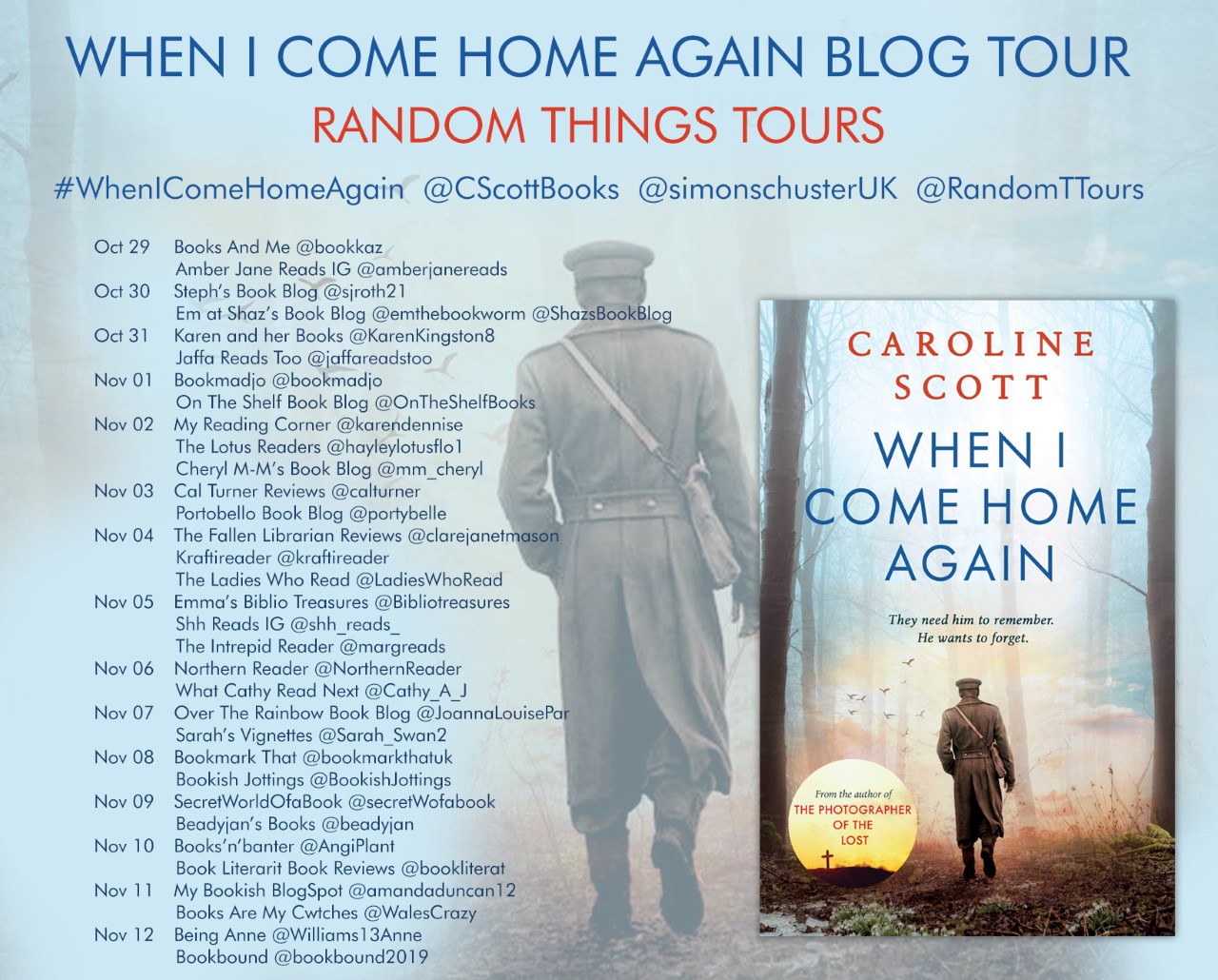
His Fic Saturday ~ Blog Tour ~ When I Come Home Again by Caroline Scott


Thrilled to host one of today's Blog Tour stops 


On Hist Fic Saturday


Let's go back to ...1918


Simon&Schuster
29 October 2020

My thanks to the publishers for my copy of this book
and Random Things Tours for the invitation to the blog tour

They need him to remember. He wants to forget. 1918. In the last week of the First World War, a uniformed soldier is arrested in Durham Cathedral. When questioned, it becomes clear he has no memory of who he is or how he came to be there. The soldier is given the name Adam and transferred to a rehabilitation home where his doctor James is determined to recover who this man once was. But Adam doesn’t want to remember. Unwilling to relive the trauma of war, Adam has locked his memory away, seemingly for good. When a newspaper publishes a feature about Adam, three women come forward, each claiming that he is someone she lost in the war. But does he believe any of these women? Or is there another family out there waiting for him to come home? 

Based on true events, When I Come Home Again is a deeply moving and powerful story of a nation’s outpouring of grief, and the search for hope in the aftermath of war.


What did I think about it..

As first hand memories of the Great War fade into the shadows of history so does our perception of what it was like for families up and down the country to receive that deadly telegram with the devastating words " Missing, presumed, killed" and just how much hope clung to the belief that their loved ones would eventually return, hale, hearty and none the worse for their adventure.

When a uniformed soldier is found cowering in Durham Cathedral in the last few days of WW1, the authorities have no clue as to his identity as the soldier remembers nothing of either his time in the army, or of his previous life with family and friends. Seemingly traumatised, the man, known only by a made up name of Adam Galilee, is taken to Fellside House, a rehabilitation hospital in the English Lake District where kindly doctors attempt to put the jigsaw pieces of Adam's life back together. However, in a desperate attempt to discover Adam's identity, a newspaper publishes a feature along with grainy photograph of him which brings several women to the hospital, each convinced that Adam is someone precious to them.

What then follows is a deeply, emotional story which looks at the trauma of loss and grief, not just of those who are desperately searching for a lost loved one, but also from the fragmented pieces of men who had lost so much of what was precious about themselves. Horrors of trauma and the inglorious nature of war haunts their dreams, and colours their world with nightmare scenes of death and destruction on a scale never before witnessed.

When I Come Home Again is a beautifully written story by an author who doesn't shy away from those stories which have a strong emotional impact. She gives us a really special lyrical quality to the story especially in the describing the area around Fellside House, the natural glory of gardens, the surprises revealed by nature but alongside is the uncompromising effect of the nightmare visions conjured by men who only ever wanted to forget what they had witnessed.

When I Come Home Again is a compelling and heart-wrenching story by a talented author who brings this traumatic period in history alive in a very special way.


About the Author


Caroline completed a PhD in History at the University of Durham. She developed a particular interest in the impact of the First World War on the landscape of Belgium and France, and in the experience of women during the conflict – fascinations that she was able to pursue while she spent several years working as a researcher for a Belgian company. Caroline is originally from Lancashire, but now lives in southwest France. The Photographer of the Lost was a BBC Radio 2 Book Club pick.


Twitter @CScottBooks #WhenIComeHomeAgain

@simonschusterUK

@RandomTTours


Saturday, 20 April 2019

Blog Tour and Giveaway ~ The Stars In The Night by Clare Rhoden


On His Fic Saturday

I am delighted  to be hosting today's stop on  The Stars In The Night Blog Tour


Odyssey Books
January 2019

My thanks to the author for my copy of this book
and to Rachel's Random Resources for the invitation to be part of this tour

Harry Fletcher is a confident young man, sure that he will marry Nora, no matter what their families say. He will always protect Eddie, the boy his father saved from the gutters of Port Adelaide. 

Only the War to End All Wars might get in the way of Harry’s plans… 

From the beaches of Semaphore to the shores of Gallipoli, the mud of Flanders to the red dust of inland South Australia, this is a story of love, brotherhood, and resilience.


My thoughts..

We owe such a huge debt of gratitude to those service men and women from around the British empire who came to our aid in WW1. Harry Fletcher and his adopted foster brother Eddie are just two ordinary young men from Semaphore, a quiet town in Australia, who left their shores in a flurry of patriotic duty, only to find themselves amidst the horror of a theatre of war which showed them no mercy. From Gallipoli, to Flanders, Harry and Eddie prove to be an invincible team but, as they find out to their cost, war has a tenacity to throw in a few unexpected surprises.

The Stars in the Night created a realistic portrait of  war and the story gave a sense of just what it was like to be away from home, waiting for news from family, and hoping that your sweetheart would still be there for you when it was all over. By using both narrative and epistolary/diary entries a story emerges of two incredibly brave young men, who, with characteristic stoicism, and a lively outlook, took on board everything the war threw at them.

The author has obviously done a great deal of historical research and paints a realistic portrait of wartime without ever resorting to too much graphic detail and yet, both the horror and the emotional impact of grief and loss certainly comes across. There were times within the story when I felt that emotion and, without giving anything of the plot away, I had to wipe away a tear or two on more than one occasion.

The Stars In The Night is beautifully written with a strong sense of wartime camaraderie and brotherhood, not just between Harry and Eddie who are quite special characters, but also between those soldiers who, regardless of rank, were all in it together. I think this passage from the book sums up so succinctly the effect of the war... "Quite a few fellows never made the next roll call. We couldn't always work out where they had ended up. But it was, like, just something that happened. Nothing special. We just got on with it."

From its evocative cover, to the very last sentence, The Stars In The Night is one of those stories which stays with you long after the last page is turned.


About the Author


Clare Rhoden writes historical fiction, sci-fi and fantasy (check her titles at Odyssey Books http://odysseybooks.com.au/). Clare lives in Melbourne Australia with her husband Bill, their super-intelligent poodle-cross Aeryn, a huge and charming parliament of visiting magpies, and a very demanding/addictive garden space. 

Clare completed her PhD in Australian WWI literature at the University of Melbourne in 2011, and a Masters of Creative Writing in 2008, in which she investigated the history of her grandparents who emigrated for Europe to Port Adelaide in January 1914. The Stars in the Night is the result of her research.


Twitter @ClareER #TheStarsInTheNight

Instagram @clarerhodenauthor

@rararesources


✨✨
✨✨ GIVEAWAY ✨✨
✨✨


Giveaway to win a signed copy of The Stars in the Night, a metal poppy brooch made by a Melbourne craftswoman, and a cross-stitch poppy card. (Open Internationally) 


*Terms and Conditions*

–Worldwide entries welcome. 


The winner will be selected at random via Rafflecopter from all valid entries and will be notified by Twitter and/or email. If no response is received within 7 days then Rachel’s Random Resources reserves the right to select an alternative winner. Open to all entrants aged 18 or over. Any personal data given as part of the competition entry is used for this purpose only and will not be shared with third parties, with the exception of the winners’ information. This will passed to the giveaway organiser and used only for fulfilment of the prize, after which time Rachel’s Random Resources will delete the data. I am not responsible for despatch or delivery of the prize.

Please enter using the Rafflecopter box below. 

Sunday, 4 November 2018

Sunday WW1 Remembered - Blog Tour ~ The Glorious Dead by Tim Atkinson


Jaffareadstoo is delighted to host today's The Glorious Dead Blog Tour stop 


Unbound
1 November 2018
My thanks to the author, publisher and Random Things tours for my ecopy of this book and the invitation to be part of the blog tour

What's it all about..

What happened when the Great War ended and the guns stopped firing? Who cleared the battlefields and buried the dead? 

It's 1918 and the war may be over but Lance-Corporal Jack Patterson and the men of his platoon are still knee-deep in Flanders mud, searching the battlefields for the remains of 
comrades killed in action. 

But duty isn't all that's keeping Jack in Flanders. For one there is Katia, the daughter of a local publican, with whom he has struck up a romance. And then there is something else, a secret that lies buried in Jack's past, one he hopes isn't about to be dug up...

My Thoughts about it..

If you've been to the WW1 cemeteries of northern Europe, you will know that, even after a hundred years, the sight of row upon row of headstones, lasting memorials to the gallant fallen, you are looking at something you will never forget. I hadn’t considered just what a mammoth task it was, at the end of WW1, to try to locate the remains of bodies, or to re-bury those who had been so hastily buried in shallow graves usually where they had fallen in the midst of battle.

The Glorious Dead introduces us to a team of soldiers who, from the end of the war in 1918, are charged with the task of locating missing bodies which, taken from the mist and mud of Flanders, can be then reburied in recognised war graves. It's a gruesome task and not one undertaken easily and yet, for some of men, it is almost a way of putting the past into perspective, and of trying to move into some sort of uneasy future. 

Lance-Corporal Jack Patterson and the group of men who work alongside him, usually chest deep in the cloying mud of a Flanders field, do so with a cheerfulness that belies so many deep seated psychological wounds. Shared bravado and hidden secrets, cheeky songs and the consumption of many pints of strong Belgian beer, help the group to put their gruesome task into some sort of perspective.

The author, with a real sense of time and place, allows WW1 history to come alive, exploring the after effects of the war in a very readable way. There are some really nice touches in the book, descriptions of grieving families who went looking for their loved ones, and of the clandestine nature of choosing, and then repatriating, the body of the Unknown Soldier.

In this special anniversary year of the centenary of the Armistice, it is important to remember that the effects of the war didn't end with the cease of hostilities, and that the repercussions of this violent conflict were felt for so many years afterwards. The Glorious Dead is not just about the collective grief of a nation but it’s also about the natural order of things being re-established, of farmers who needed to have their fields restored, of towns and villages being reconstructed from shattered ruins, and of the mending of hearts after so many years of being broken.


Tim Atkinson is a teacher, author and award-winning blogger. He studied philosophy at the University of Hull and has worked variously as a filing clerk, lay-clerk, chain-man and school teacher. He was born in Colchester, brought up in Yorkshire and now lives in Lincolnshire.


Twitter @dotterel

@Unbound

#RandomThingsTours


Saturday, 13 October 2018

Blog Tour ~ The Poppy Field by Deborah Carr


On  Hist Fic Saturday 


I am delighted to be hosting today's stop on The Poppy Field Blog Tour


October 12th 2018

My thanks to the author and to Rachel's Random Resources for my copy of the book
and the invitation to be part of the blog tour

What's it all about..

Young nurse, Gemma, is struggling with the traumas she has witnessed through her job in the NHS. Needing to escape from it all, Gemma agrees to help renovate a rundown farmhouse in Doullens, France, a town near the Somme. There, in a boarded-up cupboard, wrapped in old newspapers, is a tin that reveals the secret letters and heartache of Alice Le Breton, a young volunteer nurse who worked in a casualty clearing station near the front line.

Set in the present day and during the horrifying years of the war, both woman discover deep down the strength and courage to carry on in even the most difficult of times. Through Alice’s words and her unfailing love for her sweetheart at the front, Gemma learns to truly live again.

My thoughts about it...

The events of The Great War continue to both fascinate and beguile us and even now, a hundred years from the end of the war, memories linger and emotions run deep.

When young nurse, Gemma, escapes to France from the pressure of being a trauma nurse in the modern day NHS, her story intertwines with that of Alice, a young VAD working at a casualty clearing station in northern France during some of the most momentous years of WW1.  Alice's story comes to light when Gemma uncovers a stash of hidden letters during the renovation of a neglected farmhouse.

The parallels between the past and the present are nicely done and I enjoyed it when the alternate chapters gave us the story of both of these strong young women. That they have been touched by tragedy comes across and it was interesting to see how both of them coped with the difficulties life had placed before them.

The dual time element is strong, with some fascinating and quite poignant detail about what happened at the casualty clearing stations, when young men, so dreadfully damaged in both mind and body were patched up, to be either sent home if they were lucky, or hurried back to more fighting if they weren't so fortunate as to sustain a blighty, an injury which would, hopefully, see the end of their own personal war. However, in the midst of this horror, Alice discovers, that some relationships, despite the tensions and the danger and the petty bureaucracy which hindered personal contact, are worth fighting for. Gemma's story, in the here and now, with her struggle to discover what she truly wants from life, is equally fascinating, and the author does a great job at separating the two time frames so that both story lines feel fresh and relevant.

We are coming up to the hundred year anniversary of Armistice, a time, when the poppy fields of northern France will, once again, take on special meaning. The significance of the symbol of scarlet poppies blowing gently in the breeze is a constant reminder of those who died too young.... and far too soon.


About the Author


Deborah Carr lives on the island of Jersey in the Channel Islands with her husband, two children and three rescue dogs. She became interested in books set in WW1 when researching her great-grandfather's time as a cavalryman in the 17th 21st Lancers. 

She is part of ‘The Blonde Plotters’ writing group and was Deputy Editor on the online review site, Novelicious.com for seven years. Her debut historical romance, Broken Faces, is set in WW1 and was runner-up in the 2012 Good Housekeeping Novel Writing Competition and given a 'special commendation' in the Harry Bowling Prize that year. The Poppy Field is her second historical novel.


Twitter @DebsCarr


Sunday, 7 October 2018

Sunday WW1 Remembered...


Battle of Canal du Nord 27th September - 1 October 1918


The Canal du Nord is a 95 km canal in northern France which was developed to allow the French coal mining companies to compete with foreign mining production and transportation. At the outbreak of war in 1914 canal construction was stopped and during the war there was widespread damage to the canal.

The Battle of Canal du Nord was part of the the Hundred Days offensive and took place on the outskirts of Cambrai between the 27th September and the 1st October 1918.

The Hundred Days offensive brought victory but with huge loss of life. Allied casualties between August and November 1918 were approximately, 700,000 with German losses slightly higher 760,000.


Twelve Victoria Crosses were awarded during the Battle of Canal du Nord :

Acting Lieutenant-Colonel John Vereker, 6th Viscount Gort of the 1st Battalion, Grenadier Guards.

Captain John MacGregor, 2nd Battalion, Canadian Mounted Rifles.

Captain Cyril Hubert Frisby, 1st Battalion, Coldstream Guards.

Lieutenant Graham Thomson Lyall, 102nd (North British Columbia) Battalion, CEF.

Lieutenant Samuel Lewis Honey, 78th Battalion (Winnipeg Grenadiers), CEF.

Lieutenant George Fraser Kerr, 3rd Battalion (Toronto Regiment), CEF.

Lieutenant Milton Fowler Gregg, Royal Canadian Regiment.

Sergeant William Merrifield, 4th (Central Ontario) Battalion, CEF.

Sergeant Frederick Charles Riggs, 6th Battalion, York and Lancaster Regiment.

Corporal Thomas Neely, 8th Battalion, The King's Own Royal Regiment (Lancaster).

Lance-Corporal Thomas Norman Jackson, 1st Battalion, Coldstream Guards.

Private Henry Tandey, 5th Battalion, Duke of Wellington's Regiment (West Riding).


The Victoria Cross is the highest award in the British Honours System. It is awarded for :

... most conspicuous bravery, or some daring or pre-eminent act of valour or self-sacrifice, or extreme devotion to duty in the presence of the enemy...

It bears the motto : For Valour

Originally the ribbon was dark blue for Royal Navy recipients and crimson (described as 'red' in the Warrants) for the Army. After the formation of the Royal Air Force (1 April 1918) the crimson ribbon (sometimes described as 'claret', 'maroon' or 'dark red') was adopted for all recipients. ( Source: IWM)


© IWM (OMD 2406)


Thursday, 13 September 2018

Blog Tour ~ The Blue Bench by Paul Marriner


Jaffareadstoo is thrilled to be hosting today's stop on The Blue Bench Blog Tour

Bluescale Publishing
June 2018

My thanks to the author for my copy of the book and to Random Things Tours for my invitation to the blog tour

What's it all about..

Margate 1920 The Great War is over but Britain is still to find peace and its spirit is not yet mended. Edward and William have returned from the front as changed men. Together they have survived grotesque horrors and remain haunted by memories of comrades who did not come home. The summer season in Margate is a chance for them to rebuild their lives and reconcile the past. Evelyn and Catherine are young women ready to live to life to the full. Their independence has been hard won and, with little knowledge of the cost of their freedom, they are ready to face new challenges side by side. Can they define their own future and open their hearts to the prospect of finding love? Will the summer of 1920 be a turning point for these new friends and the country?

Here's what I thought about it..

The fragments of lives altered by circumstance haunted those who returned from The Great War and for those who were irreparably damaged in both mind and body their lives would be changed forever. The task of getting back to some semblance of normality was attempted, but sometimes the cracks, quite simply, ran too deep, and the memory of those who would never return was often a merciless burden which was carried, by some, for the rest of their lives.

In The Blue Bench, Edward and William have returned from the Western Front, they each bear the scars of this dreadful war and although they endured the nightmarish horror with stoicism, the question they ask themselves, in this time of peace, is what price is paid for freedom?

The book concentrates on the events of a summer in the seaside town of Margate in 1920, where Edward, with his skill for music, has been booked to play piano at the town’s Winter Gardens. There they meet two young ladies, Catherine and Evelyn, a momentous pairing, which will have repercussions for years to come. All four characters are eloquent narrators, each expressing their thoughts with an almost detached vulnerability which I found distinctly moving. 

There’s lots of historical fiction written about The Great War and what I found so refreshing about The Blue Bench was to pick up the story just two tears after the war was over when the country was still reeling with the loss of a generation of young men. There was a distinct sense of trying to get back to normal, but with an almost covert embarrassment at acknowledging those who had been so dreadfully damaged, not just in a physical way, but also in recognising the psychological trauma which was still so vivid for those who had lived and survived the mud of Flanders.

Having read of the work of Harold Gillies, the WW1 doctor, whose pioneering surgery in facial reconstruction cannot be underestimated; it was particularly poignant to have the title of the book, The Blue Bench, acting as a poignant reminder of just what he achieved in this experimental field of plastic surgery.

Beautiful and poignant, The Blue Bench is a heart breaking story which takes a while to read and which sometimes urges you to take a break to consider what you have just read. Coming in at over 530 pages of smallish print it cannot be rushed, and nor should it be.


About the Author


Paul grew up in a west London suburb and now lives in Berkshire with his wife and two children. He is passionate about music, sport and, most of all, writing, on which he now concentrates full-time. Paul has written four novels and his primary literary ambition is that you enjoy reading them while he is hard at work on the next one (but still finding time to play drums with Redlands and Rags 2 Riches).

Twitter @marrinner_p #TheBlueBench

#RandomThingsTours


Sunday, 5 August 2018

WW1 Remembered


On this Day

4th - 5th August, 1914


The assassination of the Archduke Franz Ferdinand in Sarajevo in June 1914 set in motion a series of actions, which would finally culminate at 11pm on Tuesday August 4th 1914, when Britain declared war on Germany.

The first newspaper reports of the outbreak of war began to circulate on Wednesday 5th August 1914 with many of the reports declaring that  "Great Britain declared war on Germany at 11 o'clock last night," and that an ultimatum from the cabinet office to the German government had received an "unsatisfactory" reply and therefore "the King held at once a council which had been called for midnight". 

Unlike today's headlines which appear on the front pages of our newspapers, news didn't appear on the front page until 1952. On the 5th August, 1914 the Manchester Guardian reported the outbreak of war on page 5 and then devoted 7 of its 10 pages to the war.


Posters exhibited on a hoarding the day Britain entered the war, 4 August 1914.


© The rights holder (IWM Q 60484)

The first battle of the war began on the 5th August 1914 when the Germans invaded the Belgian fortified city of Liรจge, which is situated at the confluence of the River Meuse and the River Ourthe, between the Ardennes to the south and Maastricht (in the Netherlands) and Flanders to the north and west. The city also lies on the main railway lines from Germany to Brussels and Paris.


Ruins of Fort Lamin in the Fortress of Liege, shot to pieces by a German 42 cm mortar.


© IWM (Q 87733)


The Great War started amid a flurry of patriotic fervour as men began to enlist in their thousands, for pride and patriotism came top of the agenda, and the excitement of meeting the challenge of war carried the country in a wave of euphoric endeavour.

The first British officer landed in France on the 11th August 1914. It would be four long years until peace was restored in Europe on the 11th November 1918. The total number of military and civilian casualties is estimated to be over 37 million, making it one of the deadliest conflicts in human history.


Chorley Memorial
Photo credit: © Digital Images

Sunday, 22 July 2018

Sunday WW1 Remembered


Over the last four years of adding WW1 information onto my blog I have found lots of books really interesting so I thought it was time to share them.


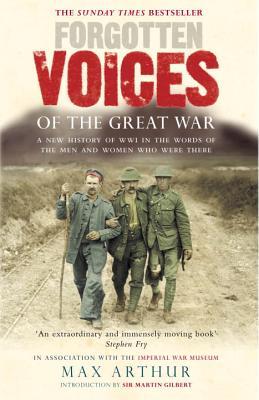
Forgotten Voices of the Great War
Ebury Press
2003
In 1972 The Imperial War Museum began the task of finding the ordinary veterans and survivors of the First World War. This book records the experiences of the ordinary men and women of the Great War who share their stories in this fine collection of reminisces and recollections of what it was like to live during this troubled time in world history. 

From the mundane to the complex each of the stories have a special poignancy, not just because these brave people are now forever lost to us but also because their wealth of knowledge and experience will stand the test of time, and will be part of our collective history forever .

The book is divided into years from 1914-1918 and I've found it very useful in trying to experience just what was being seen, and of the myriad of emotions which, in so many cases, are heartbreaking and occasionally, strangely uplifting.

From an entry dated...July 18th 1918

Captain Reginald Thomas, Royal Artillery

"It was a magnificent sight as the French cavalry came out of the forest at Soissons. Their uniforms were all new, bright blue, every bit and spur-chain was burnished and polished; their lances were gleaming in the sun; and as the bugler blew the charge the horses went into the gallop in a fan attack-two regiments of French cavalry, They went along beautifully, magnificently, through the wheat field in the afternoon sun..."

The stories within Forgotten Voices of the Great War are taken from the sound archives of the Imperial War Museum and after hundreds of hours and unlimited access to the complete WW1 tapes, the author, Max Arthur and his researchers have created this unique insight into WW1 as related by those ordinary men and women who experienced it first hand.


 ~****~

Sunday, 24 June 2018

Sunday WW1 Remembered..


Over the last four years of adding WW1 information onto my blog I have found lots of books really interesting so I thought it was time to share them.

Some, like this one have been featured before, but its always worth a reminder.


22292393
AA Publishing
August 2014

My thanks to the publishers for my copy of this book

In Men of Letters, the author has with considerable skill, given the men of the Post Office Rifles their own very special voice and in a series of personal stories, poignant letters and diary entries, their life at the front becomes a heart rending chronicle of war. Their social observations forcibly remind us of just what life was like at the front, the interminable boredom of long periods of time closeted in the murk and mud of the French countryside, balanced against the shock of the sniper’s bullet and the agonising terror of waiting for the call to go over the top. It is especially heart breaking to realise that over 1500 of them didn’t make it to the end of the war.

In this evocative retelling of the history of the men of the Post Office Rifles, I was forcibly reminded of just how the Great War impacted on the lives of men and women, and of how the ordinary man in the street rose to the challenge of the call to arms. With over 10,000 registered letters per month reaching the Western front, I had never visualised the effort that it took to get the morale boosting mail packets to the men, and yet, whilst the Post Office rifles were made of up from the ranks of postal workers, they were very much part of the fighting force and acted honourably and with great courage under enemy bombardment.

The book is easy to read and well divided into understandable chapters, which cover the involvement of the Post Office Rifles,from the Battle of Festubert during the spring offensive in May 1915, through to their involvement in the Battle of Passchendaele in 1917. The sensitive use of personal documentation highlights the very human face of war and as names begin to crop up in the narrative, I found that I formed an emotional attachment to many of them, and seeing their photographs and reading their memories emphasised to me in a very poignant way, that these are real stories and not just dusty records from the annals of history.

We owe a huge debt of gratitude to, not just the men of the Post Office Rifles, but also to the many thousands of young men and women, who gave their lives unquestionably and who with pride and patriotism served their country in a war they really didn’t fully understand.


~****~