Showing posts with label Myth and Legend. Show all posts

Tuesday, 10 September 2024

๐Ÿ“– Blog Tour ~ Goddess with a Thousand Faces by Jasmine Elmer


Renegade Books
12 September 2024

Thanks to the publisher for the invitation to the blog tour


Goddess with a Thousand Faces is the first of its kind, blending multiple genres to create an accessible read for everyone. It offers a fresh and necessary perspective on the ancient world, transcending culture, race and time. 

Steeped in ancient magic, dark divinity and wild ways, Goddess with a Thousand Faces takes you on a historical journey like no other... 

Blending mythological retellings with historical research, and stunning illustrations, Goddess with a Thousand Faces traverses the world and transports through time to bring ten formidable and inspiring ancient goddesses to life. Meet Artemis, the Greek goddess of the wilderness, never without her bow and arrow; Sedna, Inuit goddess of the ocean, guarding the icy waters and all its creatures; Isis, Egyptian goddess of healing, who dwells by the River Nile, just to name a few...

Jasmine Elmer explores these goddesses of our past, uncovering their truths, their rebellion and their freedom. For too long, they have been written out of history; lost to the sands of time and stamped into silence. Goddess with a Thousand Faces restores these women to their deserving glory.

Pour over this treasure trove of myths, legends and mighty goddesses. Hear the messages echoing through the ages and see yourself in the faces of these icons. For while their stories might be ancient, today they are more important – and more powerful – than ever.


๐Ÿ“– My Review...


As an introduction to Goddess mythology this book works extremely well and for someone like me with no prior knowledge at all I found it to be both absorbing and informative on an easy to understand level. Nicely divided into clearly defined chapters, each one explains in more detail the chosen goddesses from around the world. There are those who we may have heard of like Freja, the Icelandic Goddess from Viking mythology, Artemis from the Greek, and Isis, the Egyptian Goddess of Healing, Magic and Wisdom and then lesser known Goddesses such as Sedna, the Inuit Goddess of the Sea and Marine Animals,  and Kali, Hindu Goddess of Time, Death and Destruction. The remaining five Goddesse, Rangda, Inanna, Mawu-Lisa, Hine-nui-pล, Huitaca, are equally as fascinating as the author describes in detail their power and ancient wisdom, and brings each one to life in intricate detail. Each Goddess is beautifully illustrated in simple black and white line drawings which emphasise their power and gives each one a distinct personality. 

This is one of those lovely books which educates as well as entertains and whilst it is perfectly possible to read in sequential order, I found myself dipping into and out of the book at whim, initially choosing the Goddess who appealed the most and then retracing my steps and going back to re-read something I had missed on my first time around. Well written, and well researched, with an informative bibliography, there is much to discover in Goddesses with a Thousand Faces a non-fiction book which brings the ancient myths and legends to life in a meaningful way and which also adapts them for a modern readership.


About the Author


Jasmine Elmer is a straight-talking ancient world expert. Deciding her subject needed a 'glow up', she began her mission in 2020 to make the subject relatable and representative. Outside of writing, she spends her time bringing that energy to television screens, appearing on broadcast channels such as Channel 4, Channel 5 and National Geographic, as well as hosting and featuring on many podcasts. Her podcast Legit Classics has a mission to make everyone love the Classics as much as she does.

Her debut book Goddess with a Thousand Faces is a bold exploration of world goddesses, blending storytelling with historical fact. It follows years of research as a student at universities like UCL, Cambridge and Exeter and a career as a secondary school teacher of Classics. She is of dual heritage, Pakistani and white, and her mother was born in Canada. She grew up in East London but now lives in Exeter, Devon with her husband and son. She has five cats and is absolutely not ashamed of that fact! When she has some downtime, she loves spending time in nature, curling up with a good book and a hot choc, and having a laugh with her friends. She flits between meditation and being frazzled. Such is life.


X @jasmine_elmer

X @dialoguepub

X@midascampaigns


Friday, 11 October 2019

Blog Tour ~ Foxfire, Wolfskin and other stories of Shapeshifting women by Sharon Blackie


Delighted to be taking part in this Blog Tour


September Publishing
2 October 2019

My thanks to the publishers, Ruth Killick Publicity and Random Things Tours for my copy of this book
and the invitation to be part of his blog tour


Charged with drama and beauty, this memorable collection by a master storyteller weaves a magical world of possibility and power from female myths of physical renewal, creation and change. It is an extraordinary immersion into the bodies and voices, mindscapes and landscapes, of the shape-shifting women of our native folklore. We meet the Water Horse of the Isle of Lewis, the huldra, the Scandinavian supernatural forest-dweller, and Baba Yaga of Slavic folklore (but will she help you or kill you?) Here too is the Snow Queen; the wild bird-woman of the Sliabh Mis Mountains; Blodeuedd, the Welsh ‘flower-faced’ woman.


Illustrations by Helen Nicholson


Drawing on myth and fairy tales found across Europe – from Croatia to Sweden, Ireland to Russia – Sharon Blackie brings to life women’s remarkable ability to transform themselves in the face of seemingly impossible circumstances. These stories are about coming to terms with our animal natures, exploring the ways in which we might renegotiate our fractured relationship with the natural world, and uncovering the wildness – and wilderness – within.


What did I think about it..

There’s something quite special about the myths and legends which give a country its identity. Stories which reach through the mists of time, soaking into our subconscious, so that whilst we don’t always know where they originated, we remain emotionally connected to the haunting quality of their particular brand of magic.

In this extraordinary collection we allow our imagination full reign in stories which set fire the soul, which are in turn both mournful and uplifting, hauntingly beautiful and inherently dangerous. Beautifully written and highly original in their delivery, the author’s natural story-telling ability shines through with every well written word, capturing the very essence of our long forgotten myths and folklore.

Every reimagined story has its own unique strength and yet there is something distinctly fascinating to be found in all of them. The thirteen stories vary in length, some are quite short, just a couple of pages, whilst others are a little longer, however, collectively, they form a wonderfully diverse mixture which are supported by stunning black and white illustrations. I have several favourites amongst the thirteen and in particular I would like to mention Wolfskin, Foxfire and Snow Queen as being stand out stories for me. At the back of the book is a fascinating notes section where the author explains the origins, placing the stories in their historical and geographical context.

This is a really special collection of haunting stories which I’m sure will appeal to anyone who has an interest in the old tales of myth and folklore.


Dr Sharon Blackie is a writer, mythologist and psychologist, and an internationally recognised teacher of the mythic imagination. Her bestselling book, If Women Rose Rooted, won a 2016 Nautilus award, and laid out a haunting heroine’s journey for every woman who finds power, inspiration and solace in the natural world. She has an international following through her online communities, and the courses and workshops she offers through ‘The Hedge School’. Her first novel, The Long Delirious Blue, was described by the Independent on Sunday as ‘hugely potent’. She lives in Connemara, Ireland. 


Twitter  #FoxfireWolfskin

@septemberbooks

@RKbookpublicist

#RandomThingsTours


Thursday, 31 May 2018

Blog Tour ~ Breaking the Foals by Maximilian Hawker


Jaffareadstoo is delighted to be part of the blog tour for Breaking the Foals


My thanks to the author for his guest post and also to Random Things Tours for the invitation to be part of this blog tour.


It is with great pleasure that I introduce the author, Maximilian Hawker,
to the blog today with this lovely guest post, featuring a rather special, Bronze-Age Jaffa


Jaffa, though a 21st-century cat, would find plenty to enjoy in Bronze-Age Wilusa. Of course, he’s a brilliant ginger in colour, but the Aegean sun would lighten his fur and his perpetual hunt for food should keep him lean and agile. By day, he would have wandered Wilusa’s lower town, ears twitching at the myriad tongues bartering through marketplace trade. But Jaffa is, first and foremost, a cat, which means he shelters somewhere shady – perhaps in a mud-brick house – and sleeps. 

By night, Jaffa would have been in his element. Here he’d finds the bawling of intoxicated men; epic conflicts between stray dogs for fly-licked chunks of meat; other cats chanting poetry, simmering for love; and lung-rattling babies plundering the night for its natural peace. Beneath his paws, the dusty roads are finally cool and, above him, a perfectly starlit sky is incomprehensible. Further on, Jaffa goes, into the shadowed streets, where he cannot comprehend the girls, strolling in twos or threes, anticipating sales of intimacy to whichever drunk stumbles upon them first. His nose twitches as he finds balding men with grating voices selling skewered chunks of hissing meat, fresh from outdoor grills, to passing strangers who, having spent the evening drinking and smoking, have an overwhelming urge to feed. 

Moving up from the depths of the lower town, he passes men holding large trays, upon which are scores of luck charms: poorly devised items of thin metal with – so the traders promise – the miraculous ability to protect the bearer from muggers, hangovers and the inevitable verbal assault of a wife angered by her husband’s late-night drinking sessions. 

Jaffa slips past several guards – one shooing him along – and he saunters through a gate into the upper town, domain of the rich and royal. From the heights of the upper town, which inclines steeply, the view of the lower is comprehensive and, come sunrise, the streets will be visibly speckled with shards of clay pots, forgotten items of clothing and estuaries of urine. The Hittites did not worship cats in the same way as the Egyptians, but this doesn’t prevent a temple servant from bringing a bowl of water and some excess sardines out to Jaffa, stroking him briefly, before being yelled at by a priest to get back to work – ‘You think I keep you so you can play with animals, eh!?’ Jaffa enjoys his little treat but is not deterred from pressing on towards his ultimate destination. 

The palace looms white and impressive on the crest of the hill and it is there that a form of luxury awaits Jaffa befitting only of cats and royalty. He doesn’t attempt to make an entrance through the main doors – he’s a cat after all, not a foolish dog – and shadows into the manicured gardens where olive trees and wild flowers abound. The smell wafting out from the kitchen windows is tempting, but Jaffa has an altogether different destination in mind. He springs silently up to a window that leads into a sconce-lit corridor, walls stucco-covered and ruddy with images of gods, festivals and all manner of beasts that would be far more perturbing to Jaffa were they there in the flesh. 

Jaffa slinks out of the sight of servants, guards and dignitaries alike, their voices echoing around the palace – so much louder in his feline ears than in the weak ears of a human. He comes to a small chamber in which a boy sleeps, clinging on to a little ragdoll cat of his own. Jaffa jumps up onto the bed and settles into the quilt, licking at his paws as the pressure is relieved. He rests here awhile, soothed into sleep by the steady breath of the boy whose bed he has claimed for himself. When the sun-god, Appaliunas, draws up into a ruby sky in several hours, Jaffa will not have to hurry into the fields to start a day’s labour, nor sail out into an Aegean bay to net for fish – he is a cat, and cats have sat idly, contentedly, as human civilisation has flourished and fallen over the course of thousands of years. All he need worry about is fleas. 


Huge thanks to the author for this guest post,

Jaffa is thrilled to have featured in this extra-special and very exclusive story ๐Ÿ˜ป


Unbound Digital
April 2018

What's it all about ..

The Troy of myth was a real city and it was called Wilusa. This is its story... Hektor's life of privilege is forever changed when a man, allegedly possessed by the sun god, inspires revolution among the oppressed people of Wilusa. For Hektor, son of the city's despotic ruler, social equality contradicts every principle he has been taught. And his obsession with duty is alienating him from his own young son, Hapi, with whom he has a fractured relationship. But when Hapi's life is threatened, Hektor is compelled to question his every belief as he rebuilds his relationship with his child through the breaking of a foal. As Wilusa collapses into political violence and the commoners rise up, Hektor must finally decide whether to defend the people and lose his identity, or remain loyal to his irrational, dangerous father.


Maximilian Hawker is a 30-year-old writer who lives in Croydon, South London, with his wife and two daughters. He is author of the novel Breaking the Foals, due to be published with Unbound in March 2018. An alumnus of Kingston University, he has a postgraduate degree in English Literature and has worked in education, editorial and design. Currently, he works in frontline children's social care for Croydon Council, providing a service for care leavers and also runs a YouTube channel for looked after children and care leavers called formeR Relevant, which he aims to eventually promote at a national level. He has had poetry and short stories - occasionally nominated for awards - appear in publications run by Dog Horn Publishing, Kingston University Press, Arachne Press and Rebel Poetry, among others. He also aims to see the word 'asparagi' added to the English Dictionary, as its absence troubles him

Twitter @MaxHawker #BreakingTheFoals


Wednesday, 24 January 2018

Blog Tour ~ Aphrodite's Tears by Hannah Fielding


Jaffareadstoo is delighted to be hosting today's stop on the 


Aphrodite's Tears Blog Tour


36682445
London Wall Publishers
25th January 2018

My thanks to the author and publisher for the invitation to be part of this blog tour and for my copy of the book

I am delighted to welcome back to the blog one of my favourite authors.

I asked Hannah where she got the inspirations for Aphrodite's Tears...

Inspirations for my new novel, Aphrodite’s Tears


The seeds for Aphrodite’s Tears were sewn in my childhood. Firstly, through the Greek people I met who told me all about their country and its traditions (I grew up in Alexandria, Egypt, at a time when it was a very cosmopolitan place, and many of my parents’ friends and my school friends were Greek). Secondly, and importantly, through my family’s love of storytelling, which introduced me to Greek mythology.

It was a children’s book that first opened my eyes to these fantastic stories. I remember it as well-thumbed, with a cracking spine, and falling open on certain stories I loved: Persephone and Hades, King Midas and the golden touch, Theseus and the Minotaur (although the Minotaur illustration would frighten me). My governess read this book over and over to me, as did my parents, and I lived the stories in my imagination.

The stories of Greek mythology stayed with me over the years, and when I had my own children, I was able to rediscover them all over again; and then, more recently, once more with my grandchildren. The more I read these stories, all different versions of them, the more they ignited sparks in my imagination – I wanted to write something infused with these ancient tales.

Beyond my love of legends, though, Greece had become a natural choice for the setting for a novel because of my history with the country. Where better to situate a romance than where I have experienced some of my own most romantic moments? I bought my wedding dress in Greece, and I honeymooned there, on the Greek islands. The stunning sunset that Damian and Oriel watch together on Santorini in Aphrodite’s Tears… I have seen that myself, many times, and each time it has taken my breath away.

As well as the romance of Greece, the values of the Greek people struck a chord with me. In Aphrodite’s Tears, I conceived a story that focuses on a tight-knit community, isolated from others, in which tradition and family are very important. From my travels in Greece, I knew that the Greek island setting would be a good fit. Helios is the kind of island I think many of us would love to escape to, where traditional values are still important and family is at the heart of everything. I remember learning that according to Greek customs a man should still ask a father for his daughter’s hand in marriage, and thinking: ‘This is the place for a love story.’

Greece is a very special setting for me, and it is one I know well. ‘Write about what you know’ is an old adage, but an apt one – my novels are always set in places that have meaning for me. I would add, however, that is just as important to write about what inspires you. Greece – its people, its customs and traditions, its history, its legends, its landscapes – this place inspires me. For as the Romantic poet Percy Bysshe Shelley put it: ‘We are all Greeks. Our laws, our literature, our religion, our arts have their root in Greece.’

Huge thanks to Hannah for this fabulous guest post.


Twitter @fieldinghannah # AphroditesTears


Aphrodite’s Tears is out in paperback on 25th January for £7.99


Do visit the other blog tour stops


Tuesday, 14 February 2017

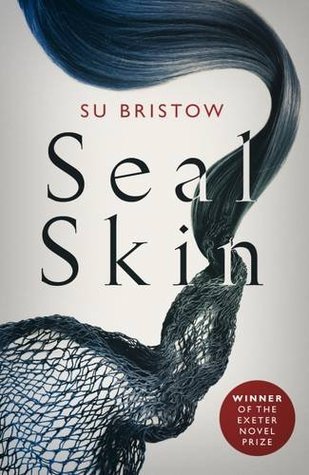
Review ~ Sealskin by Su Bristow


32713449
Orenda Books
2017


What's it all about..

Donald is a young fisherman, eking out a lonely living on the west coast of Scotland. One night he witnesses something miraculous, and makes a terrible mistake. His action changes lives—not only his own, but those of his family and the entire tightly knit community in which they live. Can he ever atone for the wrong he has done, and can love grow when its foundation is violence? Based on the legend of the selkies—seals who can transform into people—evokes the harsh beauty of the landscape, the resilience of its people, both human and animal, and the triumph of hope over fear and prejudice. With exquisite grace, Su Bristow transports us to a different world, subtly and beautifully exploring what it means to be an outsider, and our innate capacity for forgiveness and acceptance. Rich with myth and magic, Sealskin is, nonetheless, a very human story, as relevant to our world as to the timeless place in which it is set.

Out now in ebook @OrendaBooks


What did I think of it..

The myths and legends of our isles and islands are in the very fabric of our bones, they're in the call of the wind and in the ebb and flo of our tides. They come to us in the memories of those who have gone before us, and are as familiar as family, and yet, can also be as uncomfortable as a stranger in our midst.

Sealskin is a story that starts with a great wrong. A wrong so wrong that it may never be put right, but it's also about the power of love, the inherent need for forgiveness and the genetic call of the wild, which lives in all of us.

The writing is wonderfully lyrical with words that have magic and meaning and yet, there is also the irresistible simplicity of silence when everything is conveyed by a look and or a glance and in the soft touch of hands which say ‘I remember’ far more eloquently than any words. Sealskin shows us that love, in its many guises, can bring us together or it can tear us apart. It can be the most glorious feeling in the world or it can devastate us so much that we become as jagged as a stone.

In many ways Sealskin acts a cautionary warning, which leaves us in no doubt that, for all of our actions, be they good or bad, there is always a price to be paid, and reminds us that, so often, after great happiness comes great hurt. And yet, for all of its inherent sadness, there is also celebration and, ultimately, Sealskin is a glorious love story to the myth and legend of our shared heritage. 

There is no doubt that the literary magic lingers long after the last beautifully written word is ended. He does not forget, and neither will I.


Best Read with... A single malt whiskey, pure and clear, with the irresistible tang of generations of peat fires.


About the Author


Su Bristow is a consultant medical herbalist by day. She's the author of two books on herbal medicine: The Herbal Medicine Chest and The Herb Handbook; and two on relationship skills: The Courage to Love and Falling in Love, Staying in Love, co-written with psychotherapist, Malcolm Stern. Her published fiction includes 'Troll Steps' (in the anthology, Barcelona to Bihar), and 'Changes' which came second in the 2010 Creative Writing Matters flash fiction competition. Sealskin is set in the Hebrides, and it's a reworking of the Scottish and Nordic legend of the selkies, or seals who can turn into people. It won the Exeter Novel Prize 2013. Her writing has been described as 'magical realism; Angela Carter meets Eowyn Ivey'.


Follow on Twitter @SuBristow #Sealskin

@orendabooks


~***~

Tuesday, 29 September 2015

The author in my spotlight is ...Melissa Bailey


I am delighted to introduce the author


Today she is talking about her latest book

Beyond the Sea


Arrow
July 2015


Melissa ~ welcome to Jaffareadstoo and thank you for sharing your thoughts about Beyond the Sea...


Your latest novel Beyond the Sea is set in the Hebrides. How important is location to your writing, and did you visit any of the places you describe so vividly in your novel?
Setting is really important. Before I knew very much at all about the novel, I knew that it would be set in the Hebrides. It’s a wild, remote part of the world with ever changing weather and tides. It seemed to be the perfect location for my protagonist Freya, a woman grieving the loss of her husband and son – a true reflection of her loneliness and turbulent emotional landscape.
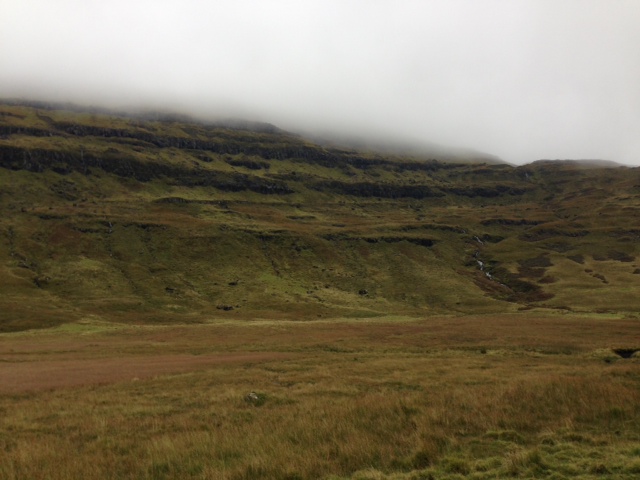
Glen More


A849 - view toward the Burg


I travelled to Mull to research some of the places that are mentioned in the novel. I took the ferry from Oban on the Scottish mainland to Craignure, the same journey that Freya takes in Chapter 1 of the novel. I then drove along the A849 to Fionnphort (the same route that Freya also takes), past towering Ben More and across the desolate glen at its feet. I passed Loch Scridain (the loch that Torin lives beside) and watched the sunshine turn its seawater from slate grey to brilliant blue.


Loch Scridain


I visited Knockvologan on the south of the island, waited until low tide, and then crossed the exposed white sand beaches of the tidal island of Erraid (the setting for Robert Louis Stevenson’s Kidnapped). I trekked past the now abandoned lighthouse keepers’ cottages and tried to imagine what it would be like to live on a tiny island like this, isolation complete when the sea rolled back in. From there, out in the vastness of the ocean, I caught sight of the ominous lighthouse, Dubh Artach, which gets a few mentions in the novel. I made a later visit to Skye and travelled to Neist Point lighthouse, one of the inspirations for Freya’s lighthouse in the novel. It’s built in an incredibly beautiful but immensely isolated spot.


Loch Linnhe Lighthouse
One of the Lighthouses used as inspiration for Freya's Lighthouse


Beyond the Sea is a story about sadness, secrets and folklore – in your research for the novel; did you discover anything which surprised you?
I found out so many strange things - from accounts of mermaid sightings, to vanishing lighthouse keepers, to the discovery of perfectly preserved objects that had been on the sea bed for nearly 400 years.
I came across a great literary anecdote when I was researching the Corryvreckan, the whirlpool between the islands of Jura and Scarba, which also features in the novel. I discovered that George Orwell (who went to Jura in 1947 to complete the first draft of the novel which would become Nineteen Eighty-Four) once nearly drowned in the whirlpool when he was caught out there in rough seas. He was ultimately stranded with his two friends and his three year old son on Eilean Mor, a skerry south of the whirlpool, when their rowboat capsized on it. They were later rescued by passing lobstermen. I also subsequently found out that Orwell’s one legged brother-in-law, Bill Dunn, was the first person to swim across the Gulf of Corryvreckan!


Another thing that surprised me was not only the sheer number of shipwrecks which have occurred in Scotland but as a result the number of lighthouses that were built around the Scottish coast (over 150 by the Stevenson family alone). I read a large number of interviews with lighthouse keepers about the realities of tending the lamp - tales of isolation, depression and the primitive conditions in which they had to live. One account told how the keepers on a tower far out at sea had two buckets for their daily ablutions - one was for washing; the other was their toilet which they emptied by flinging the contents off the top of the tower. So it was important to check the way the wind was blowing before doing so!

Where do you get your inspiration for a story from – are you inspired by people, places or do you draw purely from your imagination?
My books usually start with a single image which has taken root in my mind. In The Medici Mirror it was a darkened mirror. In Beyond the Sea it was a woman, Freya, her hair turned white in grief, standing on a beach, a lighthouse in the near distance behind her.
I then do huge amounts of research to help me find the story. For Beyond the Sea I read lots and lots of books on the Scottish islands - the history, the landscape, the sea, the people. Through this the strands of the novel began to emerge - the historical thread with its soldiers, storms and sea battles; Freya’s emotional and physical journey, the old keeper, Pol telling her stories of when he once worked at her lighthouse, her blind friend, Torin, possessed of the second sight common in the islands, giving her warnings along the way. I read fairy tales – the fabulous ‘Wonder Tales from Scottish Myth and Legend’ by Donald Mackenzie – and stories of magical islands, mermaids and dark Beira, the Queen of Winter began to feed into my story. And slowly but surely it all began to come together.

Beyond the Sea is your second novel, The Medici Mirror, being the first – did you feel more of an obligation to make this second book even better than the first?
Yes, without a doubt. I think every writer feels that way. Ultimately it’s not good to dwell too much on that as it can inhibit you. But you keep working away at it, hoping that you’re making progress, that you’ve learnt a lot from the mistakes you made in the first novel and that your writing is improving. But you never know for sure, so there’s always a large element of hope!

What do you hope readers will take away from your stories?
I hope with Beyond the Sea that readers will come away with a keen sense of place, of the beauty and magic of the Hebrides, and a desire to visit the islands and perhaps the places that are mentioned in the novel. I also hope they’ll be touched by the characters within that landscape, particularly Freya, and come away from the world of the novel with a sense of consolation. Finally, I found the stories from the Hebrides really fascinating - a rich combination of history, myth and fairy tale. I hope readers found them equally interesting and discovered a few things they didn’t know before!

What can we look forward to next?
I’m in the process of writing a third novel. I love dark topics - betrayal and black magic in The Medici Mirror, grief in Beyond the Sea. The next book focusses on madness.


All photographs by kind permission ©Melissa Bailey


Huge thanks to Melissa for sharing her inspiration so eleoquently. I really feel like I have visited this beautiful part of the world. 

My review of Beyond the Sea is here.


Melissa is very kindly giving away a copy of Beyond the Sea to one lucky UK winner of this giveaway


a Rafflecopter giveaway


Good Luck


~***~