Showing posts with label Fairy tale. Show all posts

Thursday, 20 March 2025

๐Ÿ“– Book Review ~ Bitter Greens by Kate Forsyth

Allison and Busby
20 March 2025

Thanks to the publisher for the opportunity to read this book 


Three women bound together by the strands of fate

Charlotte-Rose de la Force, exiled from the court of the Sun King Louis XIV, has always been a great teller of tales.

Selena Leonelli, once the exquisite muse of the great Venetian artist Titian, is terrified of time.

Margherita, sold by her parents for a handful of bitter greens, is trapped in a doorless tower and burdened by tangles of her red-gold hair. She must find a way to escape.

Bitter Greens is a dark, beautifully written retelling of the Rapunzel tale, interwoven with the story of one of the tale’s first tellers. 


๐Ÿ“– My Review

I’ve always loved fairy tales, from my very first, and now rather battered copy of Grimm’s Fairy Tales, to this sumptuous retelling of the story of Rapunzel. The author shares with us the gift of her imagination as she vividly brings to life Charlotte-Rose de Caumont de la Force who had been exiled to a nunnery by the Sun King, Louis XIV. Charlotte was a real person, a teller of tales and it is her 1698 story, Persinette, which inspired the Grimm’s version of Rapunzel.

The story gets off to a bit of slow start but once the main threads of the story come together then it becomes a clever mixture of history, fantasy and fairy tale. It’s always difficult to recreate an old story which has been previously well told but the author does a good job of breathing new life into an old tale. I enjoyed Charlotte-Rose’s story, she’s a fascinating character and a strong woman when women were not treated very well. As a lover of fairy tales I was equally enthralled with Marguerite and Selina both of whom bring everything together in a fascinating way. 

It’s been well worth a re-read as Bitter Greens was previously published in 2013. Its bright and attractive new cover art will certainly help to bring the book to a new audience.


X @KateForsyth
X @allisonandbusby


Thursday, 20 January 2022

Author Interview ~ Nicholas Jubber


On Publication Day of The Fairy Tellers I am delighted to welcome its author


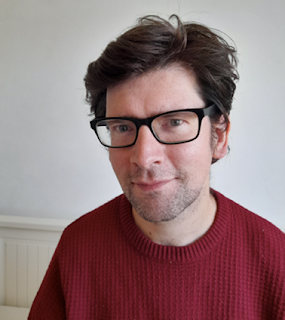
Nicholas Jubber


to tell us more about his book


Welcome to Jaffareadstoo, Nicholas, thank you for spending time with us today.  What inspired you to write The Fairy Tellers?


Fairy tales thrilled me in childhood - classics like ‘The Snow Queen’, ‘Rumpelstiltskin’, ‘The Ebony Horse’. I’d imagine myself riding on a reindeer’s back like Gerda or working the levers of the wooden horse like the Arabian prince. As a student, I wrote and put on a play about fairy tale characters, and found these stories were still bubbling in my head. So when, a decade and a half later, I was looking for stories to tell my children, the traditional tales weren’t very far out of mind. But now I was itching with a particular question: who were the people behind these tales? This question came partly from my lifelong interest in fairy tales, and partly from my curiosity about what goes on behind the scenes - whether it’s at the theatre, movies or anything else. So that set me on a quest to learn about some of the long-ago tellers of tales and the lives they led.


Where was your starting point? And how did you decide which fairy tellers to write about?


There were so many potential starting points, such as the first written ‘Western’ fairy tale, from 2nd century North Africa, or a 9th century Chinese version of Cinderella, or a medieval Indian story collection - which features prominently in the book. But I decided to start in Naples with Giambattista Basile, a charismatic storyteller who was kicked around the courts of 17th century Italy, often in the wake of his singing sensation sister Adriana. Giambattista’s book, The Tale of Tales, is a charming and often surprising anthology of fairy tales, and it’s the first written European fairy tale collection, with early versions of iconic tales such as ‘Cinderella’, ‘Sleeping Beauty’ and ‘Rapunzel’, so I felt it was a good entry point. Plus, Giambattista’s world is still wonderfully accessible: for all that Naples has changed over the centuries, the raucous atmosphere of his time still hums through its streets.

As for choosing which fairy tellers to write about - this came about organically. I wanted to cover a wide spectrum of the world and a wide spectrum of stories. I was keen to include a range of tellers, women and men, people from different social and ethnic backgrounds, and people who covered different angles on ‘fairy-telling’ - inventors of tales like Hans Christian Andersen, collectors of tales like Ivan Khudiakov, and the sources who told tales to collectors, like Dortchen Wild. I spent a lot of time thinking about this selection, so I hope it offers the reader a varied and interesting cross-section of fairy tale history.


What were the challenges?


I had already done a lot of travel and research when the pandemic struck. In early 2020, I’d been travelling between Italy, France and Germany, and was attending a witches’ festival in the Black Forest, when I learned that Northern Italy had transformed into a central zone of the virus. The lockdowns forced me to change many of my plans. I found myself looking back at notes from travels in places like Kashmir and Syria, exploring the lives of storytellers like the medieval Indian poet Somadeva and the 18th century teller of ‘Aladdin’, Hanna Dyab, through my jottings from those journeys. I sought out experts around the world, received documents from Delhi, Berlin and Kiev, and spoke via Zoom to scholars and storytellers in America, India, Egypt, Russia and many other places, people who might have been harder to get hold of if they hadn’t been, like me, stuck at home. So, whilst it was a tricky time to write a book (especially with homeschooling two small children!), there were also opportunities that I might not have found if circumstances had been different.


In your research did you find anything that surprised you?


Lots of things surprised me. For example, discovering that the Italian storyteller Giambattista Basile drank at the same Neapolitan taverna around the same time as the painter Caravaggio, who was wounded there in the early 17th century; or that Hans Christian Andersen visited the Brothers Grimm in Berlin and was very disappointed when Jacob Grimm admitted he’d never heard of him. These connections, joining up storytellers and other artists around the world, really fascinated me, as did the ways their lives were affected by the big events going on in the world around them - the impact of the Napoleonic Wars on the work of the Brothers Grimm, for example, as well as on the life of Hans Christian Andersen. Perhaps the biggest surprise was the life of the Russian storyteller Ivan Khudiakov. I’d originally planned to write about a completely different Russian storyteller, but when I started learning about Ivan’s extraordinary life - tramping around the villages of Russia in search of tales, and involving himself with ‘nihilists’ bent on assassinating the Tsar - I knew I’d have to scrap my previous plans and find out more about this strange, tragic figure. Many of the tales he collected lead to the macabre witch Baba Yaga and her hut on chicken legs, but in many ways Ivan’s life was even stranger, and darker!


Do you have a favourite fairy tale?


It’s hard to pick out one favourite! There are so many and I’ve been really excited by many tales that I didn’t know about before. But the one that’s stuck deepest inside me is ‘The Snow Queen’. I love the journey Gerda undertakes to rescue her friend Kai. As a child I dreamed of travelling by reindeer across Lapland like Gerda. On my journey, I got to meet a reindeer herder in Lapland and spend some time with his herd, and I also interviewed ballet performers in Copenhagen who were putting on a production of ‘The Snow Queen’. The costumes and sets were designed by Queen Margrethe, and I learned from the director of the show that ‘The Snow Queen’ is her favourite fairy tale too!


What do you hope readers will take away from The Fairy Tellers?


I hope readers will be introduced to many tales that haven’t been given the attention they deserve - wonderful tales like ‘The Flea’, about a princess forced to marry an ogre and how she escapes; or ‘The Golden City’, a mesmerising Indian tale about a gambler who sets out on an adventure in search of a mythical city, getting swallowed by a giant fish and riding a magical talking bird along the way. I hope they’ll feel they’ve dipped into the lives of the people behind these tales, and experienced the worlds they came from, and that they’re as excited as me by the way these stories connect around the world.


How can readers find out more about you and your work?


You can find out more at my website www.nickjubber.com, or you can follow me on twitter @jubberstravels or see pictures from my travels on instagram - nick.jubber. I’m also hoping to do lots of talks and events about The Fairy Tellers, and I’ll be posting information about that on my website.

The Fairy Tellers: A Journey into the Secret History of Fairy Tales is published by John Murray Press, priced at £20 and available online and from all good bookshops.


Nicholas Jubber has travelled in the Middle East, Central Asia, North and East Africa and across Europe. Along the way, he has worked as a teacher, carpet-washer and even had a stint as a tannery assistant. He has written three previous books, The Timbuktu School for Nomads, The Prester Quest (winner of the Dolman Travel Book Award) and Drinking Arak off an Ayatollah's Beard (shortlisted for the Dolman Award). He has written for numerous publications, including the Guardian, Observer, Globe and Mail, Irish Times and BBC History.


Twitter @jubberstravels  #TheFairyTellers


@BookPublicistUK


Huge thanks to Nicholas for spending time with us today. 

We wish you good fortune with your book.


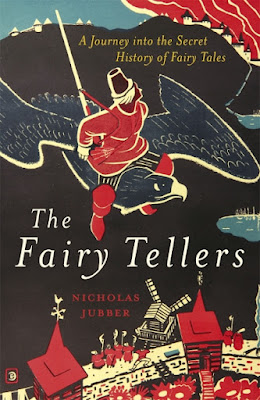
๐Ÿ“– Publication Day Book Review ~ The Fairy Tellers by Nicholas Jubber


John Murray Press
20 January 2022

My thanks to the publishers and Emma at the Book Publicist for my copy of this book


Fairy-Tales are not just fairy-tales: they are records of historical phenomena, telling us something about how Western civilisation was formed. In The Fairy Tellers, award-winning travel-writer Nick Jubber explores the secret history of fairy-tales: the people who told them, the landscapes that forged them, and the cultures that formed them.

While there are certain names inextricably entwined with the concept of a fairy-tale, such as the Brothers Grimm and Hans Christian Andersen, the most significant tellers are long buried under the more celebrated figures who have taken the credit for their stories - people like the Syrian storyteller Youhenna Diab and the Wild Sisters of Cassel. Without them we would never have heard of Aladdin, his Magic Lamp or the adventures of Hansel and Gretel.

Tracking these stories to their sources carries us through the steaming cities of Southern Italy and across the Mediterranean to the dust-clogged alleys of the Maghreb, under the fretting leaves of the Black Forest, deep into the tundra of Siberia and across the snowy hills of Lapland.

From North Africa and Siberia, this book illuminates the complicated relationship between Western civilisation and the 'Eastern' cultures it borrowed from, and the strange lives of our long lost fairy-tellers.


๐Ÿ“– My thoughts..

For me, there is something endlessly fascinating about fairy tales. I've loved them since I was old enough to listen and still enjoy reading tales from enchanted forests, of witches and princesses, princes and demons. That the stories span history and continents, folklore and legend, is what makes each fairy tale so unique.

In The Fairy Tellers the author takes us a comprehensive journey into this magical world of landscape and culture, explaining the history behind the stories, the inspiration and the beguiling nature of tales from storytellers which have been handed down generation by generation until they have become as intrinsic a part of our collective culture as the air we breathe.

Reading like a travelogue and breaking down the book into seven distinct parts we get to learn more about the origins and connections of some of our well known fairy tales. I especially enjoyed the fairy story which heads each chapter and which whisk us away to a magical world. The quirky line drawings which are interspersed within the text also add a lovely sense of atmosphere.

Beautifully written, extensively researched, and as descriptive as a history book, I found The Fairy Tellers completely absorbing.  Dipping into and out of the book, at whim, I discovered things I didn't know about the origins of the long lost fairy-tellers, those shadowy people, whose bright imagination once brought all our classic fairy tales to vibrant life.


You can read an interview with the author by clicking here


Best read with...a glass of milk and chocolate chip cookies


Nicholas Jubber has travelled in the Middle East, Central Asia, North and East Africa and across Europe. Along the way, he has worked as a teacher, carpet-washer and even had a stint as a tannery assistant. He has written three previous books, The Timbuktu School for Nomads, The Prester Quest (winner of the Dolman Travel Book Award) and Drinking Arak off an Ayatollah's Beard (shortlisted for the Dolman Award). He has written for numerous publications, including the Guardian, Observer, Globe and Mail, Irish Times and BBC History.


Twitter @jubberstravels  #TheFairyTellers


@johnmurrays

@BookPublicistUK


Friday, 11 October 2019

Blog Tour ~ Foxfire, Wolfskin and other stories of Shapeshifting women by Sharon Blackie


Delighted to be taking part in this Blog Tour


September Publishing
2 October 2019

My thanks to the publishers, Ruth Killick Publicity and Random Things Tours for my copy of this book
and the invitation to be part of his blog tour


Charged with drama and beauty, this memorable collection by a master storyteller weaves a magical world of possibility and power from female myths of physical renewal, creation and change. It is an extraordinary immersion into the bodies and voices, mindscapes and landscapes, of the shape-shifting women of our native folklore. We meet the Water Horse of the Isle of Lewis, the huldra, the Scandinavian supernatural forest-dweller, and Baba Yaga of Slavic folklore (but will she help you or kill you?) Here too is the Snow Queen; the wild bird-woman of the Sliabh Mis Mountains; Blodeuedd, the Welsh ‘flower-faced’ woman.


Illustrations by Helen Nicholson


Drawing on myth and fairy tales found across Europe – from Croatia to Sweden, Ireland to Russia – Sharon Blackie brings to life women’s remarkable ability to transform themselves in the face of seemingly impossible circumstances. These stories are about coming to terms with our animal natures, exploring the ways in which we might renegotiate our fractured relationship with the natural world, and uncovering the wildness – and wilderness – within.


What did I think about it..

There’s something quite special about the myths and legends which give a country its identity. Stories which reach through the mists of time, soaking into our subconscious, so that whilst we don’t always know where they originated, we remain emotionally connected to the haunting quality of their particular brand of magic.

In this extraordinary collection we allow our imagination full reign in stories which set fire the soul, which are in turn both mournful and uplifting, hauntingly beautiful and inherently dangerous. Beautifully written and highly original in their delivery, the author’s natural story-telling ability shines through with every well written word, capturing the very essence of our long forgotten myths and folklore.

Every reimagined story has its own unique strength and yet there is something distinctly fascinating to be found in all of them. The thirteen stories vary in length, some are quite short, just a couple of pages, whilst others are a little longer, however, collectively, they form a wonderfully diverse mixture which are supported by stunning black and white illustrations. I have several favourites amongst the thirteen and in particular I would like to mention Wolfskin, Foxfire and Snow Queen as being stand out stories for me. At the back of the book is a fascinating notes section where the author explains the origins, placing the stories in their historical and geographical context.

This is a really special collection of haunting stories which I’m sure will appeal to anyone who has an interest in the old tales of myth and folklore.


Dr Sharon Blackie is a writer, mythologist and psychologist, and an internationally recognised teacher of the mythic imagination. Her bestselling book, If Women Rose Rooted, won a 2016 Nautilus award, and laid out a haunting heroine’s journey for every woman who finds power, inspiration and solace in the natural world. She has an international following through her online communities, and the courses and workshops she offers through ‘The Hedge School’. Her first novel, The Long Delirious Blue, was described by the Independent on Sunday as ‘hugely potent’. She lives in Connemara, Ireland. 


Twitter  #FoxfireWolfskin

@septemberbooks

@RKbookpublicist

#RandomThingsTours


Thursday, 14 March 2019

Blog Tour ~ The Silver Moon Storybook by Elaine Gunn


Jaffareadstoo is thrilled to be part of the blog tour for The Silver Moon Storybook


My thanks to the author and Kelly at Love Books Group Tours
for my copy of this book and the invitation to be part of the tour


What darkness lies in the past of a little witch, cursed into the shape of a giant? Who will save a magical unicorn, imprisoned for generations in the castle of a tyrant? As the silver moon rises in the sky, an enormous clown and a powerful siren join a humble weaver and other enchanting characters in these haunting tales of illusion, discovery and love. 

An exquisitely illustrated bedtime story for the age of #MeToo, The Silver Moon Storybook transforms themes of modern feminism into touching fables full of the magic and shadows of traditional fairy tales.


My thoughts..

The Silver Moon Storybook is a beautiful selection of fairy stories, written with a lovely lightness of touch which makes reading the seven stories within the collection such a joy.

There's a real skill to writing fairy stories, sometimes it just feels right, and The Silver Moon Storybook has such an authentic feel that I truly felt like I was reading the fairy tales of old without the obligatory grimness. I've always loved fairy stories, they entertain, and inform, and give a glimpse into a magical world which although is not of our time, it so easily could be, and this collection cleverly shows that there are many parallels within the world of magic.

The stories are sensitively written and send a strong message which I'm sure will appeal to both children and adults alike. The stunning black and white line drawings interspersed throughout the book are a lovely addition and really bring the stories to life in a very special way. The author offers the idea of colouring in the line drawings, which is a lovely idea and could make the book very personal, however like lots of readers I could no more colour in the pages of a book than I could fly to the moon, however, it's always there as an option, along with the author's great suggestion of downloading the pictures from her website, if, like me, you can't colour the actual pictures in the book ๐Ÿ˜Š

Beautifully written and presented, The Silver Moon Storybook is a really lovely collection of stories which are perfect for children...and adults.  I am sure that my copy will stay on my book shelf forever.


Elaine Gunn has been writing more or less constantly since she first picked up a pencil in primary school. Years of unpublished literary genius languish in handwritten journals, high school English portfolios, corporate banking reports and various awful pitch documents full of impeccably-written digital marketing jargon. Her first published work, The Silver Moon Storybook, is a collection of feminist fairy tales, written as an antidote to the passive princess culture that she became horribly aware of when her children started watching telly. Elaine is also a reiki practitioner and Dr. Hauschka esthetician.


Twitter @Elaine_Gunn #TheSilverMoonStorybook

#LoveBooksGroupTours


Tuesday, 7 August 2018

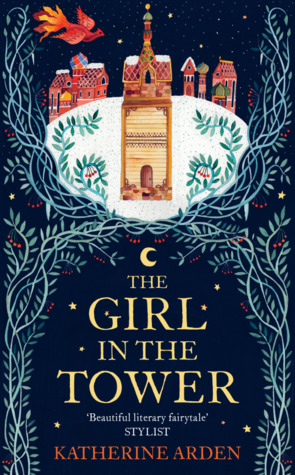
Blog Tour ~ The Girl in the Tower by Katherine Arden


Jaffareadstoo is delighted to be part of the Blog Tour for The Girl in the Tower


Del Rey an imprint of Ebury Publishing
Penguin Random House
9 August 2018

My thanks to the publishers and to Random Things Tours for the invitation to the blog tour and for my copy of the book

Inspired by Russian fairy-tales and folklore, this is the second book in a stunning literary trilogy. The perfect blend of historical fiction and magical realism, this series is for those readers who loved Naomi Novik’s Uprooted, Erin Morgenstern’s The Night Circus, and Philip Pullman.

What's it all about ...

For a young woman in medieval Russia, the choices are stark: marriage or a life in a convent. Vasya will choose a third way: magic...

The court of the Grand Prince of Moscow is plagued by power struggles and rumours of unrest. Meanwhile bandits roam the countryside, burning the villages and kidnapping its daughters. Setting out to defeat the raiders, the Prince and his trusted companion come across a young man riding a magnificent horse.

Only Sasha, a priest with a warrior's training, recognises this 'boy' as his younger sister, thought to be dead or a witch by her village. But when Vasya proves herself in battle, riding with remarkable skill and inexplicable power, Sasha realises he must keep her secret as she may be the only way to save the city from threats both human and fantastical... 

My thoughts...

This lovely story starts where book one of the Winternight trilogy left off and for readers of this series, this second book is no less fascinating than the first foray into the magical world of Russian folklore. 

Beautifully and imaginatively written, Vasya, is now grown to young womanhood, and in the face of great adversity, makes the momentous decision to decide her own way in life. With limited choices before her and with the prospect of marriage or of being sent to a convent not very appealing, Vasya undertakes a challenging journey into the unknown, which will see her placed in great danger. To say anything more about the story would be to spoil the desired effect and my best advice really is to start this trilogy from the beginning and enjoy the introduction to Vasya and her family from the very start of this fantastical adventure.

Medieval Russia with all its ancient traditions of storytelling and folk lore comes alive in The Girl in the Tower and there is such an element of magic and a kind of questioning wonder to be found in the story particularly as Vasya challenges those who seek more from her than she is prepared to give.

The author with great imagination and a genuine flair for story telling has certainly brought this world of magic and superstition to life in a believable way. I am already really excited to see how the trilogy concludes in The Winter of the Witch, which I believe is coming in January 2019.

I just need to add something about the book covers, they really are quite beautiful and compliment the story within perfectly.


36266080 35004343 38204046


Katherine Arden has studied Russian in Moscow, taught at a school in the French Alps, and worked on a farm in Hawaii. Born in Austin, Texas, she currently lives in Vermont. She is the author of the critically acclaimed The Bear and the Nightingale and The Girl in the Tower.


Twitter @arden_katherine #TheGirlInTheTower #WinternightTrilogy

@EburyPublishing

#RandomThingsTours


Wednesday, 6 July 2016

The author in my spotlight is...Valerie-Anne Baglietto


I am delighted to welcome to Jaffareadstoo the author


Hello Valerie-Anne and thank you for being my author in the spotlight today....


Tell us a little about yourself and what got you started as an author?


I was born in Gibraltar, but my family moved to England when I was three. My grandfather and great-grandfather were writers, and I don’t remember a time when I haven’t written myself, although those early ‘books’, stapled together by the nearest available adult, weren’t exactly complex. But I did illustrate them! The one I recall most vividly was a story about a little boy whose mother's nose was long and spiral-shaped. Over twenty years later, my first published novel – the rom-com THE WRONG SORT OF GIRL – won the Romantic Novelists' Association New Writer's Award. But my writing career coincided with the beginning of married life, and once babies and post-natal depression came along, my writing took a back seat for a few years. Recently, I’ve been working on contemporary fiction with fairy tale elements, and my latest, FOUR SIDES TO EVERY STORY, was shortlisted in the 2105 Love Stories Awards. I’m also the bossiest member of the Novelistas: a group of friends and writers based in North Wales, including the popular authors Trisha Ashley and Anne Bennett. We get together regularly for mutual support, while overdosing on cake and coffee, and we also have our own blog, Novelistas Ink.


Where did you get the first flash of inspiration for Four Sides to Every Story?


The inspiration for a novel with that title came to me on a train to Cardiff early in 2012, although I had no idea who exactly the four narrators were going to be. I always intended it to be a modern romance with a magical thread running through it, though, and I liked the idea that not all the narrators would be reliable, which would keep readers on their toes.


What came first – the idea or theme, the plot, place or characters?


The idea and the theme came first, and sprang from the title. I wanted to show how one plot can be viewed from a number of distinct perspectives. Like a bowl of fruit being drawn by four artists with varied styles. At the end of the day it’s the same bowl with the same fruit in it, but when the artists are finished you can guarantee you’ll have four very different paintings.


Your book is a mixture of romance, magic and fairy tale – explain to us a little more about the plot without giving too much away.


It’s essentially a love story, but not related solely from the hero and heroine’s viewpoints. Being a fairy tale, I brought in a fairy godmother, although much younger and less theatrical than the sort we’re used to. And although I had a ‘wicked’ stepmother in the plot, I used the outlook of an innocent stepchild as my fourth narrator. In spite of how it may sound, it’s very much a modern story, based in a picturesque, fictional village in Cheshire. It’s not set in a distant fairy tale land in some undefined era, it’s much more relatable to our own contemporary existence – even if the fairy godmother has no idea how to work an iPhone. There are no puffs of pink smoke, or wand-waving, or sprinkling of fairy dust to bring the hero and heroine together. It’s more the sort of match-making you’d find in Jane Austen’s EMMA, but the magic is there, woven subtly through the story. Oh, and there’s a twist. A massive one.


How do you plan your writing, and are you a plotter, or a see where it goes kind of writer?


Something in between, I’ve found. When I start work on a new project, I have a beginning, and I usually know where I want to end up, with a few important scenes along the way. I feel restricted if I plot too much. I really need a book to flow organically as I write. Saying that, I usually have a timeline (an old calendar that hasn’t been scribbled in works well for this) because it’s very easy to mess that up – I speak from experience!


What is your definition of writing Heaven and writing Hell?


I’m not sure if my answer is quite what you were after, but I did give it some thought and I wanted to be honest.

I think it’s wonderful that more writers than ever have the opportunity to get their work in front of a reader nowadays. With the boom of digital publishing, small presses and print on demand, there are so many avenues open to us, and we have the chance to experiment and push our writing in directions that might not have been available to us previously (writing Heaven). Larger publishers react to trends, but not all readers want to consume the latest crop of whatever’s ‘hot’. Authors can interact with readers directly now, and there’s the opportunity for more diversity because of that, if we choose to take it. But at the same time, this has led to the market rapidly becoming saturated, and for some authors, writing is just a hobby. This inevitably means there are fewer fulltime writers able to make a reasonable living.

For me, storytelling has been my profession for twenty years. I’ve studied the craft, and I continue to study it, and I work hard and persistently. But at times, it can be the most frustrating and demoralising of occupations (writing Hell), because so many people feel they can do it without any training or apprenticeship, and without much effort. For instance, I wouldn’t start plumbing in a sink; I have no idea what I’m doing. Or wiring an electrical socket. I could learn – maybe! – but that would take time. Yet there are people out there who pick up a pen and think that’s all it takes to call themselves an author, and there’s something disrespectful about an attitude like that.
(Rant over – sorry, Jo!)

Its not a rant at all, Valerie -Anne - glad to have your opinion...


And finally - how can readers find out more about you and your writing?


Well, it would be lovely if anyone did want to find out more, and hopefully I haven’t put anyone off! I enjoy interacting with other writers and readers on social media. You can find me here: Facebook and here: Twitter @VABaglietto, and I’m on Instagram as well: @valerieannewrites. I also have a website: www.valerie-annebaglietto.com, where you can contact me directly via email.


Before I go, I’d just like to say thank you, Jo, for having me here on your blog. I appreciate the opportunity, and I hope my answers haven’t bored anyone. My kids would be yawning by now, but I can’t use them as a gauge. I could probably tap dance in wellies wearing a sequined tutu, and I’d still be dull old Mum!


Huge thanks to Valerie-Anne for taking the time out of her busy schedule and for her insightful answers to my questions. It's been a real pleasure to have your company on the blog today.


~***~