Showing posts with label Author Guest Post. Show all posts

Thursday, 26 May 2022

๐Ÿ“– Blog Tour Review and Guest Post ~ The Trial of Lotta Rae by Siobhan MacGowan


Welbeck Publishing
26 May 2022

My thanks to the publisher for my copy of this book and the invitation to the blog tour.


Lotta Rae is a young working-class woman who is viciously attacked by a wealthy gentleman. Lotta's family are firm believers in justice and Lotta makes the brave decision to testify in court against her attacker. The guardians of justice support her, or so it seems. William Linden is a barrister about to lose everything. He is failing to live up to his father's formidable reputation and if he loses one more case, how will he house, clothe and feed his wife and young son? Both Lotta and William have decisions to make that will change the course of their lives and the lives of everyone around them for generations to come. Notorious after her trial and unable to return to the life she had before her attack, Lotta’s quest for her own form of justice takes her from the streets of Spitalfields to a Soho brothel, into the heart of the Suffragette movement, to an unimaginable place. One she could never have foreseen.


I'm delighted to be able to share Siobhan's inspiration
for writing The Trial of Lotta Rae


There were three main inspirations for my novel, The Trial of Lotta Rae. 

Firstly, much of its setting, the ancient square mile of London on the cusp of the East End is where I lived as a child, and Sunday morning walks with my father on its deserted streets whispered to me of long ago ghostly steps and of those who had walked there before. I often imagined their lives and Lotta Rae took up residence in my mind, taking on a life of her own. 

 Secondly, the period in which it is set, the turn of the 20th century, that precipice before the First World War has always fascinated me. It was a time of such great hope and promise with incredible scientific advances, a Liberal Government introducing unheard of welfare measures, the suffragettes rising and women finding their voice. All that hope only to be quashed by the darkness of a war which stole and damned a generation. Yet that same war brought about everlasting change. For, innocence having died on those battlefields of France, neither man nor woman was so willing to bow to King & Country and so came mental and social revolution. Which laid the map for our world today. 

 And lastly. The trial. Often on those City walks I would pass the Old Bailey. And, like Lotta, I would gaze up at the Golden Lady ‘…standing so high. So high, she kept watch over all the children of London; she bid them come. For, she would deliver them justice. And I believed her promise.’ Just as Lotta did.


๐Ÿ“– My Review ...

The Trial of Lotta Rae captured my imagination as right from the start I was on Lotta's side and yet as we discover justice isn't always on the side of the righteous. Bringing the mean moody streets of the East End of London to life we get to experience Lotta's downfall, her naive trust in authority and her search for justice and retribution. 

Beautifully written with such a fine eye for historical detail, I felt immersed in the story and raced through the pages eager to discover more, not just about Lotta's sad life but also about the state of England in the early part of the twentieth century with the stalwart rise of the suffrage movement and the creeping threat of war.

The Trial of Lotta Rae is one of those haunting stories which stays with you long after the last page is turned and even as I closed the book my heart was still heavy at everything Lotta had suffered. It's definitely on my book of the year list.


๐ŸทBest read with.. a glass of port and a heavy heart.


About the Author


Siobhan MacGowan is a journalist and writer who lived and worked in London for much of her life before returning to Ireland several years ago. She is from a family of great storytellers, the most prominent of which is her brother, Shane MacGowan of The Pogues. Highlights of Siobhan’s eclectic career include a highly acclaimed solo album ‘Chariot,’ touring with Van Morrison across the US and Europe and appearing in the Johnny Depp produced and Julien Temple directed 2020 film ‘Crock of Gold.’ Siobhan has connections with many of the locations which feature in The Trial of Lotta Rae including Spitalfields, Bishopsgate, Soho and Kings Cross. She lives in County Tipperary.


Twitter @EtainsDream #TheTrialOfLottaRae

@welbeckpublish


Monday, 16 May 2022

๐Ÿ“– Blog Tour ~ The Hidden Child by Louise Fein


Head of Zeus

My thanks to the publisher for the invitation to this blog tour


Londoners Eleanor and Edward Hamilton have wealth, status, and a happy marriage—but the 1929 financial crash is looming, and they’re harboring a terrible, shameful secret. How far are they willing to go to protect their charmed life—even if it means abandoning their child to a horrific fate?

Eleanor Hamilton is happily married and mother to a beautiful four-year-old girl, Mabel. Her wealthy husband, Edward, a celebrated war hero, is a leading light in the burgeoning Eugenics movement—the very ideas that will soon be embraced by Hitler—and is increasingly important in designing education policy for Great Britain.

But when Edward and Eleanor’s otherwise perfectly healthy daughter develops debilitating epileptic seizures, their world fractures. Mabel’s shameful illness must be hidden or Edward’s life’s work will be in jeopardy and the family’s honor will be shattered.

When Eleanor discovers Edward has been keeping secrets, she calls into question everything she believed about genetic inferiority, and her previous unshakeable faith in her husband disintegrates. Alarmed, distressed, and no longer able to bear the family’s burden, she takes matters into her own hands.


On Today's Blog Tour Stop I am delighted to have an exclusive guest post from the author


Here are Louise's writing tips


It is very easy when writing a first draft to feel what you are putting on the page is never in a million years going to match up to the books you read, admire, and aspire to write. Try to remember that all those beautiful books were once rough first drafts that possibly bore little resemblance to the finished product. Every book goes through multiple drafts, and has input from many people, from beta-readers to agents and editors. It really does take a small village to produce a book!

Related to that, I would also say, don’t try to fix everything in the first draft, and don’t be afraid to make mistakes and experiment. Subsequent drafts are for layering, improving, adding and deleting. Even if you are a planner, when writing the book it is fine to go ‘off plan’. Sometimes this can lead to great things! When writing The Hidden Child, I never planned to include epilepsy itself as a character. One day I just had the feeling this could work, and I decided to write a section as ‘him’. That character has indeed remained a part of the book. Sometimes it doesn’t work. I tried originally to write from a very young child’s point of view but getting into the head of a four-year-old simply wasn’t working, and all that ended up being scrapped. Never be afraid to throw words away – cutting things out can improve the book as much, if not more so, than adding to it.

I would also advise not being in too much of a hurry. I think this is a mistake many new writers make, including me! I finished the first draft of my debut novel, which truthfully took several years to write, and was so keen to send it off to agents that I did so much too early. Of course, rejections followed. It took another two years of getting a professional editor’s report, an extensive rewrite and several more edits before I sent it out again. Only then was I successful in obtaining my agent. Never be afraid to get other opinions on your work before trying to submit it. If you can afford a professional editor to look at it that is one option, but not a necessity. An avid reading friend or two who you trust to be entirely honest is also just as valuable. Be prepared to listen to advice or thoughts about your work. It can always be improved, but not every opinion from others may be correct. You should trust your own judgement as to whether you think they have a point or not.

Finally, do remember to be proud of all your achievements along the way, however small and insignificant they may seem. Our brains are programmed to keep moving the goalposts and what once would have seemed an impossible dream can, once it’s been achieved, feel suddenly like not an achievement at all.

Remind yourself of where you were, and where you are now, and be sure to celebrate all the steps in between.


Louise writes twentieth century historical fiction, based around unheard voices, or from unusual perspectives.Louise lives in Surrey with her husband, children, two naughty cats and small dog Bonnie, who is the best writing companion she could ask for. Always at her side when she writes and listens most patiently when Louise needs to talk through a tricky plot problem. She is currently working on her third novel.


Twitter @FeinLouise #TheHiddenChild

@HOZ_Books

@gray_books


Tuesday, 20 April 2021

Author Guest Post ~ Leigh Russell


I am delighted to welcome Leigh Russell to the blog to share her guest post

about writing her latest novel, Rachel's Story


 WHY WE WRITE


What on earth could prompt a crime writer to turn her hand to dystopian fiction? That’s the question readers have been asking me since the publication of RACHEL’S STORY, my twenty-fourth book and my first dystopian novel. It’s a question I struggle to answer. After my debut crime novel CUT SHORT was published, I recall being asked why I had written a crime novel, and I struggled to explain my motivation for writing about a murderer.

For me, ‘wanting to write’ was never an issue. The stories just worked themselves into my imagination and I wrote them down, with no idea where they came from. In To Kill a Mockingbird, Atticus Finch tells Scout that the only way to understand another person is to ‘climb into his skin and walk around in it’. As authors we do this all the time with our characters, but I prefer not to try and analyse my ability to ‘climb into the skin’ of so many killers. All I can say is that my debut crime novel must have been written when I was feeling angry.

Whatever drove me to start writing, like many writers I didn’t set out to look for a story to write; our stories find us. So I never intended to write a dystopian novel, just as I never planned to be a crime writer. In fact, I had no serious ambitions to be a published author until I started to write. And it all began with a story.

My detective, Geraldine Steel, continues investigating murder cases in the fictional world she inhabits, just as my life has continued in the real world. But a little over a year ago all of our lives changed as we were struck down by covid. There was some discussion among writers and readers about how much the real world situation would impact on our stories. Many authors felt unable to dismiss what was happening, but I made a decision straight away to ignore the pandemic in my books. For me, fiction offers an escape from the anxieties, the challenges, and the chores of real life. Not only did I decide not to focus on the pandemic, I didn’t even want to think about it while I was writing. So Geraldine Steel continues to conduct her murder investigations in the world we once knew as normal. Hopefully we will return to that normality very soon.

But our experiences and our inner lives creep into our writing in unexpected ways, and while I continued ignoring the pandemic in my crime novels, I found myself writing a dystopian novel. The darkness in the world where Rachel lives is perhaps a reflection of our communal experience, as we struggled to adapt and survive through lockdown with our lives more or less intact. Many people lost loved ones, many lost their livelihoods. We will come through this global crisis battle scarred and bereft.

One effect of lockdown on my own life was that it gave me more time to read. Genre has never defined my reading. I read widely, irrespective of genre or period, through romance to fantasy, crime to saga, historical novels and those books which defy categorisation. I’ve never considered myself a fan of dystopian fiction. Yet many books which have made a lasting impression on me fall into that category. Authors who spring to mind include George Orwell, Margaret Atwood, Kazuo Ishiguro, Aldous Huxley, Nevil Shute, John Wyndham, Ray Bradbury, PD James, Anthony Burgess, HG Wells, RC Sheriff... I could go on.

Dystopian fiction is, above all, fiction of ideas. In creating dystopian worlds, writers invite us to speculate about ourselves and our own world. So in 1984 Orwell is not just creating a fantasy about the future, and in his novel On the Beach, Nevil Shute is not merely speculating about a world after a nuclear holocaust. The best dystopian fiction writers explore where dangers inherent in society in the real world could lead us. They might have been writing at almost any point during the past hundred years, but many of the dangers they foresaw continue to threaten us today. Some, have even explored the effects of a pandemic.

So perhaps it’s not surprising that I wrote my first dystopian novel as we were living in lockdown. I never planned to become a crime writer. Now, thanks to Rachel, I am also a dystopian novelist.


Bloodhound Books
6 April 2021


In a world where food is scarce, the government rules and ordinary people only exist to serve, can there ever be happiness?

As a child, living in a post-apocalyptic world, Rachel is initiated into The Programme where selected young girls are medicated to make them fertile.

Fearing for her future, Rachel escapes. But freedom comes at a price, as she learns when she joins the outcasts struggling to survive beyond the city walls.


The Geraldine Steel series is published by No Exit Press.


More about Leigh 

Leigh Russell has written twenty-four novels so far, and her Geraldine Steel crime series has sold over a million copies. In addition to her crime series featuring detective Geraldine Steel, Leigh has written two trilogies and two stand alone psychological thrillers. Rachel’s Story is her first dystopian novel. Leigh chairs the judging panel for the Crime Writers Association’s prestigious Debut Dagger Award, and is a Consultant Fellow for the Royal Literary Fund.


Twitter @LeighRussell


Thursday, 22 August 2019

Guest Author ~ Anne O'Brien


✨✨ Happy Publication Day ✨✨


Anne O'Brien celebrates 10 years of giving a voice to the forgotten women of history


It is with great pleasure that I introduce best selling historical writer, Anne O'Brien to talk to us today about Constance of York, who features in her latest novel, A Tapestry of Treason, which is published in hardback and ebook today by HQ.


Welcome back, Anne and congratulations of the publication of  A Tapestry of Treason


Constance of York

A Woman of Tarnished Reputation


Meet Constance of York, Lady Despenser, and her magnificently dysfunctional family in the reign of King Henry IV. Few families have come down through history with such a questionable reputation, and Constance not the least of them. Not averse to swapping allegiances with unnerving frequency, plotting murder and insurrection, they were a deviously cunning bunch, worthy of a soap opera. How could I not write about Constance and such a superb cast of characters?

- Her father Edmund, Duke of York , the most ineffectual and poorest of the five sons of King Edward III. 

- Her mother Isabella, a Castilian Princess, with a reputation for easy morals.

- Her elder brother Edward, on the surface indolent and pleasure loving, but driven by hot ambition and with a sly charm to match it. 

- Her younger brother Richard, penniless and lacking a title, damned with the taint of possible illegitimacy.

- Her husband, Thomas Despenser, as ambitious and self-seeking as the rest. 

And what of Constance? Tradition says that she equalled her family in ambition and treachery, involving herself in every twist and turn of their conspiracies. History has damned her as a 'thoroughly bad lot'. Enjoying recognition at the vivid Court of Richard II, Constance could not accept the fall from grace that came with his overthrow and death. Thus her life became vicious and unprincipled, devoted to revenge, to restore her family's influence.

But was Constance as black as history paints her? Here we peek behind the tapestries and spy into her life more closely. Product of an affectionless family, committed to a loveless marriage, Constance's life was emotionally barren. No victim, she chose to live in an man's world and involve herself in her family's quest for power. That is until she fell in love, with all the possibilities of change and happiness. Unless Constance threw away her chances of fulfilment. Unless her lover abandoned her. 

This is tale of treachery, that is true, but also of thwarted ambitions and betrayed love. It highlights the influence that a woman could use, but also the limits on that influence in the medieval world. Constance was a woman of misplaced loyalties but must be admired for her steadfast support of those who demanded her duty. The ultimate betrayal by Constance's lover brought her heartbreak and loneliness. 

How could I possibly resist writing about her, bringing her to life? Constance is not an easy heroine, but she presents a formidable protagonist in A Tapestry of Treason.

Huge thanks to Anne for  being our guest author today and for sharing her thoughts about Constance of York.


HQ
22 August 2019
Anne O'Brien was born in the West Riding of Yorkshire. After gaining a BA Honours degree in history at Manchester University and a Master's in Education at Hull, she lived in the East Riding for many years as a teacher of history.

She now lives with her husband in an eighteenth century timber framed cottage in the depths of the welsh marches in Hertfordshire the borders between England and Wales.


Twitter @anne_obrien #TapestryofTreason


You can read my book review of A Tapestry of Treason by clicking here 


Tuesday, 30 April 2019

Book Excerpt ~ The Alchemist of Lost Souls by Mary Lawrence


Jaffareadstoo is delighted to bring you this tantalising excerpt

 from  The Alchemist of Lost Souls


Kensington Publishing
30 April 2019

My thanks to the author for sharing this book excerpt

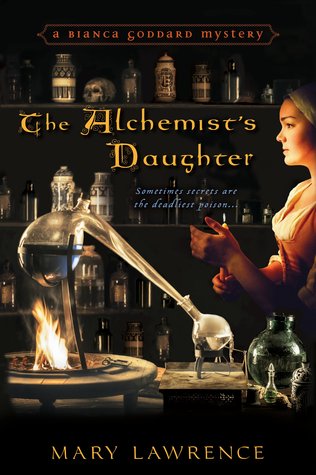
In book 4, The Alchemist of Lost Souls, disgraced alchemist, Albern Goddard, has concocted a new element, “an amalgam of earth and fire.” Once he understands the nature of this lapis mortem, he hopes to win back the favor of King Henry VIII. Unfortunately, the element is stolen. Albern seeks his estranged daughter, Bianca—now pregnant with her first child—for help in finding it.

When a woman’s body is found behind the Dim Dragon Inn, an eerie green glow issuing from her mouth, rumors circulate about how she died. Bianca traces the element to a dead-end believing it is lost and no longer a threat. But when John, her husband, is conscripted and the element turns up again, Bianca risks her life and that of her unborn child’s to prevent it from being used against the king’s army. 

Excerpt:

This tale begins with a rascally lad and a disgraced alchemist. One sought allowance with a group of puckish boys, and the other wished forgiveness from his petulant king. The two crossed paths one spring day when the air puffed warm against their cheeks, calling to mind the hope of renewal that comes with the lengthening days and appearance of green tips on trees. 

Albern Goddard wore his best woolen gown, one he’d bought from a fripperer back when he was in the king’s good graces. The clothes dealer had gotten it from the widow of a barrister who had been stabbed in the back--a fitting end to any lawyer, thought Albern. The rip had been mended and the blood stain scrubbed clean. No one was the wiser, and he himself barely remembered the gown’s tainted history as he strode triumphantly down Thames Lane. 

His coif did not hide the lift of his chin; the scholarly garb accentuated his proud posture--for here was a man basking in the ticklish glow of divine favor. A smile strained the muscles around his mouth; his usual expression was one of stoic indifference. And that was on a good day. 

He may not have discovered the philosopher’s stone--the coveted agent of transmutation capable of turning base metal into gold; instead, he had discovered a substance of unplumbed worth. Of this he was certain. Months of collecting and fermenting the golden stream--his golden stream in urns stinking up his alchemy room--had eventually wrought a substance so astonishing, so exceptional, that he could hardly keep from whooping and dancing down the street. 

However, unbridled enthusiasm can easily turn a man into a fool. The alchemist knew this; he had eaten from fate’s fickle hand before. So, he quashed the smile on his face, replacing a cheerful expression with one more solemn. Ahead of him lay several days of careful analysis to prove his discovery’s importance. 

Meanwhile, on the street ahead, there lay an ambush in the form of a gaggle of gamins. Their winter boredom had festered, so that this day of sun and warmth was like a needle to their boil, releasing the hellions to run free. 

What boy can resist the call of his friends’ mischief? After a winter of trudging through cold wet lanes lugging home bundles of sticks for his mother’s fire, of being cooped up with his siblings like chickens kept from wolves, of listening to the constant wails of younger ken, what lad of any spirit could suffer another moment staring at four cracked and soot-grimed walls? So it was that on this day, a boy with thread-bare britches and raggedly hair wandered farther than was his usual habit. 

He hitched himself to a group of boys kicking a pig’s bladder stuffed with hay. Other stragglers left their chores to join in, and soon there was a mob of exuberant, yelling imps tripping over one another and upsetting geese, pushcarts, and pedestrians. They raced around, calling each other “lead-legged”, and “beetle-brained buzzards”. They ran down Bread Lane and exited onto Thames Street just as Albern Goddard was crossing it. The ball rolled to a stop inches from the alchemist’s shoe.


Mary Lawrence lives in Maine. Her debut mystery, The Alchemist’s Daughter (Kensington, 2015) was named by Suspense Magazine as a “Best Book of 2015” in the historical mystery category. Her articles have appeared in several publications, including The Daily Beast. Other books in the series include Death of an Alchemist, and Death at St. Vedast.


Twitter @mel59lawrence


The Alchemist's Daughter (Bianca Goddard Mysteries, #1) 25489259 Death at St. Vedast (Bianca Goddard Mysteries, #3)

Tuesday, 12 February 2019

Guest Author ~ Melinda Hammond


I'm delighted to welcome writer Melinda Hammond back to the blog today

 on the publication of her latest Historical novel


Melinda Hammond writes: Today sees the publication of The Bladesmith, A Georgian romantic adventure that I started working on some years ago. The whole thing began with a medieval castle…

 
(Picture: Dunstaburgh Castle) 


The photo above is of Dunstanburgh Castle in Northumberland, and it is pretty close to how I saw it for the very first time. It was love at first sight! I knew wanted to use this setting and as I wandered around the impressive ruins on a cold November day, the first seeds of a story began to germinate. 

A castle demands action, and danger, so I decided to set the story at the time of the Jacobite Rebellion. Dunstanburgh was already a ruin by then, but my fictional castle, Warenford Keep, was restored and preparing to support Bonnie Prince Charlie as he marched south towards London. 

(picture: cavalry officer’s sword, late 18th century) 


My hero is a young man from a family of sword makers who delivers a consignment of swords to the castle, not knowing they are destined for rebel hands. In the mid eighteenth century, some of the finest swords in Europe were being made at Shotley Bridge, just 50 miles from Dunstanburgh. The swordsmiths had fled Germany a century earlier and set up business near the river Derwent, where good quality ironstone and soft water provided two important elements for making steel. Thinking of those early refugees I decided my hero’s family name might be Stahl, which by the eighteenth century had become anglicized. Thus, John Steel was born; blond, blue-eyed and courageous! 

So, I had my setting, and my hero, but now I needed a heroine. Enter Katherine, spirited, dark haired, with grey eyes that shone like a freshly polished blade. She lives with her father, who had been imprisoned for treason following the Jacobite uprising of 1715 and returned home a broken man. She and John are immediately attracted to one another, but there’s a problem: she is betrothed to the powerful Lord Warenford! 

I loved writing this adventure romance, set against the brooding backdrop of the Northumbrian coast and here is a snippet: John, travelling with his friend and servant, Matthew, sees the castle for the first time: 

(picture: South Walls) 

A low, wind-blown hedge separated the road from lush green pasture that fell away for half a mile or so to the shore and gave way to an expanse of restless blue and white water that stretched to the horizon. They stopped. John took off his hat and wiped his brow. 

'The German Ocean,' breathed Matthew, awed. 

John set his hat back on his head, pressing it down firmly for a keen breeze was blowing steadily in-shore. 'Aye, Matthew. And that, I fancy, must be Warenford Keep.' 

His outstretched finger pointed to a whinstone ridge that reared up from the flat meadows and jutted out into the bay, where the waves broke tirelessly against the black rocks. Built onto the ridge, and gleaming in the bright sun, was a sprawling stone castle. Sturdy high walls perched on top the rocky outcrop, broken occasionally by a high tower, while on the south-facing slope twin round towers stood on each side of the arched gateway. 

Matthew glanced at his master. 'They say this was once a wild land. A lord might have need of such a stronghold.' 

'And if the Stuart is indeed in Scotland, he might have need of it again. By God, the air is so clear it seems I could reach out and touch those walls!' 

***

43681559
The Bladesmith, by Melinda Hammond, is available on Kindle and as a paperback


1745: John Steel takes a consignment of swords to Warenford Keep on the wild Northumberland coast. He suspects that the swords are destined for the rebel army of Charles Edward Stuart, but matters are complicated by his growing attraction to Katherine Ellingham, daughter of a known Jacobite and betrothed to the powerful Lord Warenford.

With Carlisle in the hands of the Jacobites, and government troops patrolling Northumberland, John makes a desperate bid to retrieve the swords from the Keep before his family is implicated in the uprising, but can he succeed, and protect Katherine and her family at the same time? 


Twitter @SarahMRomance


Friday, 30 November 2018

Northern Writer ~ Joy Pearson


I am delighted to bring to Jaffareadstoo this feature which showcases


 the work of authors who have based their work in the North of England


 ✨ Here's northern writer : Joy Pearson ✨


Hello Joy and welcome to Jaffareadstoo. Thank you for spending time with us today.


EXPECT THE UNEXPECTED in my debut novel, Untangling The Webs, a cliffhanging mystery relationship thriller, concerning four women of varying ages and background. Their parallel lives deal with toxic behaviour, unexpected emotional shocks, treachery and grief. Having to show grit, and aided by the common thread of a close female `rock', each struggles to overcome huge obstacles assailing them, untangling strong threads of mystery, intent on achieving joy again.


Lost letters found four years after Trudie’s married lover, Laurie, disappears without trace, offer a few clues, but a serendipitous discovery in a Cornish church reveals vital information, if Trudie is brave enough to act upon it. Alison has to deal with repercussions from unearthing vicar Henry’s and police inspector Phil’s mendacious betrayals, before meeting lovely Stephen. Her discovery of Julia’s husband David’s deep secret, breaks the impasse of her friend’s stressful situation. Phoebe’s cossetted life appears idyllic, but her late husband’s previously out-of-bounds den holds a breathtaking shock, needing Alison’s help to solve the enigma. 

Set mainly in Cheshire, the novel dips into Worcestershire, Cornwall, Cumbria and Provence. It is available from myself, Amazon, Waterstone’s, independent bookshops. My details are on Facebook as Joy Pearson Author. 


Tell us a little about yourself and how you got started as an author? 

As an imaginative observant child, my confidence to write had been knocked by my adoptive mother, who threw my poems and short stories into the fire, informing me I was useless and so were they and I would never amount to anything From that time onwards, I wrote in secret, becoming a vigilant observer of both people and atmospheres.

I have had two life-threatening incidents in my life, the second of which made me so thankful to still be alive, that I resolved to make every day count after that. 

The incident was in Jerusalem, where a friend and self went to both a Shabat dinner with wealthy ex-pat Mancunian Jews and the previous day to an Israeli run camp with 1200 Palestinian people living. One doctor and limited time allowed out for school. We were with the social worker for the camp, who had been shot in the leg on four occasions by the soldiers in the watchtowers and in prison for nothing. After only half an hour drinking lemonade with him and his family, we heard gunfire, having to hide behind sofas. Having heard their point of view and promising to report their plight, we left. The problem began when we were seen from the watchtower, getting into our hire car which had Palestinian number plates. A prime target, our car was hit twice, thankfully not on the tyres, so with my friend zig zagging out of the open gates and myself ducking down into the passenger seat, we made our escape. 

Have I made every day count since then? Mostly, but life attacks us doesn’t it? Work, children, divorce, money worries, deaths, relationships, menopause, and general stress of our complex lives. However, having learnt the internet, stressful in itself without someone on hand to advise on its vagaries, I subsequently turned to Word. I clicked on it and began to write, delete, attempt to copy and paste, eventually successfully, so wrote my autobiography from aged three to 2008, with joys, sorrows, difficulties and triumphs recorded. A bonus in case I make old bones, but forget. In 2008, I began, with experience gained from this, to write my novel. 

I had a vague idea of who my characters might be, but no idea who they might morph into. I knew that I wanted to convey parallels in people’s lives, despite totally different backgrounds. Knowing how much the support of a close friend can bring to one’s life and vice versa, that was the theme, plus their male relationships, both good and awful reported. 

This seems a clichรฉ, but ideas and words streamed out of me. I never had writer’s block. My soulmate, Pamela, always having faith in me, had encouraged for many years, urging me not to hide my talents, reminding me of so many friends I had lost to death and that I was still here, so in her words ‘digitus extractus’ 

I was born in London, but grew up in Redditch, Worcestershire, attending grammar school there, living alongside the lovely River Arrow and wildflower fields. My diverse career has included public relations, employment agent, interior design, voice-over artist, scriptwriter, antiques, Shelter for the homeless, animal charities, Esther Rantzen’s helplines for children and the elderly, counselling and stress therapies.

Interests include the arts, music, films, theatre, gardening, animals, British social history, concerts, literary festivals. I have acted in both serious and comedic plays.

Adopted as a baby, I voluntarily now help others to trace their roots. I have two sons, who live both in France and England. Now residing in Cheshire, I have written and published poetry, comic verse, and my autobiography. Untangling The Webs is my debut novel. When I am not promoting my book, I am working on the sequel to Untangling The Webs. 


Your books are written in Northern England. Have the people and the northern landscape shaped your stories in any way? 

From teenage years I have always loved Cumbria; some of my novel takes place there. I lived in Knutsford for some years, now Middlewich. More than half my book UNTANGLING THE WEBS, takes place in Cheshire. Villages are fictional names, Sandstone Village where a mystery is uncovered, is near Chester because of sandstone being local. 

As a writer based in the North, does this present any problems in terms of marketing and promoting your books and if so, how do you overcome them? 

None whatsoever because of internet and Facebook. Visiting various Litfests has helped – including Stratford, Cheltenham and Northwich. Visits to London for Damian Barr’s three writers events at The Savoy. 


If you were pitching the North as an ideal place to live, work and write – how would you sell it and what makes it so special? 

The motorway system going to all points is ideal. Houses are more reasonably priced than the south, although expensive in Knutsford, Alderley Edge, Bowdon, Hale. Still much countryside is unspoilt, flat Cheshire Plain and hills in Macclesfield, Congleton, Beeston Castle areas. Farmers markets everywhere, as Cheshire is a dairy county. Industry though is flourishing. 


Writing is a solitary business - how do you interact with other authors? 

I had to do it on my own, then met through Northwich Litfest, other writers briefly, attending their talks. Advised by one that my novel was double the size it should be. Worked to reduce it – took many months. Asked questions of one writer friend, as layout different from the older fiction books I have. I have recently joined Cheshire Book Connections, having secured a talk and signing event in Knutsford in November, then Cheshire Connections, a networking group of ladies with a variety of careers and talents.


How supportive are local communities to your writing, and are there ever any opportunities for book shops, local reading groups, or libraries to be involved in promoting your work? 

I sent e-mails with attachments to Waterstones in Cheshire, Worcestershire and Yorkshire. Some were very accepting, some not, some no replies. Independent bookshops have taken some books. Local reading groups disappointing as no replies to e-mails or phone calls. Library book groups, have not wanted to buy my book as it is already in their libraries. One U3A group locally and one in Worcestershire promised an hour but stopped me after half an hour as said they needed to discuss their own chosen book. Consequently I sold only two books. At other talks though people have been more attentive, loved my book and bought signed copies.


You can find Joy on her Facebook author page


Huge thanks to Joy for being my special guest on the blog today


Coming next time :  Drew Neary and Ceri Williams


Thursday, 29 November 2018

Author Guest Post ~ Roma Nova Extra by Alison Morton


Jaffareadstoo is delighted to welcome, author, Alison Morton 


Overcoming the fear of short stories

As a serial writer of 100,000 word novels I used to find short stories difficult. Distilling a tale down to 1,000 or 2,000 words without making a good, meaty story seemed a terrifying task.

As a newbie writer several years ago, I tried hard with them, even entering short story competitions. This is what writing gurus advised us to do at the classes, courses and conferences I attended in my 2009-2012 novel writing ’apprenticeship’. It would develop my style, my dexterity and that all important, yet insubstantial thing, my voice, they said.

I studied the theory: focus on a single story/theme/conflict; two or three characters ideally with a maximum of four or five; single setting; short period of time, quick resolution after the climax. I read a lot of short stories – some fun, some incomprehensible, some trite, some amusing – and practised writing them. My style is economical and succinct which helped to keep the word count down. After a while, I duly submitted the stories wherever I could. Most received no response, although one was shortlisted in a magazine competition.

I sighed and went back to my novels.

After publishing six full-length stories in the Roma Nova thriller series (many reviewed on this blog – thank you, Jaffa and Jo) where I could let my characters, plots and twists run a good long course, I was asked to contribute to an anthology of alternative history short stories centred on 1066.  I was on the point of refusing; most of the other authors were medieval or Conquest specialists – what did I know? And I wasn’t comfortable producing such short fiction. But as a writer whose fictional world was nothing but alternative history and one who wrote and talked about it in theory and practice, how could I refuse the biggest ‘what it’ of English history? And how wonderful to have an eleventh century Roma Novan female envoy clash with the macho society of William of Normandy!

With a word count maximum of 5,000 – I nearly fainted with delight at that length – I would not feel too pinched and prodded into a tight frame. In the meantime, I had a mountain of research to do. Roma Nova traded with Saxon England but never with Normandy. It was terra incognita for both me and Galla Mitela, my heroine. I spent hours looking up eleventh century transport routes, the landscape of the River Seine (Sequana) as it was then, the town of Rouen (or Rotomagus as Galla called it), and the social, legal and economic dynamics that fell a long way below that of Rome, as continued in Roma Nova. And into all that, I had to weave a story of how Galla could possibly have stopped the Norman invasion. With collaborative encouragement from the other authors, 1066 Turned Upside Down was published.

My short story barrier was broken. Yay! But a collection of my own? Hm. In the end my curiosity bit me. While writing the full-length novels, I’d thoroughly enjoyed giving the characters their own backstory; it rounded them out and illuminated how they had developed into the characters they were. Almost without me realising it, the desire to explore incidents in my characters’ lives, to delve back into Roma Nova’s earliest days and discover what happened to characters after the main trilogies ended was gathering strength.


ROMA NOVA EXTRA sprang into life. Well, lurched in fits and starts. But this is the huge advantage of writing short stories; each one can be drafted in a relatively short time. Of course, the real work starts with the first revision! Seven of the eight range from 3,000 words to 10,000. At 18,000 words, the eighth story was originally going to be a separate novelette, but it seemed the perfect complement to the others. Together, they range from AD 370 to 2029, but all focus on people.


Lucius Apulius, a military tribune in the dusk of the Roman Empire, is posted from a plum staff position with one of the most influential commanders at the time to a Danube backwater. The reason? Wrong religion. His indirect descendant, Allegra Mitela, a tough 21st century Praetorian, struggles with her identity and emotional life. How did the eighteen-year-old Imperatrix Silvia, exhausted and lonely after the liberation of Roma Nova in the 1980s, meet her Italian husband? And what was the ancient mystery uncovered by Conrad and Carina during their ‘Roman holiday’?

Some are love stories, some are lessons learned, some resolve tensions and unrealistic visions, some are plain adventures, but above all, they are stories of people in dilemmas, in conflict, in trouble and their efforts to resolve them. Oh, and there are a few surprises…

Readers of INCEPTIO, PERFIDITAS, SUCCESSIO, AURELIA, INSURRECTIO, RETALIO and CARINA will be familiar with many of the characters, but it’s not essential by any means as the stories are complete in themselves. However, I hope readers new to Roma Nova may find these glimpses intriguing enough to seek out the longer books.

------

Buying links for ROMA NOVA EXTRA


Paperback from your usual online and physical bookstores


About the Author

Alison Morton writes the award-winning Roma Nova thriller series featuring modern Praetorian heroines. She blends her deep love of Roman history with six years’ military service and a life of reading crime, adventure and thriller fiction.

All six Roma Nova full-length novels have been awarded the BRAG Medallion. SUCCESSIO, AURELIA and INSURRECTIO were selected as Historical Novel Society’s Indie Editor’s Choices.  AURELIA was a finalist in the 2016 HNS Indie Award. SUCCESSIO was selected as an Editor’s Choice in The Bookseller. CARINA is a novella set between INCEPTIO and PERFIDITAS.

A ‘Roman nut’ since age 11, Alison has misspent decades clambering over Roman sites throughout Europe. She holds an MA History, blogs about Romans and writing.

Now she continues to write thrillers, cultivates a Roman herb garden and drinks wine in France with her husband.


Social media links:

Connect with Alison on her Roma Nova site: http://alison-morton.com


Twitter: https://twitter.com/alison_morton @alison_morton 

Alison’s Amazon page: http://Author.to/AlisonMortonAmazon


Huge thanks to Alison for being such a lovely guest and for allowing us a glimpse into the fascinating world of Roma Nova.


Monday, 26 November 2018

Guest Author ( and #Giveaway ) ~ Liza Perrat


❈ Jaffareadstoo is delighted to welcome author, Liza Perrat to the blog ❈


Hi Liza, thank you for being our guest today and for giving us an insight into the story behind The Swooping Magpie


Following on from The Silent Kookaburra


Liza’s new release, The Swooping Magpie also reflects the social changes of 1970s Australia, in a chilling tale of love, loss and grief, and, through collective memory, finding we are not alone.

Inspired by a true-life scandal that rocked Australia, here’s the story behind The Swooping Magpie.


It is difficult for any Australian born after the feminist movement to understand the plight of being sixteen, pregnant and unmarried in 1970. The sanctity of marriage was still the vital cornerstone of Australian society and it was impossible to envisage raising a child outside this union blessed by church and state. 

Rather than rejoicing at bringing forth this new life, these girls were shunted into a world of shame –– hidden at home or sent interstate to homes for unmarried mothers. 

But The Swooping Magpie doesn’t only evoke a society refusing support to mothers battling to raise an infant alone. It also exposes the brutal adoption industry practices that targeted healthy newborns for infertile couples.

Until the mid-70s it was common practice to adopt out the babies of unwed mothers. In the 1960s, Sydney’s Crown Street Women’s Hospital was one of largest sources of Australia’s adopted babies. Patient documents from Crown Street and other maternity hospitals show that from the moment most unmarried girls arrived, their records were marked “for adoption”.

They were given three days after the birth to sign consent, and then thirty days to change their minds. These laws were meant to give legal certainty to adoptive parents, while protecting relinquishing mothers’ rights. But in practice those rights were either denied or the women had no idea they existed. 

Many girls never even saw their child, and the original birth certificate was sealed. 

Approximately 250,000 girls had their newborns taken, many claiming they were coerced into signing paperwork whilst under postpartum sedation. Forced to pay this terrible price for pregnancy outside marriage, thousands of women harboured their grief, in silence, for decades.


The thunderclap of sexual revolution collides with the black cloud of illegitimacy. 

Sixteen-year-old Lindsay Townsend is pretty and popular at school. At home, it’s a different story. Dad belts her and Mum’s either busy or battling a migraine. So when sexy school-teacher Jon Halliwell finds her irresistible, Lindsay believes life is about to change. 

She’s not wrong. 

Lindsay and Jon pursue their affair in secret, because if the school finds out, Jon will lose his job. If Lindsay’s dad finds out, there will be hell to pay. But when a dramatic accident turns her life upside down, Lindsay is separated from the man she loves. 

Events spiral beyond her control, emotions conflicting with doubt, loneliness and fear, and Lindsay becomes enmeshed in a shocking true-life Australian scandal. The schoolyard beauty will discover the dangerous games of the adult world. Games that destroy lives. 

Lindsay is forced into the toughest choice of her young life. The resulting trauma will forever burden her heart.


And here's a tantalizing excerpt from Chapter 1:

wrinkle my nostrils against the caustic smell of cat piss as we pick our way across the filthy footpath to the black gate.

My mother steps aside as the high gate creaks open, nods at me to go through. I scowl, don’t move.

‘You heard what your father said, Lindsay.’

With a sigh, I push past her.

The storm flushed away, the humidity has seeped back into the air at this tail-end of another scalding Australian summer. There’s no warmth in me though, only ice-blocks freezing my insides so that I become so cold I can’t stop shivering.

It’s not just the fear that sets me quaking, but the helplessness too. Like when I was a kid about to launch myself down the slippery dip. I’d hesitate, knowing that once I slid off there was no turning back, even if the metal burned my bum raw, or that once I reached the bottom I’d tumble forwards and scrape my knees.

My mother nudges me ahead of her. I don’t realise it yet, and I won’t speak of the whole sorry tale for years to come, since every time I thought about it, the memories would leave me frustrated, sad and angry, but I would recall walking through those black iron gates as crossing the threshold into the darkest hell.


About the Author

Liza grew up in Australia, working as a general nurse and midwife. She has now been living in France for over twenty years, where she works as a part-time medical translator and a novelist. She is the author of the historical The Bone Angel series. The first, Spirit of Lost Angels, is set in 18th century revolutionary France. The second, Wolfsangel, is set during the WW2 Nazi Occupation and the French Resistance, and the third novel – Blood Rose Angel –– is set during the 14th century Black Plague years. 

The first book in Liza’s new series, The Silent Kookaburra, published in November, 2016, is a psychological suspense set in 1970s Australia. 

Liza is a co-founder and member of the writers’ collective Triskele Books and also reviews books for Bookmuse


Connect with Liza online: 


Sign up for her new book releases and receive a FREE copy of Ill-Fated Rose, short story that inspired The Bone Angel French historical series. 

Follow Liza on Bookbub

Purchase an e-book of The Swooping Magpie: https://www.books2read.com/u/bMQdr7

Paperback coming soon!


✨ A  FABULOUS GIVEAWAY ✨

AN E-COPY IN YOUR PREFERRED FORMAT FOR 5 LUCKY WINNERS
OPEN INTERNATIONALLY