Showing posts with label Close to Home. Show all posts

Friday, 19 October 2018

Northern Writer ~ A D Rogers


I am delighted to bring this feature to Jaffareadstoo which showcases

the work of authors who live and write in the North

✧ Here's Northern writer : Alan Rogers ✧


Photograph from author's website
By kind permission


Hi Alan, a very warm welcome to Jaffareadstoo. Tell us a little about yourself and how you got started as a writer? 

Purely by accident! I had taken early retirement from my job as an IT Manager and suddenly my hands began to cause problems – I was in a lot of pain. After some hospital investigation it seemed that after many years of keyboard use every day, my hands simply needed some exercise. Nothing seemed to work so I began to use my laptop again. I started to write short stories – I had something published in Lancashire Life and a few other magazines and it really just went on from there. 


Your books are written in North West England – how have the people and its landscape shaped your stories? 

The North West has played a big part in all my work so far. I was always taught to write about things I know about – rather than talk about things or places I hadn’t experienced. I based my books in a fictional Lancashire town called Wishton – which is made up from WIgan, Saint Helens and BoltON. Mining plays a big part in all the stories – my grandfathers were both miners and I worked for a Mining Machinery Manufacturer for nearly 40 years. 


As a writer based in the North West, does this present any problems in terms of marketing and promoting your books and if so, how do you overcome them? 

Not really. I worked in IT for nearly 40 years so was quite comfortable with using social media and I set up my own website. I’ve had feedback from people in Australia, India and the US. I also was lucky enough to be featured in a few magazines and had interviews on local radio. The only problem I had with marketing is that I didn’t really work hard enough! I think my publishers were a bit frustrated with me. 

Troubador
2015


In your research for your books, do you visit any of the places you write about and which have made a lasting impression? 

I try to visit every place I write about – going back to my earlier point about experiencing things and places first hand rather than making them up. Hopefully it sounds more realistic. I have been lucky enough to travel all over the world during my career and I have tried to incorporate some of those travels in my work. For example, although my second book is based mainly in the North West, a lot of the action takes place in Russia. I worked in Moscow and Siberia and the opening chapter of my second book describes a mugging in Red Square – something similar actually happened to me and a colleague one day! 

Troubador
2015

If you were pitching the North West as an ideal place to live, work and write – how would you sell it and what makes it so special?

I think it’s the people that make it special. As I have said earlier, a lot of the people in my books are miners or members of the mining community. This way of life has obviously disappeared now but the legacy sort of still remains. Apart from that, it is getting harder to “sell” the North West as a place to live. We have fabulous scenery and great people – but the region continues to be treated badly by central government. I’m quite passionate about still putting Lancashire on my letters – I don’t think the whole “Greater Manchester” change has helped any part of the region outside central Manchester. Flipping eck – that all sounds a bit gloomy doesn’t it! 


Writing is a solitary business - how do you interact with other authors? 

I don’t really interact with anyone! A big part of my job involved a lot of travel – usually by myself. So I became quite comfortable with my own company and this seems to have followed me into writing! 


How supportive are local communities to your writing and are there ever any opportunities for book shops, local reading groups, or libraries to be involved in promoting your work? 

I’ve been interviewed twice on local radio and appeared in a couple of local magazines. I got my “big break” when a local radio presenter offered to put my first book forward to his publisher. Apart from that – I’m sure that local groups would be more than willing to help me promote my work but sadly I’m just too lazy to chase them up! I’m lucky enough to be able to treat writing as a hobby. I’m quite professional in my approach to writing – to research and editing but once the book is finished and ready to be published – I tend to lose interest a bit. I don’t really like chasing publicity so I tend to concentrate on my next book. Must drive my publisher mad! 

Can you tell us anything about your current work? 

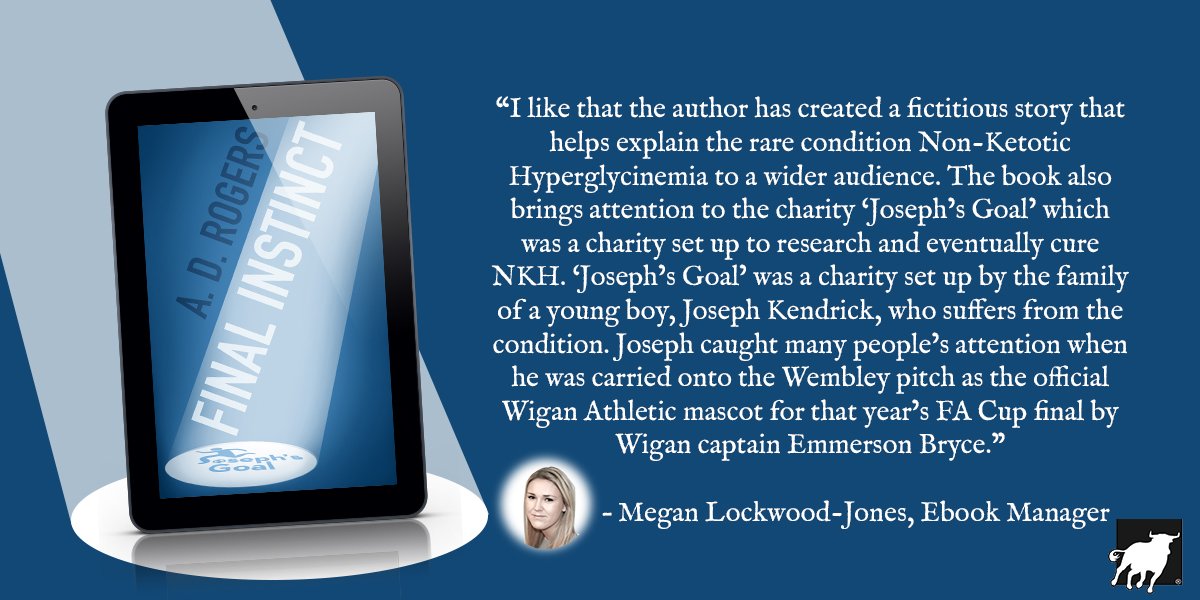
The last book I did was for a local charity – “Joseph’s Goal” and although I really enjoyed writing it, I put quite a lot of effort into the whole process and to be honest it sort of put me off writing for a short while. But I knew it wouldn’t last! I’ve done most of the research work for my next book and I’m sort of getting ready to write the first line. I’m quite excited about it because it’s a complete departure from anything I’ve done before. It will be mainly set on a small Scottish island and hopefully will cover topics as diverse as the IRA and pop music!

Troubador
2017


Huge thanks to Alan for being my guest on the blog today

 You can find out more about his writing:


Twitter @gomonline

Troubador @matadorbooks


Saturday, 19 August 2017

Close to Home ~ Thank you


In October 2016, I started my Close to Home feature in order to highlight authors who are based in the north of England, literally close to home. Since then I've been privileged to work with 44 amazing authors who have embraced the idea of sharing what's so special about the north of England and have shown this love in an array of eloquent guest posts and enlightening interviews.

I am immensely grateful to them all for their enthusiasm and for sharing their love of the north and for explaining just how this marvellous northern landscape shapes their writing.


Click on the author to discover what makes the north such a special place for them...


Karl Drinkwater
Liz Bower
Jo Hollywood
Deborah Swift
Marie Laval

A D Garrett and Helen Pepper
John R McKay
Kate Field
Lyn G Farrell

Cath Cole
J Carmen Smith
Ian Skillicorn

Paula Martin 
Martin Edwards
Paula Daly
Cath Staincliffe

Sarah Jasmon
Caroline James
Debbie Johnson
June Taylor

Nicci Rae
Kate Rigby
Pauline Barclay
Claire Brown

Barbara Copperthwaite
Gina Kirkham
Claire Coombes
Carys Bray
Sue Featherstone

Amanda Brooke
Caroline Wallace
Beth Underdown
Kirsty Ferry

Jan Ruth
Helena Fairfax
Melinda Hammond
June Francis

Rebecca Mascull
Sharon Booth
Elizabeth Ashworth
Susan Pape
Susanna Bavin

Helen Steadman
Alyson Rhodes


 A whopping big  to everyone who has taken part in Close to Home 


Jaffareadstoo couldn't have done this without you all.


Close to Home will be back sometime in the future bringing you lots more fabulous Northern Writers


~***~


Saturday, 12 August 2017

Close to Home ~ Alyson Rhodes


As a book reviewer I have made contact with authors from all across the globe and feel immensely privileged to be able to share some amazing work. However, there is always something rather special when a book comes to my attention which has been written by an author in my part of the North of England. So with this in mind I have great pleasure in featuring some of those authors who are literally close to my home. Over the next few Saturdays, and hopefully beyond, I will be sharing the work of a very talented bunch of Northern authors and discovering just what being a Northerner means to them both in terms of inspiration and also in their writing.


Please welcome Northern Writer


Alyson Rhodes


 Hi, Alyson and welcome to JaffareadstooTell us a little about yourself and how you got started as an author.

I was born in Norwich but I grew up in Birmingham where I tutored and began writing poetry to help my recovery after a severe illness. I have always been a bookworm, toting huge libraries around with me when I moved house. I relished my Saturday visits to our local library as a child. I had my first major publishing breakthrough in 1996 when Collins Educational published my children’s novel set on the Norfolk Broads, ‘Soldiers in the Mist.’ (Still available to buy on www.amazon.co.uk).

When I met my husband to be we decided to raise our family in his home town of Bradford and we moved here in 2001. Motherhood and part time paid employment filled my time. I remained an avid reader and I think reading widely is a vitally important part of writing fiction. The more I read I believe, the better I write. It is an interlinked process.

But in 2011 I began (once again) scribbling ideas down in notepads. Fortuitously I spotted a WEA Creative Writing class in Otley, Leeds and so I took what felt like the huge step of joining. The tutor was/is the poet James Nash who has proved an inspiring, hugely encouraging mentor.

Which Yorkshire born writers have influenced you?

Two Northern born Y.A. authors, Messrs Robert Swindells (born in Bradford) and Westall (born in North Shields) have been important influences. I grew up reading their books and I return to them again and again. Swindells’ novel ‘Stone Cold’ had a huge impact on me, dealing with homelessness and life on the streets. It was eye opening. Several of my flash fiction pieces explore this issue. (‘No Home for Holly’ is available to read at:- https://zeroflash.org/2017/01/02/januarys-zeroflash-entries/)

Whilst Robert Westall’s interest in World War 2 and his supernatural stories, feeds into my own writing bent for the gothic, ghostly and macabre. My ghost story, ‘The Resurrection of the Reverend Greswold’ is available for download on www.alfiedog.com.


I do still write for Y.A.s and children- my latest book is ‘The Runaway Umbrella’ (ages 7 upwards) and it is available to buy on www.amazon.co.uk) but my main focus is writing Flash Fiction for adults. This is a new direction for me as a writer, telling a tale in 500 words or less or sometimes in just 100 words (aka a drabble), but one which I’ve found challenging and enjoyable. Many of my pieces are available to read on line, on websites like www.horrortree/tremblingwithfear and www.thecasket.co.uk or in print anthologies, ‘Twisted Tales 2016’ published by Raging Aardvark (www.amazon.co.uk)


Your books are written in Northern England – how have the people and its landscape shaped your stories?

Many of my Flash pieces are located in or inspired by the areas around Bingley in Bradford where I live. The park with its log cabin play hut described in ‘Doll Man’ is in Roberts Park in Saltaire where I used to take my son scootering. The sadly decaying old Odeon in Bradford town centre has inspired a number of derelict fictional buildings such as the hotel in ‘The Adelphi’. Cliffe Castle in Keighley is the backdrop for my longer ghost story, ‘Careful What you Wish For.’ Undercliffe Cemetery in Bradford with its lavish Victorian gothic monuments has worked its way into a few of my horror shorts.

A trip in the autumn to Leeds City Centre where we ate hot chestnuts bought from the handcart seller, led to the killer short ‘Chestnuts for my Sweet.’ Family holidays spent in and around Bridlington and Filey over the last 15 years, have their fictional overlay in several of my stories. Particularly the fun fairs and the piers. Ideal crime scenes!

All of these stories and more will be appearing in my debut Flash Fiction collection ‘Badlands’ which is due out from indie publisher Chapel Town Books later this year. This is an exciting opportunity for me, which came about via an open call from publisher/writer Gill James asking for authors to submit their short shorts! I will be appearing at the Morley Indie Book Fair with my book, on Sat 7 October 2017. So if you’re passing please drop by my stall and say hi.


If you were pitching the North as an ideal place to live, work and write – how would you sell it and what makes it so special?

My uncle used to live in Otley and we visited every year walking our dog on Ilkley moor. So I have come back to my family roots in a round about way. I love the fact you are five minutes drive from the moors but you have such lovely towns with their flourishing arts scenes like Halifax, Harrogate, Hebden Bridge, Saltaire and Leeds, all so close to Bradford. I enjoy the history of these towns and their galleries, shops and cafes. Coming up from the Midlands I found Yorkshire people really friendly, chatty and down to earth! This summer on holiday, we are going whale watching by boat from Whitby! There is a huge variety of landscape and activities to explore in the North.


Writing is a solitary business - how do you interact with other authors?

Over the last few years, apart from the Otley WEA class, I have attended Saltaire Writers Group (where I met the romance author Helena Fairfax) and currently I go to Menston Writers. I regularly attend literature festivals locally and writing workshops. The most recent one I went along to was run by crime writer Liz Mistry in Keighley Library. It was excellent and informative. The Bradford libraries run a variety of (low cost) writing classes, coordinated by Dionne Hood and are very supportive of budding writers. I learn a great deal from these workshops and I enjoy chatting to fellow writers. Inevitably writing is a solitary business but with the internet it’s easier than ever to link up with like minded creatives. I sometimes think I enjoy the chatting about the writing over a coffee more than the hard work of generating the actual words!


What do you have coming up in the future?

In September 2017 I am hoping to run and teach some Creative Writing Workshops. The Craft House in Saltaire is advertising here:-


My background is in teaching, both in the paid and voluntary sectors. After several years of writing and submitting my work, with all the highs of publication and the lows of rejection which I’ve experienced, I felt it was the right time to branch out into teaching. I hope to run more classes at another venue in Farsley, but this is yet to be finalised.


I am working on a collection of ghost stories for publication in November this year. Otley Writers group is publishing their own autumnal collection too called ‘The Darkening Season’.

I post information about my writing journey and any events I attend on my blog, which can be found at www.alysonfayewordpress.wordpress.com. You can also contact me via my blog.


Thanks so much for hosting me in your Close to Home slot, Jo, and for your interesting questions. I’ve really enjoyed talking about my writing journey and how living in Yorkshire has influenced me and my fiction.


Links:-

Facebook as Aly Rhodes
My Book Gorilla page is at :-http://www.bookgorilla.com/author/B01NBYSLRT/alyson-faye/kcc
Author’s page on Gill James’ blog:- http://www.gilljameswriter.eu/p/blog-page.html


Warm thanks to Alyson for spending time with us today


 and for talking about her writing and sharing with us her love for the North of England


~***~


Saturday, 5 August 2017

Close to Home ...Helen Steadman


As a book reviewer I have made contact with authors from all across the globe and feel immensely privileged to be able to share some amazing work. However, there is always something rather special when a book comes to my attention which has been written by an author in my part of the North of England. So with this in mind I have great pleasure in featuring some of those authors who are literally close to my home. Over the next few Saturdays, and hopefully beyond, I will be sharing the work of a very talented bunch of Northern authors and discovering just what being a Northerner means to them both in terms of inspiration and also in their writing.


Please welcome Northern Writer


Hi and welcome back to Jaffareadstoo, Helen. Tell us a little about yourself and how you got started as an author.

I always wanted to write from being little, and I was always making comics and writing stories, plays and poems, and so on. But when I read Peter Carey’s Illywhacker, I was so stunned by its brilliance that I found it impossible to write for many years after comparing my own efforts with this masterpiece. (What I didn’t know then was that between 1964 and 1969, Peter Carey wrote five novels, none of which were published. His novel, Bliss, was finally published in 1981. In a Guardian webchat, he said he’d have given up had he known how long it would take. Now, he has umpteen books under his belt, and of these, two won the Booker prize, two were shortlisted and two were longlisted.) 

Finally, I forced myself to start writing seriously in 2005 and committed to writing a thousand words per day, every day, whether I felt like it or not. In subsequent years came long rounds of rejections. Finally, I had a fairly savage (but well deserved) critique and as a result of that, signed up for some Open University courses: Creative Writing A215 and Advanced Creative Writing A363 (both highly recommended). These two courses improved my writing exponentially, and I kept writing and then took an MA in creative writing. Finally, years after starting to write seriously (and with five and a half unpublished novels stashed in ream boxes), I received The Email from Impress Books last October. Now, over a decade later, my first novel has been published. I once read a quote by Anne Enwright, (The Guardian 2010) and she said, ‘The first 12 years are the worst’. I remember my despair at reading this, but I just kept going because those 12 years were going to pass irrespective of whether I did any writing or not. And in the end, it has taken 12 years! So, my advice for writers is: be patient and persevere.


Your debut novel, Widdershins, is set in the North East of England. How did the people and its landscape shape your novel?

Most of this novel was written in my head while out walking the late, great Archie Scottie Dog. It was impossible to make notes while walking (due to fear of dog loss or tripping and falling down various gullies), so I developed a technique of ‘freethinking’ where I would wander about the woodland, bringing characters to life in my head and having them converse. Later that night, I would just write up whatever I could remember from my walks. So, if anyone ever sees me walking about with glazed eyes and talking to myself, there’s no need for concern as I’m just writing in my head.

I would say that the landscape shaped the book more than people. I spent so much time looking at the landscape and wandering about in it, that I feel I must have absorbed quite a lot of it by osmosis and channelled it into the book. I also took hundreds of photos on my travels. I’m not a skilled photographer by any means, so most of them are out of focus and badly taken, but they proved invaluable for going back and checking that such and such a plant was indeed in bloom or seed at certain times of the year.


Whilst writing Widdershins, you were inspired by the true events of the 1650 Newcastle Witch trials. How did your interest in this subject start?

My interest in this subject developed as part of a gradual process. At the back end of 2011, I decided to take an MA in Creative Writing, which gave me plenty of time to decide what to write about before the MA began in 2013. I knew I wanted to write a historical novel, but had no clue what it would be about. I was walking in the woods one day and Florence Welch’s song ‘Rabbit Heart (Raise it up)’ started going through my head. This made me think of sacrifice, ritual and magical goings on, which led me to witches. Although I knew in a flash that I wanted to write about witches, I didn’t have any firm ideas at that point. In truth, my initial thoughts veered towards something rather more magical and supernatural than what I eventually ended up with.


Widdershins - First Draft


As I began researching ahead of starting my MA, I read widely on the seventeenth century, local history, witches and witchcraft, and I joined paranormal groups and investigated all sorts of supernatural goings on. In the course of my research, I learned about the Newcastle witch trials, which I’d not known about until that point. I was quite shocked to learn that 16 people had been executed on one day in Newcastle for witchcraft. Of course, I knew about the Pendle witches in Lancashire and the Witchfinder General down south, but this was the first inkling of anything local to me. What shocked me most was that during the proceedings, the witchfinder was revealed as a fraud and one girl was set free, but the others were still executed. As my research continued, I could not get this unknown girl and the witchfinder out of my mind, and I realised that this was the story I had to write. In a sense, the fact that little was known about them gave me an enormous amount of writerly freedom.


Widdershins in the Woods
Impress Books
2017


In your research for your novel, did you visit any of the places you write about and which have made a lasting impression?

Because I live in the North East, it was very easy to visit many of the places again and again, and most of my time was spent outside in nature in all seasons. I spent a lot of time walking along the River Derwent at various points, for instance, at the part near to where Jane and Annie Chandler lived. I also walked next to its confluence with the River Tyne pretty much daily for over a year.

I did expect that the hardest place to visit would be the Town Moor, where the so-called witches were executed, but that’s not the place that most affected me. The hardest place to visit was St Andrew’s church in Newcastle. The wrongfully executed people were buried in its graveyard, and it gave me quite a hollow feeling standing there.


If you were pitching the North as an ideal place to live, work and write – how would you sell it and what makes it so special?

The wide-open countryside, the huge blue skies and the fresh air are why I love it so much. I grew up in the North, but took it for granted. It was only after a decade in London that I really came to appreciate how beautiful it is and how lucky I am to live here.


North East England


From a historical writer’s perspective, it’s steeped in history, and there are thousands of untold tales tucked away just waiting to be written about. As well as stunning nature and historical gems, Northerners are among the friendliest people you could hope to meet anywhere in the world, which means you’ll never be short of a friendly face.


As a writer based in the North, does this present any problems in terms of marketing and promoting your books and if so, how have you overcome them?

I don’t think it’s presented any real problems for me. I know there are issues around British publishing being London-centric, but my publisher is based in the South West, and I’m in the North East. The fact that we’re based at diametrically opposed ends of England hasn’t stood in our way. The internet has helped, and the advent of Facebook, Twitter, Instagram and blogging means that so much promotion work is done online these days, so location seems not to matter. Of course, it helps that my publicist (Natalie Clark) is a bit of a genie! She is very creative and has a great eye for social media. I must admit that with Natalie’s encouragement, I’ve had to leave behind my Luddite ways and properly join the twenty-first century this year. (‘Insta-what?’ is a phrase that I have been guilty of using in the not-so distant past.)


Writing is a solitary business - how do you interact with other authors?

I’ve met quite a lot of writers through local groups and writing courses. I know a few writers from local chapter meetings of the Romantic Novelists Association (hello lovely ladies of the Border Reivers Chapter!), and they are very friendly and supportive. Taking courses in creative writing was also a good move because it helped me develop my writing and introduced me to some great writing friends. I am part of a group that met during our MA, and we stay in touch and criticise each other’s work (hello lovely ladies and gents of the DIY Group!). We’re spread over several countries, so we mainly meet online, but we do have the occasional get together. Getting used to giving and taking constructive criticism has improved my writing hugely, and the thick skin I’ve grown as a result has stood me in good stead for dealing with rejection!


How supportive are local communities to your writing, and are there ever any opportunities for book shops, local reading groups, or libraries to be involved in promoting your work?

People locally have been very supportive, both in terms of sharing information and being interested in my writing. North East people are very proud of their heritage and lots of locals have shown interest in this novel. For instance, two local projects, the Consett and District Heritage Project and the Land of Oak and Iron, do a lot of work to encourage people to take an interest in the area’s heritage, and I plan to do some work with both groups. Similarly, there is a strong network of libraries and bookshops, who are always supportive, and I plan to do some reading sessions over the summer and autumn.


You can discover more about Helen and her writing on her website by clicking here
Follow on Twitter @hsteadman1650
Visit on Facebook


Witches Kitchen


Warmest thanks to Helen for being our very welcome guest today and for talking about her writing and sharing her love of the North East with us.


I hope that you have enjoyed this week's Close to Home feature


Coming next week : Alyson Rhodes


~***~

Saturday, 29 July 2017

Close to Home...Susanna Bavin


As a book reviewer I have made contact with authors from all across the globe and feel immensely privileged to be able to share some amazing work. However, there is always something rather special when a book comes to my attention which has been written by an author in my part of the North of England. So with this in mind I have great pleasure in featuring some of those authors who are literally close to my home. Over the next few Saturdays, and hopefully beyond, I will be sharing the work of a very talented bunch of Northern authors and discovering just what being a Northerner means to them both in terms of inspiration and also in their writing.


Please welcome Northern Writer


Hi, Susanna, welcome to Jaffareadstoo. Tell us a little about yourself and how you got started as an author.

The simple answer to how I got started is that I was a child writer, churning out boarding school stories. Then, as a teenager, I was introduced to Victoria Holt's books by my best friend, and they got me started writing gothic novels. Over time, these naturally morphed into sagas, not because I had read sagas at that point, but because that was just the way my writing style developed.

What I love in particular about sagas, both as a reader and as a writer, is the historical aspect. The characters have to tackle whatever challenges the plot throws at them within the context of the social and legal framework of the time. Sagas are also famous for being regional and The Deserter's Daughter is set in early 1920s Manchester.


I wrote for years without attempting to get published. Then I submitted an early draft of The Deserter's Daughter to literary agents and received rejections all round - though mostly the rejections were personal letters that included comments about what the agents had and hadn't liked. Given that rejections on the whole are standard letters, I was heartened to get personal responses.

In the end it was the fourth draft that was the successful one. I did three email submissions one afternoon, intending to do more the following day, but I never had to do them, as I had a reply from Laura Longrigg at MBA that same evening. She had read my three chapters on her way home and wanted to see the rest of the book. I ended up with offers of representation from two agents, but Laura was at the top of my wish list. I went down to London to meet her and we took to one another right away.


In your research for your novel, The Deserter's Daughter, did you visit any of the places you write about and which have made a lasting impression?

Visit any of the places? I did better than that - I grew up there! The Deserter's Daughter is set in Chorlton-cum-Hardy, a suburb on the south side of Manchester. The River Mersey forms a natural boundary between Chorlton and Cheshire. At least five generations of my family have lived there, which gives me not just a strong sense of place but also of local history. Within fifteen minutes walk of the house in which I grew up are five other houses where previous generations of my family lived, going back to the 1800s.

In 1920, when The Deserter's Daughter starts, Chorlton was a small, quiet township and many of the old landmarks are still there today. Some of them feature in the book, but I was careful not to include landmarks just for the sake of it. Those that are featured are written directly into the plot - such as the Lloyds Hotel, where Ralph holds his auctions; Chorlton Green, where there is a temporary war memorial; and Jackson's Boat, the bridge that spans the Mersey, with Chorlton in Lancashire on one side and Sale in Cheshire on the other.


What did you learn about your writing through using a real location?

There is a fine line between creating a story setting based on personal knowledge and simply luxuriating in that knowledge and sharing it for its own sake. When a novel is set in a real place, readers who are familiar with the locality love the local references; but when I was writing, I was aware all the time of all the majority of readers, who would have no local knowledge and who would simply want to understand the local geography as it relates to the plot and who would want an idea of what important local landmarks look like.

I had a wonderful piece of feedback from blogger Catherine Boardman on her Catherine's Cultural Wednesdays website. She said: "All the action takes place in Chorlton, a Manchester suburb which I have never visited but now feel as if I have. Susanna Bavin describes the streets, rivers and bridges with such feeling that I felt that I was walking the cobbled terraces." I am deeply proud of that comment.


If you were pitching the North as an ideal place to live, work and write - how would you sell it and what makes it so special?

Obviously, as a Northern girl, I'm biased. I live in North Wales now, but my choice to set The Deserter's Daughter in Manchester shows the strength of my ties to my old home.

The North has everything - vibrant city life, beautiful countryside and miles of coastline, plus, of course, masses of history in the landscapes and townscapes. For me, the links with the past are hugely important, and all the more so because of the family history links I have all across the North of England. I think what the North offers is choice and variety in where and how you live. Oh, and it's definitely true what they say about northerners: we are a friendly bunch.


What are the ups and downs of being an author?

The biggest 'up' is the pure joy and satisfaction of writing. I'm sure that other writers will understand if I say that I get grumpy if I don't write for a few days. It is important to discover the self-discipline that enables you to get your work done; and of course the work/life balance is important, just as it is in any type of work. But, as in other types of work, there are times when this is easier said than done - just ask any writer who is working to a deadline!


Writing is a solitary business - how do you interact with other authors?

For me, writing was a solitary pursuit for a long time, then I started going to courses and discovered the pleasure of meeting other writers. I would urge any writer to find ways to hook up with others, whether it's in a local group or by going on a writing holiday. I am a member of the RNA (Romantic Novelists Association) and the annual Conference is a marvellous venue for meeting other writers and generally having a good time together.

Moreover, I am a member of an online group of writers and we chat regularly, not just about our writing but about anything and everything. We are all at different stages in our writing careers and we carry one another through the dark times and lead the cheering when things go well. For example, one of us, Maddie Please, had her debut novel published at the beginning of last week and the rest of us provided lots of support on social media. We live in all corners of the UK (except Northern Ireland) and a couple of times a year, we descend on London to meet for lunch in the real world.

I also have a good friend in Canada, Jen Gilroy, who writes contemporary romance. She kindly invited me onto her blog to have a chat so I could tell her North American and Canadian readers about the British saga. Jen and I are in touch by email several times a week and our friendship makes a real difference to me, especially if I am facing some sort of writing or publishing issue and she says, 'That happened to me too.'

I would urge any writer to meet up with others - and remember, the online friendships and support are as real and valid as those you find in the real world. It is simply a matter of finding the people whom you relate to the best. It doesn't matter how sympathetic or interested your non-writing friends are - nothing beats the sheer delight and satisfaction of sharing with someone whose understanding is based on similar experience and similar dreams.


Discover more about Susanna on her website by clicking here
Follow on Twitter @SusannaBavin


Warmest thanks to Susanna for being our very welcome guest today and for talking about her writing and for sharing her love of the North with us.


I hope that you have enjoyed this week's Close to Home feature


Coming next week : Helen Steadman


~***~


Saturday, 22 July 2017

Close to Home...Susan Pape


As a book reviewer I have made contact with authors from all across the globe and feel immensely privileged to be able to share some amazing work. However, there is always something rather special when a book comes to my attention which has been written by an author in my part of the North of England. So with this in mind I have great pleasure in featuring some of those authors who are literally close to my home. Over the next few Saturdays, and hopefully beyond, I will be sharing the work of a very talented bunch of Northern authors and discovering just what being a Northerner means to them both in terms of inspiration and also in their writing.


Please welcome Northern Writer

Susan Pape


Hi Susan, a very warm welcome to Jaffareadstoo and thanks so much for being our guest today. Tell us a little about yourself and how you got started as an author?

Like so many authors, I started making up stories as a little girl (and got into trouble more than once for telling people things that hadn’t actually happened. For instance, I told one of my mother’s friends a long tale about having been in a boat that was attacked by a whale. I think I’d been influenced by the film, Moby Dick.)


Your books are written in Northern England. Have the people and the northern landscape shaped your stories in any way? 


Apart from two short periods when I worked on newspapers in the South, I’ve always been based in Yorkshire. It’s a more varied county than people realise – with the wonderful Dales, glorious east coast and the gritty urban west. I know it’s a cliché, but everyone’s so friendly too – you can smile and say hello to people and you’ll always get a friendly response. 

As a writer based in the North, does this present any problems in terms of marketing and promoting your books and if so, how do you overcome them? 

I was once in London to interview a Harley Street doctor for a newspaper interview, and his secretary was astonished that I had come down from Leeds that morning – and was going home that evening. She didn’t believe you could travel that far in a day! 

Luckily, life for a journalist/writer is not as London-centric as it was then, although many authors still have the impression it all goes on in the South, probably because so many publishing houses are based there. But increasing numbers of independent publishers are springing up throughout the country (and abroad) and they don’t feel it necessary to be based in or near London. The publisher who printed our two text books Newspaper Journalism: A Practical Introduction and Feature Writing: A Practical Introduction, was London-based Sage, but the publisher of our novels is Lakewater Press, based in Australia.

The internet and social media has also changed completely the way we work. Authors and bloggers are great users of platforms such as Twitter and Facebook, and, of course, many of us run our own websites. With the internet, a writer can operate from anywhere in the world. 

I used to think we were missing out on literary events in the South, but more and more book people – authors and bloggers – are getting to know each other and meeting up in the North. 

In your research for your books, did you visit any of the places you write about and which have made a lasting impression

In our first two novels, A Falling Friend and its sequel (to be published Autumn 2017), Sue and I place the stories in Yorkshire – in areas we both know well – so we didn’t have to do a lot of fresh research. However, the two books also take in France, Greece and India, which we’d both visited on various holidays, so we were able to incorporate details from our own travels. 


If you were pitching the North as an ideal place to live, work and write – how would you sell it and what makes it so special? 

The North – and Yorkshire in particular – is such a special place to live and work. We have wonderful variety here: the Lake District (which has just been named a World Heritage Site) is only a couple of hours away; you can escape to the peace and beauty of the various Dales (such as Wensleydale and Swaledale); visit the elegant spa town of Harrogate; walk the dramatic coastline that takes in Whitby and Scarborough; trundle round the old mill towns of West Yorkshire; and do business or go shopping in the vibrant city of Leeds. 

The variety of places, and the people who live and work here, offer so much scope for book material and characterization. For instance, I only have to sit in a coffee shop for a short time to spot someone or hear something that will trigger my imagination. 

I couldn’t imagine living and working anywhere else.


Writing is a solitary business - how do you interact with other authors? 

I talk regularly to Sue on the phone or by email, and we also meet up for coffee/lunch as often as possible to discuss plot lines. I interact with other authors through Twitter and Facebook – and there are groups of us who meet for networking events and/or lunch, which is great.


How supportive are local communities to your writing, and are there ever any opportunities for book shops, local reading groups, or libraries to be involved in promoting your work

Sue and I give talks to Book Groups, Literary Festivals, Women’s Institutes, local libraries and Lunch Clubs, and they’ve all been extremely supportive and encouraging. We always take copies of our books and love it when people want to buy them – and have us sign them.


More about Susan and her co-author, Sue Featherstone, can be found on their website, the Booklovers’ Booklist: https://bookloversbooklist.com/

Follow Susan on Twitter @wordfocus


Susan Pape is a former newspaper journalist with extensive experience of working for national and regional papers and magazines, and public relations.

More recently she worked in higher education, teaching journalism to undergraduate and postgraduate students at Leeds Trinity University.

She now writes novels with her co-author, Sue Featherstone.


Huge thanks to Susan for being our very welcome guest today and for talking about her writing and for sharing her love of the North  with us.


I hope that you have enjoyed this week's Close to Home feature


Coming next week : Susanna Bavin


~***~

Saturday, 15 July 2017

Close to Home ....Elizabeth Ashworth


As a book reviewer I have made contact with authors from all across the globe and feel immensely privileged to be able to share some amazing work. However, there is always something rather special when a book comes to my attention which has been written by an author in my part of the North of England. So with this in mind I have great pleasure in featuring some of those authors who are literally close to my home. Over the next few Saturdays, and hopefully beyond, I will be sharing the work of a very talented bunch of Northern authors and discovering just what being a Northerner means to them both in terms of inspiration and also in their writing.


Please welcome North West Writer


I’ve lived in the North West all my life. In fact I can trace the direct line of my father’s ancestry back to the beginning of the parish registers in the village of Whalley in Lancashire. So it isn’t surprising that I feel a deep affinity with the place and its history.

I’ve always been a writer. I had my first ‘article’ published in Diana magazine at eleven years old and was paid a pound. My first short story was for Pony magazine just a few years later. But it was when Countryside Books asked me to write a Tales of Old Lancashire for their series that I really began to write about the histories and legends of the places I know so well.


This part of Lancashire is steeped in folklore and I loved researching those old stories, but there was one in particular that fascinated me. It was the story of a hermit who had lived in a cave under Clitheroe Castle. The legend told that he suffered from leprosy, but was cured by drinking from the wellspring. It also said that he would have inherited all the de Lacy lands in Blackburnshire and Yorkshire if he had not contracted the illness, because back then lepers were treated as being dead and not allowed to inherit, so everything went to his brother instead. Intrigued by this legend I began to do some research to see if there was any truth in it and discovered that a brother of Roger de Lacy was indeed a leper. Whether he ever lived in a cave at Clitheroe I don’t know, but I wanted to tell his story in more detail and that’s how I came to write my first novel The de Lacy Inheritance, which was published in 2012 by Myrmidon Books.


The following novel, An Honourable Estate, was also inspired by local legend. This time it was the story of Mab’s Cross at Wigan. Poor Lady Mabel thought her beloved husband William had died and she married another man. When William came back she walked barefoot to the Cross as a penance for her adultery. There are several versions of what happened to Lady Mabel and William Bradshaigh and after much research, I settled on a story that I hope is both credible and enjoyable.


15718310


Since then I’ve written two more books that feature the de Lacys: Favoured Beyond Fortune and The Circle of Fortune. The settings for these move away from the local area because of the history, but as the family is so linked to the local area they are still inspired by Lancashire.


I’ve also written By Loyalty Bound, which features Richard III and his unnamed mistress who bore him two children. This one has a local link too because I believe the mother of his children was a Lancashire born girl, Anne Harrington, from Hornby Castle, just beyond Lancaster. 


Another story, The Merlin’s Wife, is about the astrologer John Dee and his wife Jane. It isn’t set in the north but John Dee was the Warden of the Collegiate Church in Manchester in his later life, and his wife Jane is buried there. The other connection is the legend that John Dee’s associate, Edward Kelley, supposedly raised the dead in the churchyard at Walton-le-Dale. That was after he’d had his ears cropped at Lancaster for some double dealing he’d been up to. Most of John Dee’s troubles seem to have arisen from his friendship with Kelley and it’s a bit of a sad story in some ways, but one that I wanted to tell from the point of view of his long-suffering Jane Dee who stood by her husband in all his troubles.


I’ve also written about William Shakespeare and his supposed connections with Lancashire. Many Kinds of Silence explores the legend that he spent his ‘lost years’ at Hoghton Tower, near Preston. It’s credible, I think, but the lack of any firm evidence makes it something that is rarely taken seriously. That, of course, opens up the possibility for a novelist to create their own version of events!


My latest novel, which I’ve just finished writing, is the story of Isolde de Heton, who was an anchoress, a recluse, in the churchyard at Whalley. It’s yet another example of me trying to sift the facts from the various legends and come up with a viable story that doesn’t discredit the main character. I blame Harrison Ainsworth and his Lancashire Witches book for Isolde’s bad reputation. He portrayed her as a bit of a wicked woman, but when you look at the history she did what she did for a good reason. I won’t say any more! Look out for The King’s Appointed, which I hope will be available before too long.

I’m currently deciding what to write next. I’m thinking of drawing on the family research I mentioned at the beginning and writing about the challenges faced by a family who were forced to move away from hand loom weaving in their home to work in one of the new cotton mills in Blackburn. But, whatever I decide to write, you can be sure that it will be inspired by the local places I know and love.

Find out more about Elizabeth and her writing:

Website: www.elizabethashworth.com
Twitter: @elizashworth
Facebook: https://www.facebook.com/elizabethashworth/


Warmest thanks to Elizabeth for being our very welcome guest today and for talking about her writing and for sharing her love of the North West with us.


I hope that you have enjoyed this week's Close to Home feature


Coming next week : Susan Pape


~***~