Showing posts with label Northern England. Show all posts

Friday, 26 October 2018

Northern Writer ~ Celia Micklefield


I am delighted to bring to Jaffareadstoo this feature which showcases

 the work of authors who have based their work in the North of England

✴ Here's Northern writer : Celia Micklefield ✴


Hello to all you lovers of books. And a big thank you to Jo for giving me this opportunity to reach more of you through her website. 

Celia Micklefield is my maiden name. I thought it was a good idea to use it as my pen name. You know, it’s different. Maybe it would be a bit more memorable than Smith. I didn’t realise what a pain it would be fitting it on the front cover of my novels! 

I come from West Yorkshire. Keighley was an industrial town full of textile mills and factories, good butchers who made irresistible pies and pasties, enough pubs to sink a fleet and a population replete with memorable characters. Some of those characters find their way into my novels and short stories and in my first novel, Patterns of Our Lives , I used a mix of Keighley and its neighbour, Bingley in my creation of Kingsley, a northern town at the outbreak of World War Two.


All my work is character-led. Whether I’m writing a family saga or a darkly satirical short story I have to know my characters inside out and upside down. How else would I be able to give them authentic dialogue? I prefer to know my settings well, too. My work in progress, A Measured Man is set in Norfolk where I live now. It’s a battle-of-the-sexes comedy aimed at the older reader. I've long felt a need for more choice in novels with protagonists in my own age group. I was so irritated by the dearth in this sub-genre I posted about it on my website. 


I’ve never liked having to classify my work into a genre. I understand the reasons for the need but I don’t want to limit myself into formal literary boundaries. I like variety in what I choose to read and in the stories I write. But in my books you can always expect ordinary people in extraordinary circumstances with complicated problems to face. 

I lived abroad for nine years and set my second novel, Trobairitz - the Storyteller in the part of France I’d come to love. Trobairitz were female troubadours who brought news and sang songs about current affairs, romantic love and the role of women in society. I made my own lady troubadour a contemporary female truck driver whose problems echo those of her medieval sisters. I struggled describing the genre of this book, too. I think the recent ‘up-lit’ classification would suit it quite well.

You can read a sample of Trobairitz here
I began my writing career by selling short stories to women’s magazines. The first agent I approached with Trobairitz offered me a contract but it didn’t work out so I published myself as I had with Patterns of Our Lives. I’ve been on my own ever since. 

During my time in France I was on my way home to Yorkshire to visit family when a story idea hit me in the guts, as they do from time to time, while I was in the departure lounge at Montpellier airport waiting to board my flight to Leeds/Bradford. I knew I was grinning at the sound of a whole departure gate-load of Yorkshire accents. How wonderful to be surrounded by people who all sounded like me. I felt I was really going home. 

Then I spotted my characters: a father and his little daughter. She, administering tender, maternal care to the doll she had, her pouty expression alternatively cross and kind, was the epitome of miniature French coquettishness. She wore her hair in a tight top-knot and her tights were hooped in the height of fashion. Her French vowels were rounded and soft unlike the harder intonation of Occitanie. I wondered why this little minx was travelling to Leeds/Bradford. When her father spoke in English I was astounded. He was a Yorkshireman! 

Oh, the synapses fired up and by the time we’d landed I had the whole outline plotted. I sold that story and one evening as I was messing about on Twitter, I saw that the editor of The Dalesman was currently online. I don’t know where I got the nerve from but I pitched him right there and then, live on Twitter about the story I’d just sold and how the inspiration for it had come from a flight home to Yorkshire. So, I achieved a teenage ambition in writing You Can Take Grandma Out Of Yorkshire, for The Dalesman even if it was fifty years late. Copyright for that short story, Airport Departures has reverted to me and is now part of my second collection of short stories, Queer as Folk. 

My website is www.celiamicklefield.com and I have a Facebook author page. I’m also on Twitter @cmicklefield 

Do, please pop in and take a look, or better yet, Like my page. That way you’ll see when I run promotions and freebies on my books which are all available on my Amazon Celia Micklefield author page. 

When I’ve finished with A Measured Man my next book in the pipeline is set once again in the north. The God of Putting Things Right is the book I attempted to write for NaNoWriMo but without success. I can’t do anything in a rush. I have a chronic pain condition called CRPS which not many people have heard of, including many in the medical profession. On bad days I don’t attempt too much. On better days I write. I’d like to be more involved with writers’ groups and have more energy for marketing my work but I have to accept it’s just not possible. I stick to my own, slow pace and do what I enjoy most: my writing. I hope you enjoy it too. 


All best wishes, 

Celia  


Huge thanks to Celia for being my special guest on the blog today


Coming next : Alex Marchant


Wednesday, 23 May 2018

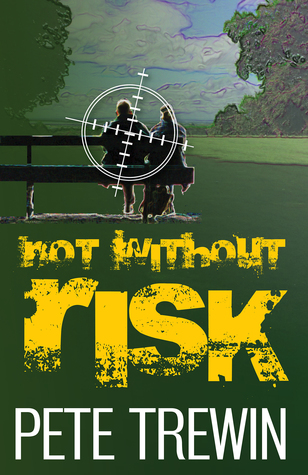
Review ~ Not Without Risk by Pete Trewin

Not Without Risk
AIA Publishing
2017

My thanks to the author for my copy of this book

Martin Bennett works behind the scenes for a regeneration company which is working on new ideas to bring prosperity back to Merseyside. Liverpool seems to be a place which is crying out for redevelopment, but, as Martin discovers, to his cost, that not everyone is of the same opinion.

Not Without Risk is a complex thriller which takes us on a lively journey through the sinister underworld of the city of Liverpool. It’s a place where all manner of shady individuals ply their trade, and thanks to a few bent coppers who turn a blind eye, they always seem to succeed in keeping one step ahead of the law. When Martin witnesses the suspicious death of an old adversary, he inadvertently gets drawn into this criminal netherworld, a world which is inhabited by unethical lawyers and equally corrupt politicians.

Trying to put together all of the pieces of this complicated jigsaw puzzle is what makes Not Without Risk such an entertaining read. I enjoyed getting to know Martin, he’s a likeable chap, and even though when we first meet him he’s slightly down on his luck, he rises to the challenges that the story throws at him with great aplomb. His lively banter with his colleague, Lester, and their thwarted efforts at getting fit made me laugh out loud, especially at the descriptions of Lester’s somewhat dubious sport attire. 

I found much to enjoy in Not Without Risk, not just because I’m a northerner and could appreciate the dry wit and ready repartee which is so reminiscent of this part of the country, but also from the way the author really brings Merseyside, and in particular, Liverpool, to life in such a convincing and entertaining way. 


Pete Trewin is the author of three crime mystery novels – with a touch of noir – set in Merseyside and the north of England.


Pete Trewin


Twitter @PeterTrewin


21920582 24626718


Thursday, 8 February 2018

Review ~ The Coffin Path by Katherine Clements


34209844
Headline Review
8 February 2018
My thanks to the publishers for my copy of this book

There is nothing I like better than an atmospheric ghost story which is set high above the hills of Northern England. 

Mercy Booth, her father, Bartram and servant, Agnes eke out a bleak existence amongst the lost and lonely crags of the Yorkshire Dales. The old coffin path that links Mercy's home at Scarcross Hall to the village below is a path not often travelled as folk say that evil lingers on its dark and lonely trail.

Mercy isn't frightened, after all, this is the only life she has ever known, and she is content to tend to her flock of sheep in isolated loneliness. But so attuned is she to her solitary environment that when strange things start to happen, and when a shadowy figure is seen near the Hall, Mercy’s peace of mind is greatly disturbed.

With a strong sense of time and place, The Coffin Path is a deliciously creepy story and so icily chilling in places that it makes the hairs on the back of your neck stand up. And whilst, it’s about the realities of living in a harsh and unforgiving time when ignorant superstition could ruin innocent lives, it’s also about gossip and sly innuendo; it’s about blood and fear and of the daily struggle of survival.

Set in the latter half of the seventeenth century, The Coffin Path is that wonderful mixture of Gothic gloom and ancient superstition which is so reminiscent of Northern England. Beautifully written, and filled with a sense of evil and a brooding loneliness, it’s one of those stories which is just perfect for a cold, wintery evening, and when the light dims and the evening gloom settles you will find yourself peering into dark shadows.....as, like Mercy, you never know what waits for you there.


Katherine Clements is a critically acclaimed novelist, self-confessed costume drama addict and current Royal Literary Fund Fellow at the University of Manchester.

She is editor of Historia, the online magazine of the Historical Writers' Association, and is a member of the HWA committee and The Prime Writers. The Coffin Path is her third novel.


Twitter @KL_Clements

#CoffinPath

@headlinepg


Saturday, 5 August 2017

Close to Home ...Helen Steadman


As a book reviewer I have made contact with authors from all across the globe and feel immensely privileged to be able to share some amazing work. However, there is always something rather special when a book comes to my attention which has been written by an author in my part of the North of England. So with this in mind I have great pleasure in featuring some of those authors who are literally close to my home. Over the next few Saturdays, and hopefully beyond, I will be sharing the work of a very talented bunch of Northern authors and discovering just what being a Northerner means to them both in terms of inspiration and also in their writing.


Please welcome Northern Writer


Hi and welcome back to Jaffareadstoo, Helen. Tell us a little about yourself and how you got started as an author.

I always wanted to write from being little, and I was always making comics and writing stories, plays and poems, and so on. But when I read Peter Carey’s Illywhacker, I was so stunned by its brilliance that I found it impossible to write for many years after comparing my own efforts with this masterpiece. (What I didn’t know then was that between 1964 and 1969, Peter Carey wrote five novels, none of which were published. His novel, Bliss, was finally published in 1981. In a Guardian webchat, he said he’d have given up had he known how long it would take. Now, he has umpteen books under his belt, and of these, two won the Booker prize, two were shortlisted and two were longlisted.) 

Finally, I forced myself to start writing seriously in 2005 and committed to writing a thousand words per day, every day, whether I felt like it or not. In subsequent years came long rounds of rejections. Finally, I had a fairly savage (but well deserved) critique and as a result of that, signed up for some Open University courses: Creative Writing A215 and Advanced Creative Writing A363 (both highly recommended). These two courses improved my writing exponentially, and I kept writing and then took an MA in creative writing. Finally, years after starting to write seriously (and with five and a half unpublished novels stashed in ream boxes), I received The Email from Impress Books last October. Now, over a decade later, my first novel has been published. I once read a quote by Anne Enwright, (The Guardian 2010) and she said, ‘The first 12 years are the worst’. I remember my despair at reading this, but I just kept going because those 12 years were going to pass irrespective of whether I did any writing or not. And in the end, it has taken 12 years! So, my advice for writers is: be patient and persevere.


Your debut novel, Widdershins, is set in the North East of England. How did the people and its landscape shape your novel?

Most of this novel was written in my head while out walking the late, great Archie Scottie Dog. It was impossible to make notes while walking (due to fear of dog loss or tripping and falling down various gullies), so I developed a technique of ‘freethinking’ where I would wander about the woodland, bringing characters to life in my head and having them converse. Later that night, I would just write up whatever I could remember from my walks. So, if anyone ever sees me walking about with glazed eyes and talking to myself, there’s no need for concern as I’m just writing in my head.

I would say that the landscape shaped the book more than people. I spent so much time looking at the landscape and wandering about in it, that I feel I must have absorbed quite a lot of it by osmosis and channelled it into the book. I also took hundreds of photos on my travels. I’m not a skilled photographer by any means, so most of them are out of focus and badly taken, but they proved invaluable for going back and checking that such and such a plant was indeed in bloom or seed at certain times of the year.


Whilst writing Widdershins, you were inspired by the true events of the 1650 Newcastle Witch trials. How did your interest in this subject start?

My interest in this subject developed as part of a gradual process. At the back end of 2011, I decided to take an MA in Creative Writing, which gave me plenty of time to decide what to write about before the MA began in 2013. I knew I wanted to write a historical novel, but had no clue what it would be about. I was walking in the woods one day and Florence Welch’s song ‘Rabbit Heart (Raise it up)’ started going through my head. This made me think of sacrifice, ritual and magical goings on, which led me to witches. Although I knew in a flash that I wanted to write about witches, I didn’t have any firm ideas at that point. In truth, my initial thoughts veered towards something rather more magical and supernatural than what I eventually ended up with.


Widdershins - First Draft


As I began researching ahead of starting my MA, I read widely on the seventeenth century, local history, witches and witchcraft, and I joined paranormal groups and investigated all sorts of supernatural goings on. In the course of my research, I learned about the Newcastle witch trials, which I’d not known about until that point. I was quite shocked to learn that 16 people had been executed on one day in Newcastle for witchcraft. Of course, I knew about the Pendle witches in Lancashire and the Witchfinder General down south, but this was the first inkling of anything local to me. What shocked me most was that during the proceedings, the witchfinder was revealed as a fraud and one girl was set free, but the others were still executed. As my research continued, I could not get this unknown girl and the witchfinder out of my mind, and I realised that this was the story I had to write. In a sense, the fact that little was known about them gave me an enormous amount of writerly freedom.


Widdershins in the Woods
Impress Books
2017


In your research for your novel, did you visit any of the places you write about and which have made a lasting impression?

Because I live in the North East, it was very easy to visit many of the places again and again, and most of my time was spent outside in nature in all seasons. I spent a lot of time walking along the River Derwent at various points, for instance, at the part near to where Jane and Annie Chandler lived. I also walked next to its confluence with the River Tyne pretty much daily for over a year.

I did expect that the hardest place to visit would be the Town Moor, where the so-called witches were executed, but that’s not the place that most affected me. The hardest place to visit was St Andrew’s church in Newcastle. The wrongfully executed people were buried in its graveyard, and it gave me quite a hollow feeling standing there.


If you were pitching the North as an ideal place to live, work and write – how would you sell it and what makes it so special?

The wide-open countryside, the huge blue skies and the fresh air are why I love it so much. I grew up in the North, but took it for granted. It was only after a decade in London that I really came to appreciate how beautiful it is and how lucky I am to live here.


North East England


From a historical writer’s perspective, it’s steeped in history, and there are thousands of untold tales tucked away just waiting to be written about. As well as stunning nature and historical gems, Northerners are among the friendliest people you could hope to meet anywhere in the world, which means you’ll never be short of a friendly face.


As a writer based in the North, does this present any problems in terms of marketing and promoting your books and if so, how have you overcome them?

I don’t think it’s presented any real problems for me. I know there are issues around British publishing being London-centric, but my publisher is based in the South West, and I’m in the North East. The fact that we’re based at diametrically opposed ends of England hasn’t stood in our way. The internet has helped, and the advent of Facebook, Twitter, Instagram and blogging means that so much promotion work is done online these days, so location seems not to matter. Of course, it helps that my publicist (Natalie Clark) is a bit of a genie! She is very creative and has a great eye for social media. I must admit that with Natalie’s encouragement, I’ve had to leave behind my Luddite ways and properly join the twenty-first century this year. (‘Insta-what?’ is a phrase that I have been guilty of using in the not-so distant past.)


Writing is a solitary business - how do you interact with other authors?

I’ve met quite a lot of writers through local groups and writing courses. I know a few writers from local chapter meetings of the Romantic Novelists Association (hello lovely ladies of the Border Reivers Chapter!), and they are very friendly and supportive. Taking courses in creative writing was also a good move because it helped me develop my writing and introduced me to some great writing friends. I am part of a group that met during our MA, and we stay in touch and criticise each other’s work (hello lovely ladies and gents of the DIY Group!). We’re spread over several countries, so we mainly meet online, but we do have the occasional get together. Getting used to giving and taking constructive criticism has improved my writing hugely, and the thick skin I’ve grown as a result has stood me in good stead for dealing with rejection!


How supportive are local communities to your writing, and are there ever any opportunities for book shops, local reading groups, or libraries to be involved in promoting your work?

People locally have been very supportive, both in terms of sharing information and being interested in my writing. North East people are very proud of their heritage and lots of locals have shown interest in this novel. For instance, two local projects, the Consett and District Heritage Project and the Land of Oak and Iron, do a lot of work to encourage people to take an interest in the area’s heritage, and I plan to do some work with both groups. Similarly, there is a strong network of libraries and bookshops, who are always supportive, and I plan to do some reading sessions over the summer and autumn.


You can discover more about Helen and her writing on her website by clicking here
Follow on Twitter @hsteadman1650
Visit on Facebook


Witches Kitchen


Warmest thanks to Helen for being our very welcome guest today and for talking about her writing and sharing her love of the North East with us.


I hope that you have enjoyed this week's Close to Home feature


Coming next week : Alyson Rhodes


~***~

Saturday, 29 July 2017

Close to Home...Susanna Bavin


As a book reviewer I have made contact with authors from all across the globe and feel immensely privileged to be able to share some amazing work. However, there is always something rather special when a book comes to my attention which has been written by an author in my part of the North of England. So with this in mind I have great pleasure in featuring some of those authors who are literally close to my home. Over the next few Saturdays, and hopefully beyond, I will be sharing the work of a very talented bunch of Northern authors and discovering just what being a Northerner means to them both in terms of inspiration and also in their writing.


Please welcome Northern Writer


Hi, Susanna, welcome to Jaffareadstoo. Tell us a little about yourself and how you got started as an author.

The simple answer to how I got started is that I was a child writer, churning out boarding school stories. Then, as a teenager, I was introduced to Victoria Holt's books by my best friend, and they got me started writing gothic novels. Over time, these naturally morphed into sagas, not because I had read sagas at that point, but because that was just the way my writing style developed.

What I love in particular about sagas, both as a reader and as a writer, is the historical aspect. The characters have to tackle whatever challenges the plot throws at them within the context of the social and legal framework of the time. Sagas are also famous for being regional and The Deserter's Daughter is set in early 1920s Manchester.


I wrote for years without attempting to get published. Then I submitted an early draft of The Deserter's Daughter to literary agents and received rejections all round - though mostly the rejections were personal letters that included comments about what the agents had and hadn't liked. Given that rejections on the whole are standard letters, I was heartened to get personal responses.

In the end it was the fourth draft that was the successful one. I did three email submissions one afternoon, intending to do more the following day, but I never had to do them, as I had a reply from Laura Longrigg at MBA that same evening. She had read my three chapters on her way home and wanted to see the rest of the book. I ended up with offers of representation from two agents, but Laura was at the top of my wish list. I went down to London to meet her and we took to one another right away.


In your research for your novel, The Deserter's Daughter, did you visit any of the places you write about and which have made a lasting impression?

Visit any of the places? I did better than that - I grew up there! The Deserter's Daughter is set in Chorlton-cum-Hardy, a suburb on the south side of Manchester. The River Mersey forms a natural boundary between Chorlton and Cheshire. At least five generations of my family have lived there, which gives me not just a strong sense of place but also of local history. Within fifteen minutes walk of the house in which I grew up are five other houses where previous generations of my family lived, going back to the 1800s.

In 1920, when The Deserter's Daughter starts, Chorlton was a small, quiet township and many of the old landmarks are still there today. Some of them feature in the book, but I was careful not to include landmarks just for the sake of it. Those that are featured are written directly into the plot - such as the Lloyds Hotel, where Ralph holds his auctions; Chorlton Green, where there is a temporary war memorial; and Jackson's Boat, the bridge that spans the Mersey, with Chorlton in Lancashire on one side and Sale in Cheshire on the other.


What did you learn about your writing through using a real location?

There is a fine line between creating a story setting based on personal knowledge and simply luxuriating in that knowledge and sharing it for its own sake. When a novel is set in a real place, readers who are familiar with the locality love the local references; but when I was writing, I was aware all the time of all the majority of readers, who would have no local knowledge and who would simply want to understand the local geography as it relates to the plot and who would want an idea of what important local landmarks look like.

I had a wonderful piece of feedback from blogger Catherine Boardman on her Catherine's Cultural Wednesdays website. She said: "All the action takes place in Chorlton, a Manchester suburb which I have never visited but now feel as if I have. Susanna Bavin describes the streets, rivers and bridges with such feeling that I felt that I was walking the cobbled terraces." I am deeply proud of that comment.


If you were pitching the North as an ideal place to live, work and write - how would you sell it and what makes it so special?

Obviously, as a Northern girl, I'm biased. I live in North Wales now, but my choice to set The Deserter's Daughter in Manchester shows the strength of my ties to my old home.

The North has everything - vibrant city life, beautiful countryside and miles of coastline, plus, of course, masses of history in the landscapes and townscapes. For me, the links with the past are hugely important, and all the more so because of the family history links I have all across the North of England. I think what the North offers is choice and variety in where and how you live. Oh, and it's definitely true what they say about northerners: we are a friendly bunch.


What are the ups and downs of being an author?

The biggest 'up' is the pure joy and satisfaction of writing. I'm sure that other writers will understand if I say that I get grumpy if I don't write for a few days. It is important to discover the self-discipline that enables you to get your work done; and of course the work/life balance is important, just as it is in any type of work. But, as in other types of work, there are times when this is easier said than done - just ask any writer who is working to a deadline!


Writing is a solitary business - how do you interact with other authors?

For me, writing was a solitary pursuit for a long time, then I started going to courses and discovered the pleasure of meeting other writers. I would urge any writer to find ways to hook up with others, whether it's in a local group or by going on a writing holiday. I am a member of the RNA (Romantic Novelists Association) and the annual Conference is a marvellous venue for meeting other writers and generally having a good time together.

Moreover, I am a member of an online group of writers and we chat regularly, not just about our writing but about anything and everything. We are all at different stages in our writing careers and we carry one another through the dark times and lead the cheering when things go well. For example, one of us, Maddie Please, had her debut novel published at the beginning of last week and the rest of us provided lots of support on social media. We live in all corners of the UK (except Northern Ireland) and a couple of times a year, we descend on London to meet for lunch in the real world.

I also have a good friend in Canada, Jen Gilroy, who writes contemporary romance. She kindly invited me onto her blog to have a chat so I could tell her North American and Canadian readers about the British saga. Jen and I are in touch by email several times a week and our friendship makes a real difference to me, especially if I am facing some sort of writing or publishing issue and she says, 'That happened to me too.'

I would urge any writer to meet up with others - and remember, the online friendships and support are as real and valid as those you find in the real world. It is simply a matter of finding the people whom you relate to the best. It doesn't matter how sympathetic or interested your non-writing friends are - nothing beats the sheer delight and satisfaction of sharing with someone whose understanding is based on similar experience and similar dreams.


Discover more about Susanna on her website by clicking here
Follow on Twitter @SusannaBavin


Warmest thanks to Susanna for being our very welcome guest today and for talking about her writing and for sharing her love of the North with us.


I hope that you have enjoyed this week's Close to Home feature


Coming next week : Helen Steadman


~***~


Saturday, 15 July 2017

Close to Home ....Elizabeth Ashworth


As a book reviewer I have made contact with authors from all across the globe and feel immensely privileged to be able to share some amazing work. However, there is always something rather special when a book comes to my attention which has been written by an author in my part of the North of England. So with this in mind I have great pleasure in featuring some of those authors who are literally close to my home. Over the next few Saturdays, and hopefully beyond, I will be sharing the work of a very talented bunch of Northern authors and discovering just what being a Northerner means to them both in terms of inspiration and also in their writing.


Please welcome North West Writer


I’ve lived in the North West all my life. In fact I can trace the direct line of my father’s ancestry back to the beginning of the parish registers in the village of Whalley in Lancashire. So it isn’t surprising that I feel a deep affinity with the place and its history.

I’ve always been a writer. I had my first ‘article’ published in Diana magazine at eleven years old and was paid a pound. My first short story was for Pony magazine just a few years later. But it was when Countryside Books asked me to write a Tales of Old Lancashire for their series that I really began to write about the histories and legends of the places I know so well.


This part of Lancashire is steeped in folklore and I loved researching those old stories, but there was one in particular that fascinated me. It was the story of a hermit who had lived in a cave under Clitheroe Castle. The legend told that he suffered from leprosy, but was cured by drinking from the wellspring. It also said that he would have inherited all the de Lacy lands in Blackburnshire and Yorkshire if he had not contracted the illness, because back then lepers were treated as being dead and not allowed to inherit, so everything went to his brother instead. Intrigued by this legend I began to do some research to see if there was any truth in it and discovered that a brother of Roger de Lacy was indeed a leper. Whether he ever lived in a cave at Clitheroe I don’t know, but I wanted to tell his story in more detail and that’s how I came to write my first novel The de Lacy Inheritance, which was published in 2012 by Myrmidon Books.


The following novel, An Honourable Estate, was also inspired by local legend. This time it was the story of Mab’s Cross at Wigan. Poor Lady Mabel thought her beloved husband William had died and she married another man. When William came back she walked barefoot to the Cross as a penance for her adultery. There are several versions of what happened to Lady Mabel and William Bradshaigh and after much research, I settled on a story that I hope is both credible and enjoyable.


15718310


Since then I’ve written two more books that feature the de Lacys: Favoured Beyond Fortune and The Circle of Fortune. The settings for these move away from the local area because of the history, but as the family is so linked to the local area they are still inspired by Lancashire.


I’ve also written By Loyalty Bound, which features Richard III and his unnamed mistress who bore him two children. This one has a local link too because I believe the mother of his children was a Lancashire born girl, Anne Harrington, from Hornby Castle, just beyond Lancaster. 


Another story, The Merlin’s Wife, is about the astrologer John Dee and his wife Jane. It isn’t set in the north but John Dee was the Warden of the Collegiate Church in Manchester in his later life, and his wife Jane is buried there. The other connection is the legend that John Dee’s associate, Edward Kelley, supposedly raised the dead in the churchyard at Walton-le-Dale. That was after he’d had his ears cropped at Lancaster for some double dealing he’d been up to. Most of John Dee’s troubles seem to have arisen from his friendship with Kelley and it’s a bit of a sad story in some ways, but one that I wanted to tell from the point of view of his long-suffering Jane Dee who stood by her husband in all his troubles.


I’ve also written about William Shakespeare and his supposed connections with Lancashire. Many Kinds of Silence explores the legend that he spent his ‘lost years’ at Hoghton Tower, near Preston. It’s credible, I think, but the lack of any firm evidence makes it something that is rarely taken seriously. That, of course, opens up the possibility for a novelist to create their own version of events!


My latest novel, which I’ve just finished writing, is the story of Isolde de Heton, who was an anchoress, a recluse, in the churchyard at Whalley. It’s yet another example of me trying to sift the facts from the various legends and come up with a viable story that doesn’t discredit the main character. I blame Harrison Ainsworth and his Lancashire Witches book for Isolde’s bad reputation. He portrayed her as a bit of a wicked woman, but when you look at the history she did what she did for a good reason. I won’t say any more! Look out for The King’s Appointed, which I hope will be available before too long.

I’m currently deciding what to write next. I’m thinking of drawing on the family research I mentioned at the beginning and writing about the challenges faced by a family who were forced to move away from hand loom weaving in their home to work in one of the new cotton mills in Blackburn. But, whatever I decide to write, you can be sure that it will be inspired by the local places I know and love.

Find out more about Elizabeth and her writing:

Website: www.elizabethashworth.com
Twitter: @elizashworth
Facebook: https://www.facebook.com/elizabethashworth/


Warmest thanks to Elizabeth for being our very welcome guest today and for talking about her writing and for sharing her love of the North West with us.


I hope that you have enjoyed this week's Close to Home feature


Coming next week : Susan Pape


~***~

Saturday, 8 July 2017

Close to Home ...Sharon Booth


As a book reviewer I have made contact with authors from all across the globe and feel immensely privileged to be able to share some amazing work. However, there is always something rather special when a book comes to my attention which has been written by an author in my part of the North of England. So with this in mind I have great pleasure in featuring some of those authors who are literally close to my home. Over the next few Saturdays, and hopefully beyond, I will be sharing the work of a very talented bunch of Northern authors and discovering just what being a Northerner means to them both in terms of inspiration and also in their writing.


Please welcome Northern Writer


Sharon Booth 


Hi Sharon, welcome back to Jaffareadstoo.
Sharon : Thank you so much for inviting me onto your blog. I'm delighted to be back again.

Tell us a little about yourself and how you got started as an author?

I’m a lady of a certain age – which could mean anything, really, and I’m saying nothing more, except I have grown-up children and several young grandchildren. I live with my very patient husband and our German Shepherd dog, and when I’m not writing I’m busy with my job in the NHS. I've always been an avid reader, and it was only a matter of time before I put pen to paper and started writing my own stories. However, after having five children, I stopped writing anything more interesting than shopping lists for a long time. It was only when I was in my late forties that I got the bug again. A trio of characters popped into my head and demanded that I tell their story, and so the Kearton Bay series was born. It took a few years of writing and re-writing before my first book, There Must Be an Angel was ready, but I've since published five full-length novels and a novella. I've also had two pocket novels published by The People's Friend. The first pocket novel has recently been published by Ulverscroft, as part of their large-print Linford Romance Library. I've had a short story in a charity anthology, Winter Tales, and another published in a People's Friend special.


Your books are written in Northern England, how have the people and the northern landscape shaped your stories?

A lot of the people I write about are loosely based on people I know. My characters' mannerisms, their thought processes, and their idiosyncrasies come from people I'm very familiar with – particularly the older generation. In my books, you'll often find an older man or – more likely – woman, who is blessed with a dry sense of humour, a no-nonsense way of looking at things, and a blunt way of expressing themselves. My maternal grandmother was one of eight children, and I grew up surrounded by various great-aunts and one great-uncle, who "said it like it is" and took great pride in doing so. They could be cutting, but they were also very funny. The people I see every day speak with broad accents, can cut you to the quick with one comment, yet will happily and unthinkingly call total strangers "love", and make cheerful conversation with anyone who catches their eye. They can crease you up with laughter with a single word, or even an expression. I love them, and I hope that's reflected in the characters I write. As for the landscape – I love that, too. Whether it's the flat plains of Holderness, the rolling hills of the Wolds, the wild untamed moors, the breathtaking Dales, or the various towns and cities in between, I have a passion for Yorkshire that means I can completely immerse myself in writing about the area and the people within it. There's such a variety of different landscapes in this region that it's never boring. Whether I want to set a story in a pretty village, on the coast, an isolated farm, or an elegant city, I can find just the location in Yorkshire. 


As a writer based in the North, does this present any problems in terms of marketing and promoting your books and if so, how do you overcome them?

I've not had any problems, really. In terms of marketing, the fact that the books are all Yorkshire-based seems to be a draw for many people. Yorkshire is well-loved. It's true that it's sometimes difficult to attend events, many of which are based in London, but I'm quite fortunate in many ways. Firstly, I belong to the blogging group, The Write Romantics, which is a group of ten writers. We have our own private Facebook group and we exchange ideas and information on there, plus two of the Write Romantics are fellow Yorkshire lasses, and we meet up regularly to chat and plan. Secondly, I belong to the Romantic Novelists' Association. The RNA has a fabulous online presence which really helps with promotion, and there are various events throughout the year, which members and non-members alike can attend. Although the parties tend to be in London, the conference is held in a different location each year, making it accessible to everyone. There is also a get-together in York this year, which I'll be attending, so that gives me a chance to meet fellow authors and hopefully get some insights and tips, and make new friends.


In your research for your books, did you visit any of the places you write about and which have made a lasting impression?

I've visited them all! It's a great excuse to go out for the day. The Kearton Bay books are based on Robin Hood's Bay and I've visited several times, absorbing the atmosphere and taking lots of photographs of the place, which helped in the writing. Kearton Hall, which features in Once Upon a Long Ago, was inspired by Burton Agnes Hall in East Yorkshire, and I visited the house several times. I love that building so much! It was a pleasure to be there, and a pleasure to write about. Skimmerdale, the location for This Other Eden, is based on Swaledale, which is where my paternal ancestors, the Keartons, came from. I visited Thwaite (Beckthwaite) and Muker (Camacker) way before I ever dreamed of writing a book, and I've visited several times since. Research has taken me to Scarborough Castle, to Middleham Castle, to the Bronte Parsonage in Haworth, to Whitby, to Goathland, to Richmond, to Bridlington…Which has made a lasting impression on me? All of them. I've loved each location, each building. The thing is, when I visit them, I picture my characters living and working there, and it makes me very emotional. The place that brought me to tears, in its own right, was the Bronte parsonage. I will admit that I welled up when I saw Charlotte's little shoes and glasses, and the quote from Jane Eyre on the wall: The marriage cannot go on: I declare the existence of an impediment.   


If you were pitching the North as an ideal place to live, work and write – how would you sell it and what makes it so special?

We'd been on holiday – I won't say where – but the entire time we were away, people were reserved, unfriendly, didn't meet our eyes. We drove home feeling we'd never go to that area for a holiday again. As we reached Yorkshire, we felt ourselves start to relax. We stopped to buy a drink and were greeted with warm smiles and addressed as "love". We looked at each other and said, "We're home". That's Yorkshire, to me. I always feel as if I'm sounding like that character played by Jim Broadbent in the Victoria Wood sketch, who bangs on about "My north" then turns out to be living in Chiswick. I don't want to come across as a professional northerner! I'm well aware that there are magnificent landscapes all around Britain, and lovely people in all areas. We've holidayed in some fabulous British locations and met some smashing locals. I love Cornwall so much, I got married there! But there's something about the north which stirs a passion. If you want scenery, we have it – whether you want coast, lakes, moorland or mountains. We have beautiful, elegant cities like York and Harrogate, grand architecture, ruined abbeys and castles, museums and art galleries. We have a lower cost of living than many areas of Britain, and most of all, we have the people. Northern people, full of warmth and humour, and grit and determination, and courage and kindness. If you want to go home, go north.
 

What are the ups and downs to being an author?

Sometimes, it feels as if you're never off duty. Even when you make a decided effort not to write for a day or two, your mind never switches off. It's always plotting a scene, correcting stuff you've already written, dreaming up new characters, new storylines. It can be very annoying for those closest to us. I've been told many times that I seem to just glaze over mid-conversation, as something occurs to me and my mind goes to work. It's also quite a strain on your eyes! Hours spent at the computer has, I'll admit, led to a deterioration in my sight and frequent headaches, but then, I have a day job which also involves five straight hours at the computer, so it's not good. The nerves are terrible, too. When you're about to release a new book into the world, the fear that it will be universally loathed is horrendous. You convince yourself that everyone will hate it. You dread scathing reviews. Then there's the fear that you won't be able to write another book. What if you've done everything you can do? What if that's it? Not to mention the sheer effort involved in the actual writing. Sometimes it's difficult to chain yourself to the desk when it's the weekend and the sun's shining outside. But there are so many ups to this job, too. There's nothing better than hearing from total strangers who've read your book and loved it. It's so touching to get messages like that – to know that your writing has moved someone enough to make that effort. Seeing your book in print, reading good reviews, knowing that you did it – you actually told your story. And there's the absolute joy of being immersed in an imaginary world, mixing with people you've created, who come to mean so much to you they're practically family. When the real world gets you down, it's wonderful to think there's somewhere you can escape to, and you can make whatever you want to happen, happen.

  
Writing is a solitary business - how do you interact with other authors?

As I said earlier, I'm a member of the Write Romantics and the RNA, so I have lots of online contact with members of those groups. I also speak to plenty of other authors and bloggers online. I meet up with two of the Write Romantics for lunch and a gossip quite regularly, and the Write Romantics are planning a group get-together later in the year. Hopefully, at least seven or eight of us will be there. I'm also going to my first RNA event in September where I'll finally get to meet some of the authors I've only ever seen on Facebook before. That will be interesting. Nerve-wracking, but interesting. Next year, I'm hoping to attend the conference, depending on where it's held, and I may then join the local chapter, which means attending monthly meetings with several authors in my area.  My main problem is shyness and lack of self-confidence. I'm working on it!  


How supportive are local communities to your writing, and are there ever any opportunities for book shops, local reading groups, or libraries to be involved in promoting your work?

To be truthful, I've never approached any of them, so I couldn't tell you. I suspect there are more opportunities than I imagine, but I'm still working on the confidence issues – see answer above!


If someone is new to your work, which book do you think they should start with?

Gosh, that's tricky to answer. I suppose you could decide where you want to read about – the coast, the moors or the Dales. If you fancy the coast, try There Must Be an Angel, which is the first in the Kearton Bay series. If it's the moors, my latest book, Resisting Mr Rochester, is the book to choose. If the Dales grab your interest, read This Other Eden. Described by one reviewer as "a huge jaunt of a novel", it's set on a sheep farm in Skimmerdale (Swaledale) and features a rather gorgeous farmer. I'm currently working on the sequel to that one. Whichever one you choose, you'll find heroines you can relate to, heroes you'll fall in love with, and glorious Yorkshire settings. Enjoy!


25234499 29777500 


You can find out more about me at www.sharonboothwriter.com

Resisting Mr Rochester, my latest novel, is available to buy now. Amazon UK


Warmest thanks to Sharon for being our very welcome guest today and for talking about her writing and for sharing her love of the North  with us.


I hope that you have enjoyed this week's Close to Home feature


Coming next week : Elizabeth Ashworth


~***~

Saturday, 29 April 2017

Close to Home ...Sue Featherstone


As a book reviewer I have made contact with authors from all across the globe and feel immensely privileged to be able to share some amazing work. However, there is always something rather special when a book comes to my attention which has been written by an author in my part of the North of England. So with this in mind I have great pleasure in featuring some of those authors who are literally close to my home. Over the next few Saturdays, and hopefully beyond, I will be sharing the work of a very talented bunch of Northern authors and discovering just what being a Northerner means to them both in terms of inspiration and also in their writing.


Today I welcome Northern  Writer


Sue Featherstone


Hi, Sue and welcome to Jaffareadstoo. Thank you for spending time with us today.


Confession time: I’m not really a northerner. I was born in the Midlands and lived there until I was nine when the family upped sticks to Yorkshire.

It was a bit of a culture shock – phrases like ‘put wood i’th’oil’ (shut the door), ‘lug ‘oil’ (ear hole) as well as words such as ‘chuddy’ (chewing gum) and ‘silin’ (raining heavily) had me completely flummoxed (confused).

But now I love it and wouldn’t live anywhere else.

So here are five reasons to visit my home city of Wakefield:

Sculpture Triangle: Yorkshire Sculpture Park, the UK’s leading outdoor art gallery, and the award-winning Hepworth Gallery, both in Wakefield, are arguably the crown jewels of the Yorkshire Sculpture Triangle.

The YSP, winner of the Art Fund Prize for Museum of the Year in 2014, is set in 500 acres of glorious parklands, and hosts a changing programme of exhibitions whilst the Hepworth, named after sculptor Barbara Hepworth, who was born in the city, is one of the largest and most visited art galleries outside London.

Yorkshire Sculpture Park  was the first UK museum to exhibit work by the American artist KAWS


The bluebells are in bloom at Yorkshire Sculpture Park

In all, around 200 of the world’s leading artists are featured at YSP and the Hepworth and their sister galleries – Leeds Art Gallery and the Henry Moore Institute, both in Leeds.

Find out more at: http://www.ysculpture.co.uk/

Rhubarb, rhubarb, rhubarb: Yorkshire Forced Rhubarb, grown by candlelight at farms in the geographical triangle between Leeds, Wakefield and Bradford, was given protected name status in 2010.

Every February, Wakefield goes rhubarb crazy with its annual Festival of Food, Drink and Rhubarb. Highlights this year included street entertainment, a family rhubarb trail and demonstrations by celebrity chef Jean-Christophe Novelli and Rachel Green, from ITV’s Flying Cook and World on a Plate.

Make a date for next year’s festival: Feb 23–25, 2018.

The Price of Coal: Pick up a hard hat and battery lamp and descend 140m underground at the National Coal Mining Museum for England where guided underground tours, led by former miners, allow visitors to get their hands dirty and experience life at the coal face as it would have been for the pitmen, and the women and children who once worked alongside them. 


The Grand Old Duke of York: Local legend claims Richard, Duke of York, father of Edward IV and Richard III, as the nursery rhyme duke who marched his army up and down a hill.

The hill in question is at Sandal Castle, now a nationally recognised Scheduled Monument, built on the site of a former Norman motte and bailey fortress. 

Richard died in December 1460 after he marched his army down the hill against a much larger Lancastrian army, which challenged his claim to the throne.

Two months later his eldest son Edward became king.

Time is ticking at Nostell Priory: This 18th century Palladian mansion, now a National Trust property, is home to one of the first long case clocks made by inventor John Harrison, who was born nearby in 1693, and whose marine chronometer revolutionised sea-going navigation, saving countless lives and ships.

Join in a year of ‘Clock Work’ celebrations to mark the 300th birthday of Harrison’s invention and have a go at putting together cogs and levers to see exactly what makes a clock tick.


One more reason to come down my way? Pontefract, a few miles east of Wakefield, celebrates its annual Liquorice Festival on July 10 and promises a smorgasbord of liquorice food and drink – including liquorice stout. Who could resist?


Here's more about Sue

Sue Featherstone is a former journalist and public relations practitioner turned academic.

Her career started in local newspapers before switching to PR to become internal communications manager with a large utility company.

She completed a degree in English Literature as a mature student and subsequently moved into higher education, teaching journalism to undergraduate students at Sheffield Hallam University.

At the beginning of 2017, Sue left Sheffield Hallam to focus on her writing.

Together with her friend and writing partner Susan Pape, she has written two successful journalism text books - Newspaper Journalism: A Practical Introduction; and Feature Writing: A Practical Introduction.

Their first novel, A Falling Friend, was published by Lakewater Press in 2016 and a sequel will follow in summer 2017.

They now write about books at https://bookloversbooklist.com/

Sue is on twitter @SueF_Writer

A Falling Friend is available to buy on Amazon here. 


Lakewater Press
2016


After spending her twenties sailing the globe, making love on fine white sand, and thinking only of today, Teri Meyer returns to Yorkshire – and to studying. That’s when she discovers John Wilmot, the second Earl of Rochester, and poet of all things depraved. What she doesn’t realise is even beyond his grave, his influence over her is extraordinary. To hell with the consequences.

Having gone out on a limb to get old friend Teri a job at the university at which she teaches, it doesn’t take long for Lee Harper to recognise a pattern. Wherever Teri goes, whatever she does, every selfish choice she makes, it’s all setting her up for a nasty fall. But Teri’s not the sort to heed a warning, so Lee has no choice but to stand by and watch. And besides, she has her own life to straighten out.

A clever, raw and hilarious character-driven masterpiece that follows the lives of two friends with the same ambitions, but who have vastly different ways of achieving them.


On the first Anniversary of the publication of A Falling Friend, Sue is kindly giving away a copy of her book to 3 lucky UK winners of this giveaway


a Rafflecopter giveaway


Huge thanks to Sue for being such a lovely guest today and for sharing her love of her adopted county of Yorkshire with us.


I hope that you have enjoyed this Close to Home Feature


Coming next week : Amanda Brooke


~***~