Thursday, 20 April 2017

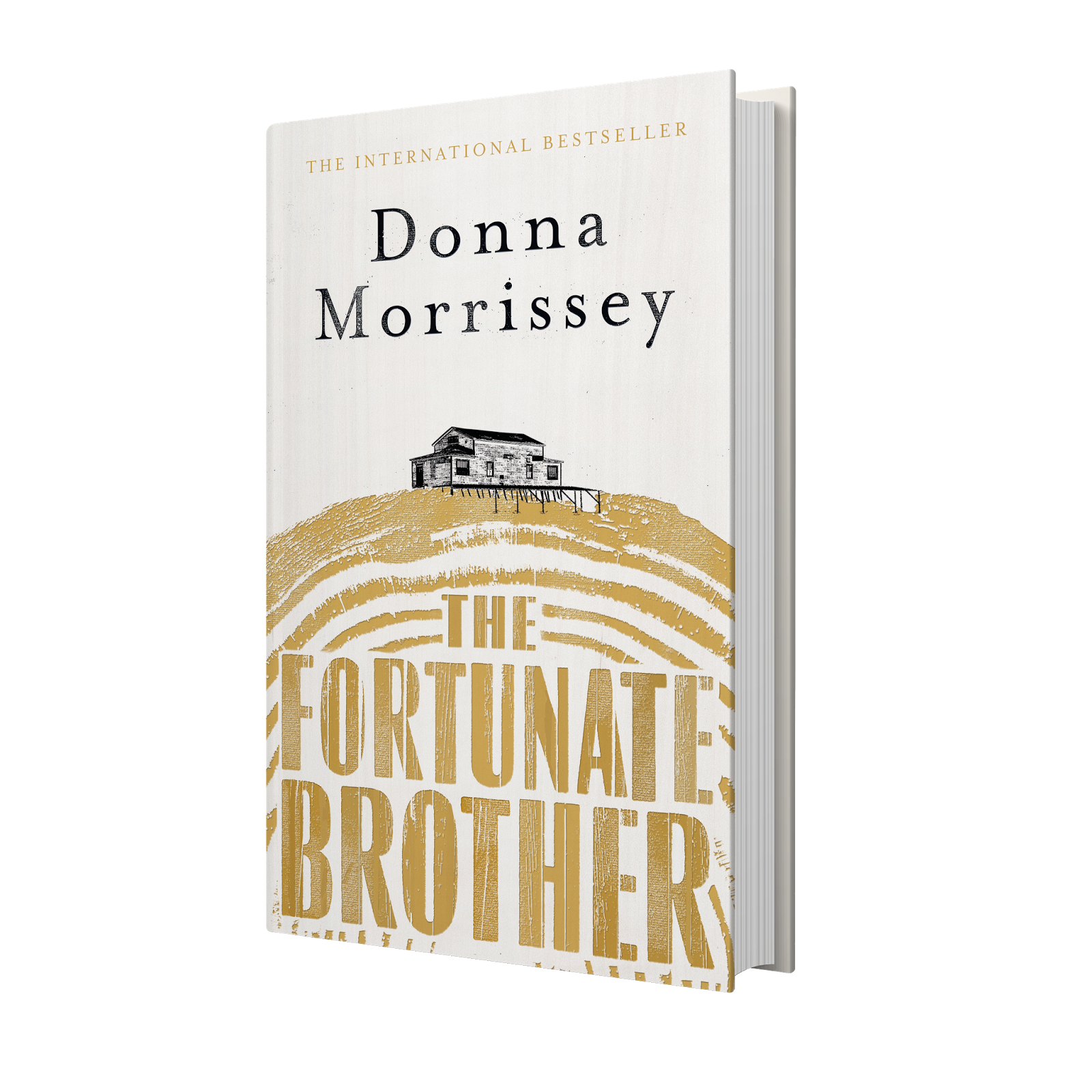
Blog Tour ~ The Fortunate Brother by Donna Morrissey


I am delighted to host today's stop on the  The Fortunate Brother Blog Tour


A warm welcome to you, Donna and thank you for spending time with us today. Tell us a little about yourself and how you started writing?


I was a high school drop-out, traveled around the country wearing beads and head bands for several years, had a “love-child,” married and then had another. A family tragedy sent me back to Newfoundland and it was then, during a horrible illness of my own, that I started back to schoo. A divorce and a university degree later, I started writing.


How did you get started as a fiction-writer?


I met this eccentric, knowledgeable a woman who prompted me to start writing, arguing it’s one’s duty to bring tragedy to the realm of myth. To give it meaning and a place of honour. The tragedies I’d suffered took me to that place where pain can be felt as holy. And holy can be felt as sublime. I picked up the pen and was instantly addicted. I've been writing every single solitary day since. And I wouldn't recommend it to anybody for it imprisons you for life.


What can you tell us about The Fortunate Brother without giving too much away?

The Fortunate Brother is the story of Kyle who is mourning the loss of his elder brother. He is caught between a mother who is attempting to sweep her house of grief, and a father who drinks to dull his pain. The family’s trauma is escalated when a local bully is murdered and his blood is found on Kyle’s doorstep.


What do you consider to be the strongest elements of the book?

The dichotomy between despair and hope. Between judgement and understanding. The hero, Kyle wrestles with all of those concepts as he works through his grief and anger re the death of his brother, his mother’s illness, and the involvement of both savory and unsavory characters from the community that are impinging on his life.

How do you plan your writing, are you a plotter, or a see where it goes kind of writer?

I sit in the muck and struggle for firm footing, day after day, minute after minute. Everything comes in a big smudge and nothing is ever defined. So, yeah, the later…no plotter here.


What do you hope that readers will take away from the story?

A sense of, ‘Wow, that was great. I want to go there.’


What has been one of your most rewarding experiences as an author?

Having a reader approach me, holding my book in one hand, and his other covering his heart and tears in his eyes. And I knew that he suffered grief and our hearts connected. May God bless all of us.


Out of all the books you've written, do you have a favourite?

Yes. The one you are about to read…..eh eh….okay, now I’m being clever. Why, this one, of course. Ok, ok…..it’s….well….To quote someone: Every artists feels their greatest work is ‘just about to happen.’ That’s why we live so uncomplainingly in the discomfort of poverty….hope that each one will be greater still!!


About the Author


Donna Morrissey is the award winning author of five novels. |She grew up in The Beaches, a small fishing outport in Newfoundland, and now lives in Halifax, Canada.


Follow on Twitter #thefortunatebrother 


**The Fortunate Brother is published today**
Canongate
20 April 2017


What's it all about...

The Fortunate Brother is a dark, atmospheric and compelling novel about the aftermath of a murder in a claustrophobic rural community in Newfoundland. When a body is found in the lake suspicion falls on the troubled Now family. As the mystery unfolds other, far deeper, secrets are revealed.


What did I think about the book...


This dark, and somewhat brooding story, is set in a small coastal community in Newfoundland and focuses on the petty indifference of a small town at odds with itself.  Sylvanus Now, his wife, Addie and son, Kyle, have had their share of family tragedy which has left an indelible mark, not just in the relationships between themselves, but also in the way the community reacts to their misfortune.

Told through considerate dialogue, a story emerges of a brutal sort of truth, which lays bare the thoughts and feelings of a family in complete disarray. When tragedy, once again, strikes at the heart of the Now family, they each deal with the fall out in their own inimitable style.

Considerately written, The Fortunate Brother is one of those stories which make you want to take your time over reading. It is the third book in a trilogy which started with Sylvanus Now and continued in What They Wanted, and whilst it possible to read and enjoy The Fortunate Brother as a standalone book, I do think that it is better to have read the series from the start in order to have a more rounded view of the Now family, of their past tragedies, and also of their place in this small town environment.

Whilst this is not a fast action, all guns blazing sort of story, there is no doubt that the book works well, both as a character driven drama, and also as an emotionally complex human story, which looks at the complicated layers between grief and loss, misfortune and tragedy, and which then brings the whole together in a story of hope over adversity.


Best Read with ...Line caught fish and a mug of sweet tea.


My thanks to Becca at Canongate for her help facilitating this interview

 and for sending my review copy of The Fortunate Brother.


Canongate20 April 2017


~***~


Wednesday, 19 April 2017

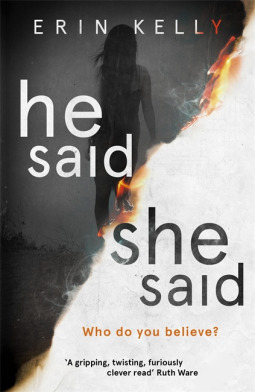
Review ~ He Said She Said by Erin Kelly


31393997
Hodder & Stoughton
20 April 2017


What's it all about ..

In the hushed aftermath of a total eclipse, Laura witnesses a brutal attack.

She and her boyfriend Kit call the police, and in that moment, four lives change forever.

Fifteen years on, Laura and Kit live in fear.


What did I think about it..

None of us really know what we would do if we witnessed a seemingly despicable act of sexual violence. Would we walk away or would we do what Laura did and challenge the perpetrator, comfort the victim and then report the incident to the police? Either way, whatever your actions,  the consequences would live with you for the rest of your life and that's just what happens to Laura and her boyfriend, Kit who are in Cornwall to witness the total eclipse in August, 1999. What they see there will shape their lives, and that of Beth and Jamie's lives forever.

The story is told in current time and also in flashbacks which take us back to that fateful summer of 1999, and also to what happened in the fifteen years afterwards. In many ways it's a salutary warning of being careful of what you get involved in and of the consequences of misguided actions which could, inadvertently, reverberate down through the years.

It's rather a slow burner of  a story which has, at its heart, a whole series of secrets and lies which threaten the safety and well being of everyone who is involved. There are some strong moments of dialogue, particularly in the trial scenes which show just how easy it is to be bamboozled by clever law teams, who, it must be said, simply want to win a case. 

I found the whole concept of centering the story around the five descriptive phases of an eclipse and juxtaposing them within the context of the story to be really clever and even though the subject matter is emotive, I never felt like the information or the consequent actions of the characters wouldn't have happened in real life.

The author has done a commendable job of talking about a really difficult subject in a way that doesn't sensationalise what happened but which, realistically,  shows just how lives can change in a heartbeat.


Best Read With..A wheatbran muffin and a decaff latte...


Erin Kelly is the author of The Poison Tree, The Sick Rose, The Burning Air,T he Ties That Bind and Broadchurch:The Novel inspired by the mega-hit TV series. The Poison tree was a Richard and Judy summer read in 2011 and became a major ITV dram in 2013.
Twitter @mserinkelly


**He Said/She Said will be published 20 April by Hodder & Stoughton**


 Follow on Twitter #HeSaidSheSaid


My thanks to Louise at Hodder for my review copy of He Said She Said


~***~

Tuesday, 18 April 2017

Blog Tour ~ Under a Sardinian Sky by Sara Alexander


Jaffareadstoo is delighted to be hosting today's stop on the 


Under a Sardinian Sky Blog Tour


It is with pleasure that I welcome the author Sara Alexander to the blog with this lovely guest post


How I’d Cast Under a Sardinian Sky


My family and I indulge in these musings quite often - the dinner table has become very animated in the process! It’s really hard for me to picture anyone other than Paul Newman and Marlon Brando in the two male leads. There is the slight problem of neither of them walking this earth any longer, but Newman’s dreamy quality is the perfect sensitive pitch for Kavanagh, the lieutenant stationed in Sardinia who invites our female protagonist, Carmela, to work for him as an interpreter. Kavanagh is a man of great mental and physical strength but with an innate humility and ability to put others at ease. He doesn’t use his rank to intimidate. The island of Sardinia bewitches him as soon as he lands there. Everything about it is intoxicating to him, the untouched wilderness, the azure coves, the food and the fierce sense of family within the communities.

In stark contrast, the brooding yet compelling Brando, would play Franco, Carmela’s fiancé. He is charming and changeable. His worldview is very fixed and narrow. He is set to become one of the richest and influential men in the town, a role he takes on with neither grace nor wit. His charm is nevertheless magnetic, despite a volatile temper.

The role of Carmela requires an actress of great sensuality but lack of vanity, she would need to have a breezy un-self conscious manner. Carmela is ambitious, skilled and with great reserves of determination. She is imaginative with the practical head to see through her ideas. There is also a fearlessness to her, which deepens as the story progresses. I can picture Catherine Zeta-Jones in her early television days of The Darling Buds of May. She had a wholesome, compelling verve which is how I see Carmela, as well as an innate, unaffected beauty.

I suppose actors preparing for these roles would need to study the Sardinian culture well – it really is quite different to what we understand as Italian. They are a diffident people, slow to trust others but ardent once those friendships are formed. Life in 1950s Sardinia was a world away from the awakening taking place in other parts of Europe at the time. It remained, in some parts even to this day, a very much undiscovered place, with hidden mountainside villages inhabited by men and women who clung fierce to their traditions and perhaps, some would say, dabbled in magic…


HQ Books
20 April 2017


What's it all about..

For Mina, a London-based travel writer, the enigmatic silence surrounding her aunt Carmela has become a personal obsession. Carmela disappeared from her Italian hometown long ago and is mentioned only in fragments and whispers. Mina has resisted prying, respectful of her family’s Sardinian reserve. But now, with her mother battling cancer, it’s time to learn the truth.

1952, Simius – a busy Sardinian town surrounded by fertile farms and orchards. Carmela Chirigoni, a farmer’s daughter and talented seamstress, is engaged to the son of the area’s wealthiest family, Franco. To the town’s eyes it’s a perfect match, but Carmela holds doubts about Franco’s possessiveness - doubts which are only magnified once she meets Captain Joe Kavanagh.

Joe, an American officer stationed at a local army base, is charismatic, intelligent… and married. Hired as his interpreter, Carmela resolves to ignore her feelings, knowing that any future together must bring upheaval and heartache to both families.

As Mina follows the threads of Carmela’s life to uncover her fate, she will discover a past still deeply alive in the present, revealing a story of hope, sacrifice, and extraordinary love.


What did I think about it..

I like stories that take me to a time and place that is unfamiliar to me and in Under a Sardinian Sky, the author takes us to the Mediterranean island of Sardinia and back to the early 1950s when the island was still reeling from the repercussions of WW2.

The story explores the life of Carmela Chirigoni, a feisty farmer’s daughter, who is engaged to be married to Franco, the son of one of the wealthiest families in the village of Simius, and yet, it is the story of Carmela’s ill-fated attraction to Captain Joe Kavannagh, an American officer stationed on the island, where the story starts to take flight.

Under a Sardinian Sky is a nicely written family drama by an author who clearly has a skill for storytelling. Time and place feels comfortably realistic and the sights, sounds, smells and tastes of this wonderful Mediterranean culture come alive in the imagination. Within the central theme of the story there is much to take in, and to say too much about the plot would spoil the overall effect, but what I will reveal, is that the story abounds with the drama of hidden family secrets which threaten to over shadow not just the past but also towards the future.


Best read with…thin slices of seadas, drizzled with warm honey and a basket of sun ripened plums and peaches...


Sara Alexander has worked extensively in the theatre, film and television industries, including roles in much loved productions such as Harry Potter & the Deathly Hallows, Doctor Who, and Franco Zeffirelli’s Sparrow.

Growing up in North West London, Sara attended Hampstead Comprehensive School, before going on to graduate the University of Bristol with a BA honours in Theatre, Film & Television, and Drama Studio London with a postgraduate diploma in acting. She now returns to her Sardinian routes through the pages of her debut novel Under a Sardinian Sky.

Follow on Twitter @AuthorSaraAlex #SardianSky


Under a Sardinian Sky by actress and author Sara Alexander is out 20th April (HQ, £7.99)


Huge thanks to Sara for this fascinating guest post 
and also to  Rebekah at Midas PR for my invitation to be part of the tour and also to HQ Books for my copy of this book to read and review.


~***~


Monday, 17 April 2017

Review ~ The Classic FM Musical Treasury by Tim Lihoreau

29916049
Elliot & Thompson
9 March 2017

A curious collection of new meanings for old words.


What's it all about ...

There are all sorts of people, events and sounds that exist in the musical world for which there are no words. We have been sadly bereft of a satisfactory way to describe the contortion of a singer’s mouth when reaching for the high notes; the audience member who leaves a concert halfway through the grand finale; or that person who places one finger in their ear and raises their eyes heavenwards when they sing.


What did I think about it...

It's no secret that I love listening to Classic FM, particularly on a Sunday morning when I am preparing my blog posts for the week ahead. So, to have a new musical treasury is a real treat especially as it is written by Classic FM presenter, Tim Lihoreau.

The Classic FM Musical Treasury is a feast for the senses, as not only does it have a delightfully humorous approach to musical facts, there is also the possibility of learning something you never knew you needed to know.  There should always be a word to describe what's happening in music but when that word doesn't exist, well as this book suggest, why not create one...

The treasury is divided into ten sections and spans Performers and their Works, through to, my favourite section, Trivia and Treats. This treasury incorporates, with musical suggestions, to quote the author..."the place names of towns and villages, the suburbs,  hamlets, digs, dens, the quarters and quoins of this beautiful land of ours…”

I was especially heartened to see the name of a village a couple of miles away from Jaffareadstoo mentioned on the very first page. It made me smile and thus set the scene for the rest of this delightful treasury which had me nodding in agreement on more than one occasion and which sent me scurrying through the book to spot other place names I recognised.

For classical music fans this book is definite smorgasbord of different musical meanings which stretch and fire the imagination.

These are just a few of my favourite place names within this musical meandering…

Jolly’s bottom (pg202) Trivia and Treats
Steeple Bumstead (pg37) Performers and Performances
Totley Rise (pg60) Concerts, Festivals and Tours
And my absolute favourite is Buldoo (pg163) Composers and their Works …this definition made me laugh out loud...

'...a faux Scottish work of light music purporting to ‘evoke the sights and sounds of the highlands’ (written ten years ago originally about farming and kept in a bottom drawer ready to be re-branded when the opportunity arose)...'

And one for Jaffa…Cat’s Bank (pg8) Performers and Performances

'...names in a fixer's little black book that can be called on when a diva falls ill..'

If you like random musical quirkiness with a hint of the absurd all melted together with British eccentricity then this book works really well.


Best Read with...A Hamperley of Appleby Parva and a glass or two of Hartsop


About the Author

Tim Lihoreau presents one of the most popular breakfast shows on commercial radio: Classic Fm's More Music Breakfast.

Classic FM
Twitter @Tim Lihoreau


My thanks to Alison  at Elliot & Thompson for this delightful treasury 


~***~


Sunday, 16 April 2017

Sunday WW1 Remembered...


The author, Michael Wills 


shares this poignant account of what happened to his grandfather, Albert Sanger in 1917


A Hundred years ago, this month


At the outbreak of the First World War, my grandfather Albert Sanger and Harry Trowbridge, the brother of Albert’s sweetheart, Amy, joined the queue of volunteers at Newport, Isle of Wight, Drill Hall. Albert, aged 21, was a miller and Harry, aged 17, was a butcher’s errand boy. Both were enlisted to the Isle of Wight Rifles, an infantry regiment which was part of the Hampshire Regiment.
After training, on 30th July 1915, together with seven or eight thousand other men, they embarked on the liner Aquitania in Liverpool docks. The troop ship had two escorting destroyers to protect against German submarines. However, the weather was so bad that the escorts had to return to port on 31st. The ship took a long detour out into the Atlantic to avoid the U-boats. On 8th August, the “Rifles” were landed in the Dardanelles, Turkey.


Harry Trowbridge


Most of the men from the Isle of Wight were not to see England again for over two years. A large proportion, including Harry, were never to return. After a terrible mauling during the fighting at Suvla Bay, most of the Battalion were shipped to Alexandria in Egypt. Harry’s body was never identified, he is remembered on the memorial at Helios, not far from the site of the battle. Albert, wounded in the fighting, was repatriated to England. There he married Amy before being shipped to Alexandria to re-join his battalion in autumn 1916.

The Isle of Wight Rifles were encamped by the Pyramids of Giza and then moved on to a deployment at the Bitter lakes, by the Suez Canal. By then, the remaining raw recruits of 1914 were hardened soldiers, but nevertheless the territory through which they were fighting took its toll. The regimental diary tells of snakes, scorpions, sand storms and extreme heat.

In January 1917, they marched first to Mazar and then in February they began chasing the retreating Turkish army across the Sinai Desert. The 145 mile march across the desert to El Arish  took twelve days. On the 17th April, the offensive against the Turkish line at Gaza began. On the morning of 19th April, the “Rifles” led the attack against the Sihan Redoubt. The Redoubt was captured, but at the roll call at the end of the day, of the 800 men who went into action, only 2 officers and 90 men were recorded. Among those who did not respond to the roll call was Albert.

After the capture of Jerusalem, one of Albert’s mates returned to the scene of the battle of Sihan Redoubt. He found Albert’s army paybook and tatters of uniform still on the barbed wire of the Turkish line. The paybook, which soldiers usually kept in their left-hand breast pocket, had a bayonet hole through it and was soaked in blood. Meaning well, he sent a letter to my grandmother telling her of the circumstances of Albert’s death and enclosing the paybook. She kept it until her death in 1941. What Albert was never to know was that he had a daughter, my mother, who was born in March 1917.

Albert and Amy Sanger's
 Wedding Photograph
1916


Corporal Albert Sanger’s grave and many others of the men of 1st Battalion Isle of Wight Rifles, is in the war cemetery in Gaza. 


Huge thanks to Michael for sharing Albert and Harry's story. It is so important that the lives of brave men, like Albert and Harry, and of the sacrifices they made for King and country should never be forgotten.


Michael also has an interest in modern history and has a website relating to the evacuation of Dunkirk in World War II.

Click here for more details


~***~

Saturday, 15 April 2017

Close to Home ....Clare Coombes


As a book reviewer I have made contact with authors from all across the globe and feel immensely privileged to be able to share some amazing work. However, there is always something rather special when a book comes to my attention which has been written by an author in my part of the North of England. So with this in mind I have great pleasure in featuring some of those authors who are literally close to my home. Over the next few Saturdays, and hopefully beyond, I will be sharing the work of a very talented bunch of Northern authors and discovering just what being a Northerner means to them both in terms of inspiration and also in their writing.


Today I welcome North West Writer

Clare Coombes


Tell us a little about yourself and what got you started as an author?

As well as being a fiction writer, I’ve covered areas from art and culture to sport science and astrophysics used by media like The Guardian and the BBC as sources for stories. Working with NASA discovering new planets ,and conservation scientists for the evolution of language and orang-utan ‘kiss squeaks’ have been two particular highlights this year.


Nasa Story - Seven New Planets


Photo Credit : Tim Laman


My first novel Definitions was published in 2015, and I have been commended for short stories and novel extracts in a number of publications, competitions and academic journals. My postgraduate teaching has included how to ‘pitch’ to agents and publishers and social media for writers. I have judged fiction competitions and spoken in schools and high profile events on writing as a career. I have also worked as an advisor and editor for aspiring writers and authors, many who have gone on to become published and win awards. 


But how did I get into writing at all? Most authors would probably say they’ve been writing for as long as they can remember, I’ve said the same in interviews in the past, but it was really after my mum died that I started to take it seriously. That doesn’t mean anything I wrote at the time was good, in fact most of it, particularly the fiction, was bad, but it was a way of me starting to work through my grief. 

My first published articles were non-fiction. The one I’m most proud of is still ‘Beyond Hollywood Grief’ in Openmind Mental Health Magazine where I talked about the effects of bereavement on those who are at that in-between stage in life – not feeling like a child or an adult, while being treated as both simultaneously. I wrote it so that other people who had been through the same thing as me could read it, which leads onto another reason I became an author, reading.

Books have always there for me through everything. That doesn’t mean I was lonely or anything, although I was a bit of a weird child. I had a form of crippling shyness up to around senior school that I think reading helped me get out of, because it gave me the confidence to be me. It let me know that there were other weird people with weird thoughts out there. I’m still an introvert, as I think most writers are, but reading helped me manage that. These days I’m even proud of being one. 

I got better at fiction because I worked at it. Some people say that writing should be a natural talent and you can’t teach it but that is wrong. All talent needs teaching, in any subject. You wouldn’t tell someone who was good at football or tennis that they didn’t need to train. And I did lots of training. I did a Masters in Writing at Liverpool John Moores University, joined writing groups, read and wrote a great deal and researched. 

My style is to take a life experience and use the emotions to produce a piece of fiction that I think will help people. That’s why, after a recent maternity leave break I’m working on - The Mum without a Mum Diaries. It’s a bit of Adrian Mole meets Bridget Jones and I’m including the first preview of the book blurb and chapter in this interview. 

Most books about the experiences of being a mum are non-fiction. There are also a limited number that look at how you cope with being a mum when you have lost your own. This is my own life experience as my mum died when I was 18 and I've just had a baby but I didn't want to do this as an autobiography. Instead I thought I could put the emotions in but create a fictional piece with additional plot threads (not based on my life) so this would appeal to a range of readers. 

Clare with husband Joe and baby Esmé


The Mum without a Mum Diaries

How do you become a ‘proper’ mum when you don’t have one? Who do you ask for advice on how to look after a baby while dealing with a boyfriend who is a brilliant father but thinks marriage is a bigger commitment than having a child? And don't even mention all the baby bystanders – his parents, well-meaning-but-occasionally-mean-friends, the Daily Mail, hitting the bottle over breastfeeding and groups like bingo-bongo-baby-massage-while playing-the-drums-upside-down-and-reading-your -baby-war-and peace. Alicia Matthews is experiencing so many trials of being a mum without a mum, and she needs someone to listen. 


Read a preview of the first chapter by clicking here 


Your first book, Definitions, is set in Liverpool– how the people did and its landscape shape your writing experience?

Liverpool has so much to offer architecturally, culturally, intellectually and historically. Growing up here, I’ve watched it develop, even go through some very dark times, and it’s an extraordinary place. It’s a city that’s built on the experiences of refugees and an example of hope in the current refugee crisis. I loved using this strength and resilience for my characters in Definitions, along with the humour and language of Liverpool. 

I wanted to share the city with people. My upcoming novel is set in Liverpool too. 


As a writer based in the North West, does this present any problems in terms of marketing and promoting your book and if so, how do you overcome them? 

There’s so much support for writers in Liverpool, particularly through organisations like Writing on the Wall. They link literary agents in London to writers in the North West through events like Pulp Idol. This is a sort of X-Factor for writers, complete with live studio readings and judges asking ‘why do you think you can write. But it’s brilliant and it got me published. Through this and writing groups, like the one I started in set up by Jimmy McGovern and his wife, there’s a lovely little writing network where everyone knows someone who knows someone. We all help each other. 


If you were pitching the North West as an ideal place to live, work and write – how would you sell it and what makes it so special? 

For me, based in Liverpool, there’s something magical about living by the river. And there are so many places to get creative inspiration, parks, the bustle of Bold Street, the cathedrals. Liverpool has the most museums outside of London and so many films and TV programmes have been filmed here using the stunning city backdrops. Recent examples include Peaky Blinders, Sherlock Holmes, Chariots of Fire, Harry Potter, Fantastic Beasts and Where to Find Them. Liverpool is also the most popular UK city used by Charles Dickens in his novels. Something is always happening and the theatres, like the Everyman always have amazing productions on, like the recent fantastic Fiddler on the Roof. It’s a great place for writers.


Writing is a solitary business - how do you interact with other authors? 

As mentioned earlier, organisations like Writing on the Wall bring writers together. I also think social media is a great place to connect. Local bookshops, writing courses and groups keep us all going, far from being in an empty room, typing away without interaction. I also have the most inspiring writing circle of published female writers. We all meet once a month for food, chats and critique. 


How supportive are local communities to your writing, and are there ever any opportunities for book shops, local reading groups, or libraries to be involved in promoting your work? 

Bookshops and libraries have been a great support. I’ve taken part in events at Write Blend bookshop in Waterloo, Liverpool Central Library, Writing on the Wall, LJMU, Waterstones and local schools.


If someone is new to your work, how would you describe Definitions in five words?? 

Gone Girl meets Mean Girls and the new one is Adrian Mole meets Bridget Jones. I like describing things in terms of how they ‘meet’. 

You can find out more about Clare and her writing on her website by clicking here

Follow on Twitter @clare_coombes

You can read a preview of Clare's latest novel, by clicking here


My thanks to Clare for spending time with us today and for telling us about her love for Liverpool and for sharing her writing with us.


I hope that you have enjoyed this Close to Home Feature


Coming next week : Carys Bray


~***~

Friday, 14 April 2017

Guest Author ~ Lilly Bartlett


I'm excited to announce that Harper Impulse have signed three books with Michele Gorman writing as Lilly Bartlett


Lilly's books are cosy rom-coms with quirky characters and guaranteed happy-ever-afters.


Harper Impulse
April 2017


​When Emma’s boyfriend Daniel pops the question with a ring the size of a small country, she suddenly realises just how different they are. She’s the Eastenders to his Made in Chelsea. She wants a low-key wedding with close friends and family in Uncle Colin’s pub, while Daniel’s mother is expecting a society do that their high-brow guests won’t forget!

How on earth can Emma put together a celebration fit for Lords and Ladies on a shoestring budget? Not to mention the fact her cross-dressing Uncle Barbara wants to be a bridesmaid, her best mate Kelly can’t stand Daniel’s best friend Cressida, and her dad is too proud to accept any help from Daniel’s family towards the costs.

There’s three months to go until the big day. Will Emma’s happy-ever-after end in disaster?


I was able to catch up with Lilly this week and this is what she told me about the inspiration for her latest novel..


The inspiration for The Big Little Wedding in Carlton Square is in the dedication to the book... my friends Ben and Ting, who got married last summer and, with the help of all their friends and family, threw the most magical wedding you can imagine, on very little money! I baked their wedding cakes.


There's a sequel coming up in June, and I might love it even more than Lilly's debut! It's called The Second Chance Cafe in Carlton Square. 


And Lilly's third book in September, called The Big Dreams Beach Hotel, which has a new cast of characters. 


You will find the ebook of The Big Little Wedding in Carlton Square on Amazon UK

You will find The Big Little Wedding in Carlton Square on Amazon.com  

More details on the publisher website here


Huge thanks to Lilly for spending time with us today.
Jaffa and I wish you much success with this new venture.


~***~