Wednesday, 16 September 2015

Review ~ Fifteen Postcards by Kirsten McKenzie

25584133
Accent Press
2015


When Sarah Lester's mother and father mysteriously disappear in separate incidents, she is left with a sense of devastating grief, not just from the loss of her beloved parents, but also from the unexplained mystery which surrounds their disappearance. Being solely responsible for running The Old Curiosity Shop, the family's aptly named antiques shop, means that, Sarah is surrounded by antiquities,which she cares for with a loving touch. When she is given the opportunity to take over some of the antique contents of a house estate, she is unprepared for the effect that some of the artifacts, particularly a set of fifteen antique postcards, will have on her life.

What then follows is a well written historical time slip novel which moves effortlessly between time frames in a story which is filled with vivid descriptions of time and place, and beautifully authentic of both speech and character. I think the author has done a commendable job in bringing the story to life and it’s obvious that she has used extensive historical research to ensure that the story always feels authentic and that’s not an easy feat to pull off, particularly with time slip novels which can sometimes feel a little bit clumsy. Overall, the story evolved really nicely, there is enough going on in the novel to maintain interest and the ending of the story lends itself very nicely to a sequel.I also need to add that the cover is really striking and compliments the story beautifully.

My thoughts are that Fifteen Postcards is a good debut novel and I’m sure the author will continue to go from strength to strength. 


My thanks to the author for sharing her novel with me.


Visit Kirsten's website

Follow her on Twitter @kiwimrsmac


Tuesday, 15 September 2015

Review ~ The Good Neighbour by Beth Miller..

The Good Neighbour
Ebury Publishing
10 September


Be careful what you let in...


When the neighbours from hell move out, Minette and her husband, Abe are delighted when new neighbours, single mum Cath, and her two children move into the house next door. Very soon, Cath and Minette become friends and start to share confidences, well, Minette is probably far more confiding than she should be, but Cath is so good at listening, and Minette is a little bit lonely and even as she loves Abe and baby daughter Tilly, she's a just a little bit bored and craves excitement.

What then follows is a cleverly constructed novel which is told in three very different voices. Cath, the beleaguered mum of Davey and Lola, seems to have boundless energy, but sometimes there’s a sense that she’s struggling to cope. However, there’s no doubt that she is fiercely protective of her children, particularly her disabled son, Davey, and she guards all their privacy with something close to obsession. Minette, we learn very quickly is a little bit frustrated and craves excitement but at what cost to her own little family? And, then there's Davey an enigmatic eight year old who is wise beyond his years ,and who has a stoicism which is commendable.

It’s a carefully manipulated story about the minutiae of family life with lots of convoluted features and a good many surprises, and I think that the author does a good job in bringing all the multi layers of the story together. There’s lots to take in and some fairly interesting clues, which, as the story moves on starts to make sense. I won’t reveal more as that would spoil things as this is one of those stories which is better revealed layer by tantalising layer. But what I will say is,  that, regardless of how well we think we know someone, life has an uncanny knack of throwing a few spanners in the works, so that we never truly know what secrets are hidden behind closed doors.


It’s a good second novel and well worth a read if you like family dramas with a bit of a twist.


You can read an extract from The Good Neighbour here.


My thanks to the author and Ebury Publishing for my review copy of this book.

Monday, 14 September 2015

Blog Tour ~ The Good Neighbour by Beth Miller


Jaffareadstoo is delighted to be part of 


And to introduce


Beth  Miller


Beth thought she was going to be a poet when she grew up, but she is rotten at poetry. Her back-up plan was to work on The Muppet Show. Instead, she has written two novels, When We Were Sisters and The Good Neighbour, both published by Ebury (Random). She’s also written a book called For The Love of The Archers, out in October. She is currently wrestling with her third novel.


I am delighted to be able to share an extract from


Ebury Publishing
10 September 2015


What's it all about :
When the horrible next-door neighbours finally move out, Minette is ecstatic. And even more so when she finds that Cath, who takes their place, is a completely different sort of person: easy-going, child-friendly, and with an interesting take on life. The two women quickly become friends and confidantes, and Cath encourages Minette to spread her wings, which includes getting to know their other neighbour, handsome Liam, a little better… But Cath is very guarded, reluctant to reveal much about her past, and Minette soon finds herself wondering if she really knows her new neighbour at all.


For your delectation ..........here's an extract from Chapter 10

Minette


No one, including Minette herself, realised she couldn’t see properly until she got into trouble at school, aged six, for copying from the girl next to her. ‘I didn’t copy her answers,’ Minette protested, ‘only the questions, because I couldn’t see the board.’

Minette’s mother often described how guilty she felt at Minette’s first eye test, when the optician looked at her, over his own glasses, at Minette’s first eye test. ‘She’s extremely short-sighted,’ he said, bluntly. He didn’t add, but didn’t need to, ‘How could you not notice?’

Minette’s parents acknowledged ruefully that there had been a few signs: the way Minette sat so close to the television, for instance, or her uncertain responses when things were pointed out to her, but she was a bright child who had compensated for her poor vision in other ways. When the optician put the heavy test glasses onto her face, and slipped in the correct lenses, Minette cried out, ‘Oh, I can see lots of things!’ and her mum burst into tears. Minette couldn’t understand why. Hadn’t she just been given the precious gift of sight?

She loved her glasses, though they were chunky blue National Health ones that got her teased throughout primary school. She still had a pair of glasses, more flattering than the ones of her youth, for the brief periods without lenses first thing in the morning and last thing at night.

But one of her great pleasures, since she was six, was to remove all visual aids and allow herself to sink into Blur World. She could only do at it home, in a familiar setting, but oh, the comfort of it. Abe didn’t understand it. He felt sorry for her poor mole-like state, said if he was half as short-sighted as her, he’d have laser surgery like a shot. But when Minette took out her lenses, and the room lost its edges, shifted to a colourful fog, she felt herself relax. It wasn’t just, as Abe suggested in one of his amateur psych moments, that she’d regressed to childhood, to that time before anyone knew she couldn’t see. It was more than that: it was also an abdication of responsibility. ‘I can’t see,’ says the inhabitant of Blur World, ‘don’t ask me to do anything.’

Abe was at work, and Tilly was having a nap in her cot, worn out after a stressful trip to Toys R Us. Now that Minette had finally made the decision not to go back to work, there were going to be a lot more days like this. She sighed. But Cath next door was right – she wouldn’t get this time again. She took out her lenses and lay on the bed, gazing at the ceiling, which in Blur World was a fuzzy white expanse, with a blue sparkly blob in the centre (the lampshade).

What was that Cath had said?

We’ll all be dead in a hundred years.

No one had ever said anything like that to her before, and it was a revelation. Minette had always been a high achiever. Her glasses excluded her from the cool gang, so she naturally formed alliances with the geeks and nerds, the hardworking kids. She never really had a rebellious phase. Not when her parents split up; and not even in her teens. She went to university, got a good degree while working hard at a series of part-time jobs, and settled down into a career with a pension, a steady relationship with Abe. They had a very conventional life. He worked, she looked after the baby, they saved a little money each month, did the recycling and sponsored a child in Africa. Minette had never been too drunk to brush her teeth before bed, had never left her seatbelt off, never slept on a beach.

And yet, all the time, there existed a parallel universe she hadn’t known about, a world in which she could have been guided by the straightforward philosophy of ‘we’ll all be dead in a hundred years’. Imagine if, instead of working hard at her homework, maintaining a steady Grade A, she’d gone out dancing and boozing like the majority of her classmates. So many of them had dropped out of education completely, got work as shop assistants and hairdressers and gardeners. What if Minette hadn’t gone to university after all, but had remained in her Saturday job in the chemists, asked to be made full-time? They’d wanted her to stay, had given her such a lovely send-off, presenting her with a bag full of the make-up she’d admired when she tidied it on the shelves each weekend. She still had some of it: an eye pencil in the most perfect grey, now little more than a nub, and a Chanel lipstick, which she only ever used on special occasions.

What if she’d lived in this parallel universe? What if she’d thought, it doesn’t really matter what job I do? Shop assistant, tourism officer, brain surgeon: we’ll all be dead in a hundred years, after all. If she hadn’t gone to university she wouldn’t have moved to Brighton, or met Abe, or had Tilly. But she would have done other things. Travelled round South America on a motorbike, perhaps. Or become a burlesque artiste. Met a crazy man with fair hair and brown eyes, and fallen tumultuously in love. And not cared, because ’we’ll all be dead in a hundred years.

I’m lucky, thought Minette, snapping her eyes back to attention so that the orbs of lights stopped dancing around the blue blob. I have a lovely man, and a gorgeous daughter, and, and, and. She conjured up a Kodak moment of Abe, him holding Tilly as a tiny baby on Brighton beach last year, father and daughter squinting into the wintry sun and, in their woolly hats, looking very much alike.

Her mind drifted away from Abe, to the recent encounter with Liam. Snogging like teenagers on her sofa, as she’d said to Cath, while Tilly slept upstairs.

‘I’m bored with making this macramé bikini,’ he’d said as she opened the door to him.

‘Is there even such a thing?’ she laughed, resigned to the fact that, yet again, he looked as hot as all get out and she looked rank. He was the handsomest man in the street – probably in the whole of Sussex. As for her, Tilly had spat up milk on her sweatshirt, and her hair was in its home-day pineapple top-knot.

‘In my head, there is. You can model it and I’ll take a picture for the front cover of Macramé Masturbators Monthly.’

‘What have you really been doing?’

‘Listening to my mum on the phone, being upset about my gran.’

‘Oh no, why, what’s happened?’ She stood aside to let him pass.

‘My mum saw her yesterday and Gran said she wanted to go home, and when Mum said, “You are home,” she cried.’

‘Poor them.’

‘And poor me for having to listen to it. I need a treat after that, so I thought of you.’ He smiled. ‘Where’s Tilly?’

‘Asleep.’ She showed him into the living room.

‘This is a posh sofa.’

‘Heal’s. Abe’s parents bought it for us.’ Shut up, Minette.

Liam sat down. ‘How long till Tilly wakes up?’

Minette, flustered, glanced at her wrist, though she wasn’t wearing her watch. ‘Half an hour? Maybe a bit longer?’

‘Perfect.’ He patted the seat next to him.

‘Shall I make tea?’ Minette said, hesitating.

‘No thanks. Sit down please, Minette.’

She sat abruptly, looking at her lap so she couldn’t see his face, his eyes, the path of wrongness they would lead to.

 ©Beth Miller

Tempted by this extract? 

Well, you can find The Good Neighbour on Amazon UK and Amazon.com


Beth  Miller


You can find Beth on her website

An follow her on Twitter @drbethmiller


My thanks to Beth Miller and Ebury Publishing for the invitation to be part of this exciting Blog Tour. 


Do visit the other stops and discover more about The Good Neighbour.


~***~

Sunday, 13 September 2015

Sunday War Poet...

The theme for this months poetry


 is


The Soldier


The Soldier Speaks 


by 


John Galsworthy


If courage thrives on reeking slaughter,
And he who kills is lord
Of beauty and of loving laughter —
Gird on me a sword!
If death be dearest comrade proven,
If life be coward's mate,
If Nazareth of dreams be woven —
Give me fighter's fate!

If God be thrilled by a battle cry,
If He can bless the moaning fight,
If when the trampling charge goes by
God Himself is the leading Knight;
If God laughs when the gun thunders.
If He yells when the bullet sings —
Then my stoic soul but wonders
How great God can do such things!

The white gulls wheeling over the plough,
The sun, the reddening trees —
We being enemies. I and thou,
There is no meaning to these.
There is no flight on the wings of Spring,
No scent in the summer rose;
The roundelays that the blackbirds sing —
There is no meaning in those!

If you must kill me — why the lark,
The hawthorn bud, and the corn?
Why do the stars bedew the dark?
Why is the blossom born?
If I must kill you — why the kiss
Which made you? There is no why!
If it be true we were born for this —
Pitiful Love, Goodbye!


Not for the God of battles!
For Honour, Freedom and Right,
And saving of gentle Beauty,
We have gone down to fight!


John Galsworthy

1867 - 1933

Was an English author, poet and playwright. He is perhaps best remembered for his series of novels, The Forsythe Saga, and its sequels, A Modern Comedy and The End of the Chapter, which he published between 1906 and 1921. 

He won the Nobel prize for Literature in 1932.


~***~


Saturday, 12 September 2015

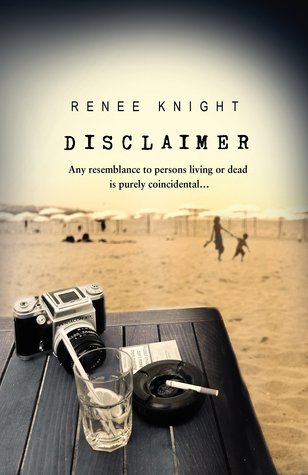
Review ~ Disclaimer by Renee Knight


23346719
Random House
Transworld Publishers
2015


On the surface, Catherine Ravenscroft, and her husband, Robert seem to have everything and yet hidden away in their marriage are cracks which conceal shared disappointments and tragedy.When Catherine and Robert move into a new property, Catherine is disturbed to find a book by her bedside which, when she starts to read, is about  something that happened, over twenty years ago, in her own life. The usual book disclaimer has been scored through in red pen. Catherine has no knowledge of where this book has come from. and this unsettling notion forms the basis for this psychological suspense story, which puts the microscope under lives which are about to be unraveled and altered forever.

The writing overall is reasonably good and the tightness of the plot is well controlled in places, but  it does have a tendency to meander. Initially, I was interested enough to want to know what happened in Catherine's past and why she was reacting as she did. And then, by about a third of the way into the novel,  I'm afraid that my attention started to wander and, if I'm honest, I became a bit bored by the whole thing ,until I just stopped caring about what happened to any of them.


I can appreciate that the novel fits comfortably within the domestic noir genre format and as such will have general appeal. It's a cleverly contrived debut novel but, on this occasion,  it didn't just work for me.


My thanks to Netgalley and Random House Transworld Publishers for the chance to read this one.


~***~


Friday, 11 September 2015

Review ~ Solomon Creed by Simon Toyne


Harper Collins
September 2015


His Past is Unknown. His Future Unwritten


In the Arizona desert, on the outskirts of the aptly named town of Redemption, a plane crashes, and an explosion threatens to engulf both the town and its people. Out of the smoke and ashes comes an enigmatic stranger, a man with no memory of who he is, who appears, seemingly out of nowhere, and who has more questions about him than answers. But one thing is certain; Redemption, with Solomon Creed in it, is never going to be the same again.

The book gets off to a complex and exciting start. The pace is fast and furious, and the short and snappy chapters lend an air of exciting anticipation which really focuses your attention. The multi layers of the plot are skilfully woven together and form the basis of a story that is steeped in mystery, so that it becomes not just about what’s happening in the here and now, but also about what happened in Redemption’s past. There’s more than a hint of the glory days of the Wild West about Redemption, but the air of  covert ambiguity which surrounds Solomon Creed, and the very modern aspects of the plot, gives the novel a contemporary edginess which is quite compelling to read.

There is no doubt that this first book in the Solomon Creed series gets off to a rollicking good start. And for me to say more about the fundamentals of plot, counter plot and malice would be to spoil a very enticing read, and that wouldn’t be fair, as the book needs to be read without any spoilers from me. However, what I will end by saying is this, there’s an undeniable cinematic quality to the unfolding drama in Solomon Creed, which would, I think, make a great all action movie. The eponymous Solomon Creed is incredibly mesmeric, an unfathomable stranger who doesn’t suffer fools and makes no allowances, but when he speaks you listen, and his actions really do speak louder than words. I can't wait to read more about him in future novels.


My thanks to Jaime at Harper Collins  for my copy of this book.


~***~


Blog tour and Giveaway ~ Solomon Creed by Simon Toyne


Jaffareadstoo is delighted to be part of the 


Solomon Creed
Harper Collins
10 September 2015


And to introduce the author


Simon Toyne © Toby Madden


Simon ~ welcome to Jaffareadstoo..


ST: Thanks for having me on your Blog. I really appreciate it.


I appreciate that giving away anything after the first few pages is something of a spoiler, but can you tell us a bit about Solomon Creed?

Solomon Creed is the name of the main character of the story. He arrives shoeless in the Arizona desert and seemingly knows everything about everything but nothing about himself. The only thing he knows for sure is that he is there to save someone. Unfortunately that person turns out to have been buried that morning. But how do you save a man who is already dead?


Where did the idea for Solomon Creed the character come from? Did he come before the story?

I had the general idea first, of a man who has to save others in order to ultimately save himself, then I worked backwards and spent a lot of time thinking about who that man might be and what he might look like. Solomon Creed is an albino, a blank sheet of a man, wiped clean of his past. As he starts to remember who he is he starts to get coloured in, literally and figuratively.

He’s very much in the long tradition of the knight errant or the ronin or the lone rider in westerns. He has a code and a quest and he blows into places with deep secrets and starts asking awkward questions that put him in harm’s way. I love those kinds of stories and always wanted to write one. And now I have.


Why did you decide to set the novel in the deserts of Arizona? Was a lot of research involved?

I wanted Solomon to walk out of a very hostile environment wearing inappropriate clothes to give the impression that he had just appeared and shouldn’t really be there. To my mind this meant he had to either emerge from a snowstorm wearing a T-shirt and shorts, or from a desert wearing a suit. I’d visited Arizona a few times and loved its otherworldly, elemental landscape so I went back there on a research trip looking for a place to set the book. In my previous books I’d built a whole city in Turkey - Ruin - to set the stories and it was a lot of work so I wanted to avoid that if possible. In the end, though, I couldn’t find a place that exactly fitted what I needed for the story so I ended up creating a whole town anyway, the city of Redemption.

My trip to Arizona was invaluable, though. I took hundreds of photos, some of which I’ve posted here on my Pinterest page, and referred to them endlessly while writing. I’m very visual so I need to know what things look like. Going to Arizona meant I knew what it smelled and felt like too and that also made its way into the book.


Solomon Creed goes by another title in the US – The Searcher. Which title came first? Do you think one loses or gains something over the other?

Solomon Creed is my title. It’s actually the only book I’ve ever written that has retained my original title. Sanctus started life as Ruin, so did the Key, and The Tower was called End of Days. Solomon Creed was always Solomon Creed until my US publisher decided to change it to The Searcher for their market. I would have preferred it to stay as Solomon Creed, partly because I wouldn’t then have to endlessly explain to various readers on both sides of the Atlantic that it’s the same book with a different title and cover. I actually did a small survey of my writer and reader friends in the US, Canada and the UK and found that, generally, the UK readers and writers prefer the UK cover, and the US and Canadian readers and writers prefer the US one, so those marketing peeps clearly know what they’re doing. I think both covers are great, actually, so I can’t complain. Maybe we can do a straw poll of your subscribers too, ask them which cover and title they prefer. :)


Answers in the comments section below.


Your Sanctus trilogy focused very much on history and identity. Solomon Creed does this as well, albeit in a different way. Do you find yourself returning to certain themes and ideas? Why do you think they appeal?


Well, that’s very perceptive of you.

I think identity is one of those big, universal human themes that overlaps with history, philosophy, science and religion. In fact if you did a Venn diagram of those four subjects in relation to mankind then ‘identity’ would be the point where they all intersect.

As a writer, and a reader, I like stories that make me think about all the big fundamental questions - who am I? why are we here? what’s the point of everything? I also love thrillers and a fast-paced story. I want you to turn the pages and be desperate to know what happens next, but I also want to write something that has a bit more depth than the average crash and dash action story. Don’t get me wrong, I love a good, mindless action-er as much as the next person, but it takes me a year to write a book and I have to have something going on in it that engages me and makes me think a bit, otherwise I’d lose interest and I think the reader would too. I also think thrillers are a bit of a guilty pleasure and if I can inform you a bit while you’re (hopefully) frantically turning the pages, and make you think about it in a little more depth it will resonate more. And identity is central to all of us, we’re all trying to figure out who we are, so I find it endlessly fascinating. It’s a perfect thriller element too containing mystery, uncertainty, and questions seeking answer


What’s next for you? Will Solomon be returning?

Yes he will. This is the first book of a new series and so, even though each book will have a self-contained story and mystery, his personal journey towards discovering who (or what) he is will continue through the series.

Next he’s heading to France to find the tailor who made his suit. I’m writing it now. It’s got Nazis and modern right-wing politics and intolerance woven into it - it’s going to be a corker. :)


Visit Simon's website

Follow him on Twitter @simontoyne


The publishers Harper Collins have generously offered a copy of Solomon Creed to one lucky UK winner of this giveaway. 


23215458


a Rafflecopter giveaway


My thanks to Simon for his insightful interview and to Harper Collins for extending an invitation to be part of this exciting Blog Tour.


~***~