Saturday, 7 October 2017

Hist Fic Saturday ~ Bleak House by Charles Dickens


On Hist Fic Saturday


Let's go back to Victorian London 


11840642
A cloth bound classic
Penguin Classic
2011

Over summer I have listened to Bleak House by Charles Dickens. Just listening to a snippet here and there it’s taken me a while to get through it. However, it's my favourite Dickens novel and so well worth taking my time over. Whilst I have read it and watched the excellent BBC TV adaptation I have never listened to the story before, luckily, thanks to Librivox, I was fortunate to find a recording of Bleak House, narrated by the excellent, Mil Nicholson, who reads the story with fine attention to detail, and such skill with character definition that it brings a whole new dimension to the story. 

I am sure that everyone knows what Bleak House is all about, but in a nutshell, it's complicated story about a legal dispute involving Jarndyce and Jarndyce, which has been prominent in the London court of Chancery for many years. Along with the story of Ada Clare and Richard Carson, who are the latest wards in Jarndyce, it is also the story of Esther Summerson and of her connection to the enigmatic, Lady Honoria Deadlock. All these characters are bound together in such a perverse and complicated way that it takes Dickens well over a thousand pages to untangle the plot.

That the plot is eventually untangled is tantamount to Dickens unique ability to weave together the most ambitious of story lines.The great and the good of Victorian London are laid bare; none escape Dickens vitriolic observation or his sardonic wit, and as always, he combines good and evil, happy and sad, and mingles all together with a good old dollop of wonderful storytelling. 

The dark and seedy world of London society comes gloriously to life with all the finely drawn characteristics which are so reminiscent of this author's very special way with words.


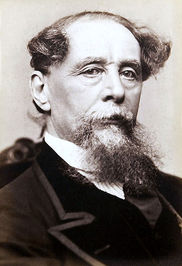
Charles DickensCharles John Huffam Dickens (7 February 1812 – 9 June 1870) was an English writer and social critic. He created some of the world's best-known fictional characters and is regarded as the greatest novelist of the Victorian era. His works enjoyed unprecedented popularity during his lifetime, and by the twentieth century critics and scholars had recognised him as a literary genius. His novels and short stories enjoy lasting popularity.

Biography source : Goodreads


You can find out more about Charles Dickens by clicking here

Find out more about Librivox by clicking here

You can read Bleak House for free by going to Project Gutenberg by clicking here


“There were two classes of charitable people: one, the people who did a little and made a great deal of noise; the other, the people who did a great deal and made no noise at all.” 

― Charles Dickens, Bleak House


~***~


Friday, 6 October 2017

Blog Tour ~ Blood's Game by Angus Donald


 Jaffareadstoo is delighted to be hosting today's stop on the Blood's Game Blog Tour


And to give a warm welcome to the author


Angus Donald


Donald, thank you for spending time with us today and for your guest post


Thomas Blood and the theft of the Crown Jewels

By Angus Donald


A little before 7am on a chilly morning in early May, 1671, a tall, middle-aged man calling himself Thomas Ayliffe, and dressed in the sober clothes of a parson, knocked at the door of the Irish Tower in the northeast corner of the Tower of London.

He had with him three companions, two tough-looking men of about the same age as the parson and a younger fellow, who claimed to be the nephew of this respectable man of God as well as a gentleman of private means worth £300 per annum. The four men were admitted to the Irish Tower – now called the Martin Tower – by Talbot Edwards, the Assistant Keeper of the Crown Jewels, who resided there. Edwards kept the Crown Jewels – worth an estimated £100,000 pounds, a vast sum in those days – on wooden shelves behind an iron cage in a locked, windowless room below his private chambers in the Irish Tower.

Edwards, an elderly man and former soldier in the service of the noble Talbot family, had invited “Parson Ayliffe” and his “nephew” to breakfast with his wife and daughter and, as a treat, had promised them a sight of the famous royal jewels. The Assistant Keeper desperately wished to curry favour with the parson and his family, particularly with his nephew, as an engagement had been proposed by Parson Ayliffe between that apparently wealthy young man and Edwards’s ugly daughter.

Once the visitors were inside the Jewel House, with the bars of the cage open, the gang attacked Talbot Edwards, knocking him down with a blow to the head from a wooden mallet and stabbing him with daggers. Having subdued the old soldier – indeed, leaving him lying in a spreading pool of his own blood – the four men began helping themselves to the Crown Jewels, filling their pockets with priceless objects, cramming their boot-tops with handfuls of precious gem stones . . .

For Parson Ayliffe was not some mild-mannered country cleric; he was in fact the notorious desperado Thomas Blood, an outlaw with a price on his head, and the wealthy nephew was his eldest son, also called Thomas, a well-known highwayman.

I was first told the story of Thomas Blood and his attempt to steal the Crown Jewels as a child of perhaps ten or eleven – and I found it thrilling, not least because my mother, whose maiden name was Blood, told me that we were descended the crown-stealer. So, naturally, when I grew up, I wanted to tell his extraordinary story. The result is Blood’s Game, the first novel in my new 17th-century series. 

In middle-age, while I am no longer sure that I’m directly descended from him, I still find Thomas Blood to be a compelling character. However, after a good deal of research, I have also discovered that he is by no means an easy man to admire: some of his acts were shockingly violent, even needlessly brutal; he was nakedly self-serving and often rather depressingly incompetent. But he did have a quality of fearless, can-do optimism that I do find inspiring. All too often our 21st-century existences can be tame, risk-averse, coddled. I’m not suggesting anyone should pop on a ski mask, and go out and pull a bank job – but I do sometimes ask myself: would you ever have the balls to risk it all for wealth, fame and glory, as old Thomas did?

Thomas Blood was born in County Clare, Ireland in 1618, the son of a successful iron-master and grandson of a member of the Irish Parliament. At the age of 20, he married an English girl called Mary Holcroft who came from a family of Lancashire gentry and with whom he had at least seven children. 

When the English Civil War broke out in 1642, Blood initially joined the royalist side but when it became clear that the Cavaliers were losing the war, he switched sides and became a Roundhead. He rose to the rank of captain and was duly rewarded for turning his coat at the end of the wars with a gift of lands in Ireland. Thomas Blood then settled down to enjoy a gentlemanly life of moderate wealth and leisure with his growing family. 

All was well for the Bloods until the Restoration of Charles II in 1660, which was followed by the Act of Settlement of 1662, a piece of legislation that stripped lands from Cromwell’s supporters and handed them over to the resurgent royalists. 

Blood was ruined. His new estates were confiscated and he blamed the Irish government for his sudden destitution, and particularly the restored King’s personal representative, the Lord Lieutenant of Ireland, James Butler, Duke of Ormonde. 

Not the sort of man to take an injury without retaliation, Blood was part of a doomed scheme in 1663 to storm Dublin Castle and kidnap the Duke of Ormonde and hold him for ransom. Blood was forced to flee Ireland and find refuge in Holland, leaving his penniless wife and family behind to manage as best they could. 

By 1670, Blood was back in England, living in Romford Market, a few miles northeast of London, under the alias Doctor Thomas Allen. Despite having no medical qualifications at all, he made a decent living treating the people of Romford for their various ailments. On December 6 of that year, on a foul, rainy night, Blood and his confederates attacked the Duke of Ormonde’s coach in St James Street, as it was heading up the hill to Piccadilly where the Duke lived in the rented palace of Clarendon House. Blood and his gang pulled Ormonde from the vehicle but, instead of killing him immediately, they decided to take him to Tyburn, west along Piccadilly and approximately where Marble Arch now stands, and hang him there like a common criminal. Ormonde was tied to the back of a horse – but managed to wriggle free and he was rescued by footmen coming out with torches from Clarendon House.

After the failure of the Ormonde assassination attempt, Blood laid low, probably in Romford, planning his next move. Sometime in April 1671, Blood, disguised as a well-to-do country parson, calling himself Thomas Ayliffe, and accompanied by his beautiful “wife”, an actress called Jenny Blaine, paid a visit to the Tower of London and asked if he might be allowed to see the famous Crown Jewels of England. 

At that time, Talbot Edwards made a small income, on top of his salary as Assistant Keeper, by allowing visitors to view the King’s coronation regalia. He showed Blood and his charming companion the jewels and, when she feigned an illness and fainted, he kindly took them upstairs to his private apartments to recover under the care of his wife and daughter. A few days later Blood returned with a small gift – a thank-you for the Edwardses’ kindness. Over the next few weeks, Blood wormed his way into their affections and dangling a rich “nephew” as bait, he began negotiations with the Edwardses for the hand of their daughter Elizabeth. 

Early in the morning on May 9, 1671, Blood and three companions arrived at the Irish Tower, entered the Jewel House, overpowered Edwards and began helping themselves to the jewels. They believed the Assistant Keeper to be dead or dying – and certainly no longer a threat. But Edwards was made of stern stuff. While the thieves were filling their pockets with jewels, he revived and began to call for help. By sheer chance, Edwards’s son Wythe happened to be returning on leave from his regiment in Flanders that day and he arrived with a friend called Captain Beckman at the exact time that Edwards was screaming blue murder from inside the Jewel House. 

The thieves made a run for it, spilling treasures as they went, and were pursued by Wythe, Beckman and the Tower guards. There was a running fight, pistols, muskets and rapiers, as the gang tried to reach their horses which were tied up at the end of Tower Wharf at the Iron Gate. Blood was captured. As the soldiers seized him, he said: “It was a gallant attempt, however unsuccessful! ’Twas for a crown!”

Blood was imprisoned in the White Tower and questioned by the lieutenant of the Tower, Sir John Robinson, but the old outlaw refused to give away any details of the plot or the names of the other people involved. Quite outrageously, Blood insisted that he would only give an account of himself in a personal audience with the King.

After weeks of negotiations, with Blood still refusing to name names, he was granted a royal audience. I still find myself shocked by this: imagine Ronnie Biggs, the Great Train Robber, or a Kray twin or some other major criminal demanding to speak privately with Queen Elizabeth II. Nevertheless, a private audience was granted, Colonel Thomas Blood met Charles Stuart, and while nobody knows exactly what went on at that meeting, Blood emerged with a royal pardon for his crimes and a grant of lands in Ireland worth £500 a year.

Who says crime doesn’t pay?

In Blood’s Game I attempt to unravel exactly what went on during that meeting between the King and the most notorious outlaw of his age. 

Some historians have suggested that King Charles was so amused by this charming Irish rogue that he decided to pardon him. That doesn’t ring true for me. I think there was something darker going on. Blackmail, perhaps. The threat of a secret that would be revealed if Blood went to the gallows. And when I began to research the background for the novel, I did, in fact, discover a genuinely shocking secret, a royal secret of explosive proportions, something the British government kept hidden for more than a hundred years afterwards. This secret forms basis for my telling of this incredible tale about an extraordinary man . . . but I’m not going to say any more. If you want to find out, you’ll have to read Blood’s Game.


Angus Donald is the author of Blood's Game, published by Zaffre in hardback £12.99

Find out more on his website

Follow on Twitter  @angus_donald #BloodsGame

Visit on Facebook


Zaffre
5 October 2017


Huge thanks to the author for spending time with us today and for his fascinating insight into Thomas Blood and his audacious attempt to steal the Crown Jewels.


Thanks also to Emily at Bonnier Zaffre for her invitation to be part of this blog tour and for sending a copy of Blood's Game to me .


~***~

Thursday, 5 October 2017

Review ~ Black Teeth by Zane Lovitt

30078132
Text Publishing
2017
Blurb

Jason Ginaff doesn’t get out much. Partly because of the anxiety, mainly because he works at home. Researching people on the internet. Job candidates doing bucket bongs on Instagram accounts they thought they’d deleted; the prospective new head of sales stripping for a hens’ night…

He’s been searching for something on his own time, too.

Now he’s found it: the phone number of the man he believes to be his father.

Which is how he gets mixed up with Rudy Alamein. They’ve been looking for the same man.

Difference being, Rudy wants to kill him.

Black Teeth is a witty, dynamic contemporary thriller by an emerging master of the form. Beautifully written and darkly funny, it’s both a literary triumph and an irresistible read.


My Thoughts

I have to admit that this book is probably a little out of my comfort zone and as such it took me a while to settle into this rather bleak Australian noir tale of two disparate loners who are brought together in the most unlikely of circumstances.

The story reads well in places but there are times when it feels a little bit lost and there were times when I felt lost along with it. The contemporary thriller at the heart of the novel works in places but sort of loses its momentum towards the end which I felt was something of a disappointment.

The book's cast of characters play their role within the story with a strange fascination and I think this where the strength of the writing lies, in the way that the author shapes and molds them, so even though they are largely unlikable, you can't help but be curious about them and wonder how the story will eventually play out in the wider scope of the mystery.

Although the story didn't really work for me, I can't fault its originality and the author's commitment to writing something a little bit different.


 About the Author

Zane Lovitt was a documentary filmmaker before turning his hand to crime fiction. His debut novel, The Midnight Promise, won the Ned Kelly Award for Best First Fiction, was long listed for the Commonwealth Book Prize for Best First Book, and led to Zane being named one of the Best Young Novelists of 2013 by the Sydney Morning Herald. Zane Lovitt lives in Melbourne. Black Teeth is his second book.


My thanks to Phoebe and the team at FMcM Associates for my review copy of Black Teeth


~***~


Wednesday, 4 October 2017

Review ~ To Catch A King by Charles Spencer

35618413
William Collins
5 October 2017

I remember in history lessons at school trying to dissect and remember all those interminable facts about the English Civil War and, in the midst of all the turmoil, and disaster, being excited to learn that following the disastrous Battle of Worcester, in September 1651, the future King Charles II escaped capture by his enemies by hiding in an oak tree. This momentous event is still, and probably forgotten by most of the population, commemorated by each 'Royal Oak' public house. That this is the stuff of legend gives this most charming of English monarchs, for me anyway, huge appeal.

In To Catch A King, the author has captured the excitement of the subterfuge which was needed, over a period of six weeks, to ensure the young King's safety. In using authenticated archive material the author brings together a fascinating look at the huge risks that Charles faced in a time when the whole of the country was in complete disarray. The book reads like a boys own adventure, full of daring-do and high excitement, however, what is never forgotten, is the inherent danger that Charles faced, after all, the country had executed his beloved father just two years previously. I was particularly pleased to see mention of an event that happened in my home town. In August 1651, the Battle of Wigan Lane, led by the Earl of Derby's men, was a disaster for the Royalists and marked a decided turning point in Charles's fortunes. Had this attack been a success the outcome for both king and country may well have been very different.

There's sometimes a danger in non-fiction history books that the substance becomes just a regurgitation of facts and figures but, not so with To Catch A King. It's a very readable account of Charles's escape, and with the substance of history never compromised, the book gives a thrilling account of how events unfolded. Beautifully illustrated, To Catch A King follows on from this author's previous book, The Killers of the King. As you would expect there are comprehensive notes and a detailed bibliography section with a wide-ranging index for ease of use, which is particularly helpful if, like me, you like to dip in and out of history books, at whim.

To Catch A King is a confident and meticulously researched account of a man who was in grave danger and yet, it's also about the love and loyalty of those supporters who jeopardised their own lives in order to ensure Charles's safety. It is heartening to learn, in one of the later sections of the book, that these acts of kindness, however large or small, were never forgotten by the King and that, once he was restored to his throne, his friends and followers were rewarded handsomely for their support.

I often read accounts of Charles's time as King, usually  these focus on his love of excess, his philandering nature, and his inability to take things seriously. It is particularly heartening to read a comprehensive and inspiring non-fiction account of the early life of this most charismatic of English monarchs, of the events which shaped his personality, and of the strength of his character that was formed during his dark days of exile.


About the Author

Charles Spencer was educated at Eton College and obtained his degree in Modern History at Magdalen College, Oxford. He was a reporter on NBC’s Today show from 1986 until 1995, and is the author of four books, including the Sunday Times bestseller Blenheim: Battle for Europe (shortlisted for History Book of the Year, National Book Awards) , Prince Rupert: The Last Cavalier and Killers of the King.


My thanks to Margot, marketing assistant to Earl Spencer, and also to Helen at Harper Collins for my review copy of To Catch A King.


~***~

Tuesday, 3 October 2017

Review ~ Love and Other Consolation Prizes by Jamie Ford

36162064
Allison & Busby
September 2017


1909, Seattle. At the World’s Fair a half-Chinese boy called Ernest Young is raffled off as a prize. He ends up working in a brothel in Seattle’s famed Red Light District and falls in love with Maisie, the daughter of a flamboyant madam, and Fahn, a karayuki-san, a Japanese maid sold into servitude. 

On the eve of the new World’s Fair in 1962, Ernest looks back on the past, the memories he made with his beloved wife while his daughter, a reporter, begins to unravel their tragic past.


My thoughts

The strength of Jamie Ford's novels, and I've read all three to date, lies in his ability to say, in just a few short words, that which takes some authors pages to impart. He conjures an authentic world so completely that, from the opening page of any of his novels, you become confidently immersed in the lives of the characters he so lovingly recreates.

That this latest book kept me reading long in the night came as no surprise and as Ernest's story is revealed in two very different time frames what comes across is the ability of the human spirit to transcend tragedy. That Ernest's early life in China was built on trauma is written about very sensitively, as is the portrayal of the life he eventually leads once he arrives in America.

Gracefully combining the effects of tragedy, loyalty, love and family, Love and Other Consolation Prizes, is both meticulously researched and elegantly written, by an author whose authenticity shines through with every well written word.

I’m deliberately not saying anything about the way that the story unfolds, as that would be to do both the author, and this beautiful story, a complete disservice, and the book really does deserve to be read without any spoilers from me. So all I will say is that if you enjoy a story which pulls at your heartstrings from the very beginning, which beautifully highlights a forgotten period in history and which is both colourful and poignant at the same time, then Love and Other Consolation Prizes will work for you.


Jamie Ford is the great-grandson of pioneer Min Chung, who emigrated from China to San Francisco in 1865, where he adopted the Western name “Ford”. Jamie grew up in Seattle and worked as an art director and creative director, before becoming a full-time writer. He now lives in Montana with his wife and children.

For more information - www.jamieford.com @JamieFord


My thanks to Emma at EmmaFinniganpr for sending me my review copy

 of Love and Other Consolation Prizes


~***~

Monday, 2 October 2017

Blog Tour ~ Home is Nearby by Magdalena McGuire


Jaffareadstoo is delighted to host today's stop on the Home is Nearby Blog Tour


It gives me great pleasure to introduce, author, Magdalena McGuire


Hi Magdalena, welcome to Jaffareadstoo. Tell us a little about yourself and what got you started as an author?

I was born in Poland – or, the Polish People’s Republic, as it was known at the time. My mother is Polish and my father was Australian. They met in the university city of WrocÅ‚aw, where my book is set. My mother was studying literature and my father was teaching English and learning Polish. Despite the language differences between them, it didn’t take long for them to fall in love, get married and have a baby – me!

At the time, food was scarce in the shops in Poland, and my parents believed Australia would be a better, or at least easier, place to raise a child. We moved to Australia when I was two years old. I grew up in tropical Darwin, with cyclones and palm trees and multiculturalism. So a very different place to Poland!

I’ve always wanted to be a writer, but somehow there was always a compelling reason not to write. Looking back at it, it’s clear that fear of failure was holding me back. I was paralysed by the notion that I had to write something ‘good’ instead of just writing for the pleasure of it. Finally, I broke out of this way of thinking by scribbling random thoughts in a journal as part of a regular writing practice. After that I started writing and publishing short stories. These days, writing is my absolute passion. I’m so lucky to have writing and books in my life.


Where did you get the first flash of inspiration for Home Is Nearby?

The inspiration for the novel really came from my own family heritage. Growing up, I often wondered what my life would’ve been like if we’d stayed put in Poland. What would it have been like to grow up in communist Poland, to live through the momentous decade of the 1980s when the country was on the cusp of radical change?

While the novel started out as an attempt to explore my family history, it only really came to life when I departed from that history. When I let the story unfold on its own terms. That was really exciting for me: the discovery that this story could take on a life of its own.


What can you tell us about the story without revealing too much?

Home is Nearby is about a young Polish woman, Ania, who wants to be a sculptor. She moves from her small village to the university city of Wrocław to study art. There, she befriends a group of bohemians who, despite the difficult political and economic circumstances that surround them, live life to the fullest. Everything changes when martial law is declared in Poland. When love and politics collide, Ania is forced to make a decision that will shape the rest of her life.


In researching Home Is Nearby did you discover anything unexpected?

Before I started doing the research for this book I knew next to nothing about Polish art. When I started looking into it I discovered that the art scene in 1980s Poland was rebellious and exciting and totally wild! In fact, some of the artworks were so out-there that if you transplanted them in fiction they would sound totally implausible. One that comes to mind is a performance in which an artist installed herself outside a government censorship office and solicited passers to have sex with her in public, right outside the office, in order to critique the country’s censorship policies. Apparently there were a few takers…


Whilst you are writing you must live with your characters. How did you feel about them when the book is finished? Are they who you expected them to be?

The characters in the book started out as sketches of people, but as the book progressed they became very real to me. Sometimes I’d even dream about them at night.

One of the unexpected things I learned was that you can’t force characters to inhabit either ‘minor’ or ‘major’ roles within a book. In the end, they take up the amount of space that they want to take up. Some characters who I thought were pivotal ended up not being so, whereas others really took on a life of their own.


How do you plan your writing, are you a plotter, or a see where it goes kind of writer?

Generally I start with a vague idea for a story and then take it from there. I don’t like to plot everything out beforehand as this feels tedious and doesn’t leave any room for the twists and turns that make writing fiction exciting. Not that there’s anything wrong with plotting! It’s just not the way I work.


What do you consider to be your strongest points as a writer?

Ooh, that’s a tough one. I’ve got a background in human rights and I like to think that I bring that to my writing. I don’t want my writing to be didactic, but I do want it to shine a light on the lives and histories of people who can be marginalised, people whose stories aren’t always told in mainstream settings.


Again, without giving too much away, what do you hope readers will take away from reading Home Is Nearby?

First of all, pleasure! I hope that Home Is Nearby is an enjoyable read and that it contains some strong images – particularly of art – that will stay in people’s minds after they’ve finished reading.

As well as that, I hope that the book gives people a different perception of Poland to the one that they might have. There are a lot of stereotypes about 1980s communist Poland and I hope that my book complicates them. I’d also love it if readers could find the parallels between Polish history and some of the political developments that are happening in our own time.


My thoughts about Home is Nearby


Impress Books
1 November 2017


Poland in the 1980s saw a great deal of change, both political and social, and for those who lived during that momentous time, life was changed forever. For Ania, living in small village with her father, her hopes of becoming a sculptor are just a dream, until she gets accepted onto an art course at the University of Wroclaw. Once there, Ania comes into contact with a group of young people, and swept along in their ideology, she finds that her life takes a very different turn.

The complex and difficult political situation is brought to life in this detailed story which explores what it was like to live in the shadow of oppression. All of the characters are finely developed, but I especially liked Ania, her relationship with her father is both loving and gentle, which is in direct contrast to some of her more challenging relationships. Time and place is brought quite vividly to life, and I enjoyed travelling Ania's journey with her, learning much about the political situation in Poland, and the effect that martial law had on the people living during that time.

The impression that home is always nearby is an interesting idea and one which is particularly evident at the end of Ania’s momentous journey and I won’t spoil anything by saying too much about what happens. But I must admit to shedding a few tears at the end of the final chapter.

I think that this is a strong debut novel from a talented new author and I look forward to seeing what follows, Home is Nearby.


More about the author can be found on her website by clicking here 


You can follow the Blog Tour #HomeIsNearby @Magdalena_McG @ImpressBooks1


Huge thanks to Magdalena for spending time with me on the blog today and for answering my questions and also to Natalie at Impress Books for the invitation to be part of the blog tour and for my review copy of Home is Nearby


~***~

Sunday, 1 October 2017

Sunday WW1 Remembered....


The Battle of Polygon Wood
26 September - 3rd October 1917


The Battle of Polygon Wood took place during the second phase of the Third Battle of Ypres in World War I and was fought near Ypres in Belgium 26 September – 3 October 1917, in the area from the Menin road to Polygon Wood and north towards the area beyond St Julien.

The name Polygon Wood was derived from the shape of a plantation forest that lay along the axis of the Australian advance on 26 September 1917. The wood was sometimes known as Racecourse Wood, as there was a track within it. Before the Great War, Polygon Wood was used by the Belgian Army and within it stands a large mound, known as the Butte, which was used as a rifle range; there was also a small airfield near the area.

Though smaller than in 1917, Polygon Wood is still large; the remains of three German pillboxes captured by the Australians lie deep among the trees but few trench lines remain. The Butte is still prominent and mounted on top of it is the 5th Australian Divisional memorial. There are two Commonwealth War Graves Commission (CWGC) cemeteries in the vicinity of Polygon Wood, the CWGC Polygon Wood Cemetery and the CWGC Buttes New British Cemetery. Within Buttes New British Cemetery is the CWGC Polygon Wood New Zealand Memorial to the Missing.

Source:Wikipedia


A wrecked German concrete observation post, 26 September 1917, seen during the Battle of Polygon Wood part of the Battle of Passchendaele.


Photograph : Brooks, Ernest ( Lieutenant)
Imperial War Museum
© IWM (Q 2908)


Motorised transport on the Ypres-Zonnebeck road, alongside which wrecked transport are seen with their split loads of shells, etc. 30 September 1917, during the Battle of Polygon Wood, part of the Battle of Passchendaele. In the background men are filling in shell-holes.


Photograph : Brooks, Ernest ( Lieutenant)
Imperial War Museum
© IWM (Q 2917)


Battle of Polygon Wood 26 September - 3 October: Members of the 13th Australian Field Ambulance sheltering in funk holes along Anzac Ridge.


Photograph : Australian Official Photographer
Imperial War Museum
© IWM (E(AUS) 839)


As always, I am indebted to the Imperial War Museum for the opportunity to share these fascinating photographs taken at the time by WW1 photographers.


~***~