Showing posts with label Non Fiction. Show all posts

Wednesday, 1 October 2025

πŸ“– Book of my Month ~ Willie, Willie, Harry, Stee by Charlie Higson with Illustrations by Jim Moir

Harper Collins 
9 October 2025

My thanks to the publisher for my copy of this book to review


Willie, Willie, Harry, Stee, Harry, Dick, John, Harry three. One, two, three Neds, Richard Two, Henries, four, five, six, then who? Charlie Higson has always been interested in the story of the fabled English monarchy: from the b*stardly to the benevolent, brilliant to the brutal. In this wonderful new book, with the famous rhyme he learned at school as his trusty guide, Charlie takes the plunge into the storied history of this most treasured of institutions – introducing readers to every single ruler since poor Harold was shot in the eye at the Battle of Hastings. Bloody treachery? Check. Unruly incest? Check. Short parliaments? Check. A couple of Cromwells? Check.

A rip-roaring journey that takes in the Normans, Stuarts and Tudors, not to mention the infamous Blois (how can we forget them?), Willie, Willie, Harry, Stee is an utterly engrossing and grossly entertaining primer on who ruled when and why.


πŸ“–My Review..

Willie Willie Harry Stee is an interesting romp through the history of England’s monarchs who ruled from 1066 to the present day. Their many failings and a few successes are all explained in an informative book which definitely makes history come alive. Whilst I was familiar with the rhyme on which the book is based it’s not something I learned at school and my party piece is to be able to recite the monarchs from William the Conqueror, through to Charles III, without the need to rely on the Willie, Willie,Harry, Stee rhyme.

This is one of those fascinating history books which doesn’t take itself too seriously and yet serves up a plethora of facts in an easily digested manner. The quirky illustrations by Jim Moir add an extra dimension and the rather serious faces of the monarchs on the cover of the book would certainly have me reaching for a copy in a book shop in order to have a closer look. The British monarchy is not renown for its fun factor and yet, such is the lure of the writing, that, on occasions, I found myself laughing out loud. It’s worth mentioning that the author has an engaging podcast about Willie, Willie, Harry, Stee which is available from wherever you get your podcasts and the historical content ties in nicely with the book.

Overall this is a great read and a useful aide memoir if you want to check up on a few facts about a monarch or two, or just to dip into and out of at whim and discover more about those monarchs who, for good or ill, have shaped our history. Short and snappy chapters help to make the history of our Kings and Queens easily readable, and for making rather complex history fun, I am delighted to have Willie, Willie, Harry Stee as my Book of the Month for October.

Willie, Willie, Harry, Stee is published by Harper Collins on the 9th October.


About the Author


Charlie Higson is a comedian and writer of screenplays and novels, including the Enemy and Young Bond series. He has written and performed on BBC’s The Fast Show and makes regular TV appearances as a guest, panellist and actor. Charlie is a huge horror fan and studied gothic literature at university. He lives in London.

James Moir, commonly known by his stage name Vic Reeves, is an English comedian and artist.


X@monstroso

X@HarperCollinsUK


Thursday, 15 May 2025

πŸ“– Publication Day Book Review ~ Finding the Wayfarer by Emma Rose Barber

Tandem Publishing
15 May 2025

Thanks to the publisher for the copy of this book


Through a series of walks, the author follows in the path of the medieval wayfarer to see how this captivating figure developed from being seen as an indigent nuisance, much maligned, to romantic muse for artists and writers. The book brings the wayfarer to life. And all up-to-date to see how it is found in contemporary culture.

Finding the Wayfarer is a captivating exploration of the age-old tradition of wayfaring – the simple, often
solitary journey on foot. Through a blend of historical enquiry, evocative place writing and memoir, the book weaves together the stories of wayfarers across time.

From the marginalized figures in medieval manuscripts, to the introspective writings of Charlotte Smith,Wordsworth and Hardy, the wayfarer has often been viewed with suspicion and fear. Yet, they have also inspired admiration, embodying melancholy and a deep connection to the natural world. Themes of illicit love and scorn through wayfaring are the themes of later writers and artists like Dickens, Samuel Beckett and Grayson Perry. The book is a rich tapestry of walking, resilience and survival, inviting readers to consider this enduring archetype.


πŸ“–My Review..

Wayfarer is not a word we use much these days but this ancient term, which has its origins in Middle English, refers to a traveller, someone who travels on foot, and this interesting book takes us on a journey as we discover more about the origins of this age-old tradition. We don’t walk as much as we used to, modern forms of transport make walking to places unnecessary however, as the author suggests there is much to be gained from observing the ways of the ancient wayfarer. Quietly taking stock of our surroundings is  sometimes paramount to our well-being.

Using as a guide the book is divided into seven sections, walks which follow the guidelines set out in the ‘seven works of mercy’ namely: feeding the hungry, giving water to the thirsty, clothing the naked, sheltering the homeless, tending the sick, visiting the prisoner, burying the dead. Each section uses modern day references alongside that of the medieval world , each sit comfortably side by side and give a unique perspective. Whilst reading I found much to think about and I have enjoyed dipping into this impeccably researched book which is as much a history lesson as it is a spiritual guide.

Finding the Wayfarer is a gentle, contemplative read which took me on a journey of quiet reflection something that perhaps we don’t do enough of in our busy world. It has given me the opportunity to discover if there is a wayfarer within me.


About the Author


Emma Rose Barber is an art historian and writer. Author of 111 Churches That YouShouldn’t Miss in London (Emons, 2020), she has also written a novel and various articlesfor magazines, including Art and Christianity and Selvedge. She lives in Sussex, whichalongside Norfolk is a county that features in this book. Her next non-fiction book is Single, Double:  Mother and Child.


Friday, 1 November 2024

πŸ“– Featured Book of the Month ~ The Place of Tides by James Rebanks


Penguin
17 October 2024

My thanks to the publisher for my copy of this book


We are all in need of lights to follow.

One afternoon many years ago, James Rebanks met an old woman on a remote Norwegian island. She lived and worked alone on a tiny rocky outcrop, caring for wild Eider ducks and gathering their down. Hers was a centuries-old trade that had once made men and women rich, but had long been in decline. Still, somehow, she seemed to be hanging on.

Back at home, Rebanks couldn’t stop thinking about the woman on the rocks. She was fierce and otherworldly – and yet strangely familiar. Years passed. Then, one day, he wrote her a letter, asking if he could return. Bring work clothes, she replied, and good boots, and come her health was failing. And so he travelled to the edge of the Arctic to witness her last season on the island.

This is the story of that season. It is the story of a unique and ancient landscape, and of the woman who brought it back to life. It traces the pattern of her work from the rough, isolated toil of bitter winter, building little wooden huts that will protect the ducks come spring; to the elation of the endless summer light, when the birds leave behind their precious down for the woman to gather, like feathered gold.

Slowly, Rebanks begins to understand that this woman and her world are not at all what he had previously thought. As the weeks pass, what began as a journey of escape becomes an extraordinary lesson in self-knowledge and forgiveness.


πŸ“– My Review..

Seven years after first meeting Anna, James Rebanks leaves behind his Cumbrian farm and returns to the remote Norwegian island where Anna, now elderly, protects the Eider Ducks who return to the island each year and from which the precious eiderdown is collected. Spending springtime on the island known as The Place of Tides will test the resilience of James, Anna and her companion, Ingrid but together they learn to form a community and coexist amicably together.

With such a fascinating wealth of stories, Anna recounts the history of the rocky islands of this isolated Norwegian archipelago which lie on the edge of the Arctic circle. Recounting tales about the harshness of survival, and complete with the same degree of stubbornness which allowed her ancestors to survive, Anna, keeps the old ways alive, maintaining harsh traditions which are as fragile as the ecology to which the islands still cling.  From the surge of the tides, to the swooping majesty of seabirds in flight, the beauty and harshness of the natural world unfolds, a world which is increasingly under threat. The arrival of the ducks to the island, to nest and rear their young, is when the work begins in earnest and keeping them safe from predators and allowing natural order to be maintained takes time, skill and effort.

Poetic, lyrical and beautifully quiet in places, this is not a book to be rushed, or squandered, but rather find the time to sit and allow the ebb and flow of the tides to set its own momentum just as Anna’s forgotten way of life allows her life story and that of the Eider ducks to be heard at their own distinct pace. I have no hesitation in making The Place of Tides my Featured Book of the Month for November. 


About the Author


James Rebanks runs a family-owned farm in the Lake District in northern England. A graduate of Oxford University, James works as an expert advisor to UNESCO on sustainable tourism.


X @herdyshepherd1 #ThePlaceofTides


Monday, 28 October 2024

πŸ“– Book Review ~ A Winter Dictionary: A Collection of Words for the Festive Season by Paul Anthony Jones


Elliot & Thompson
24 October 2024

Thanks to the publisher for my copy of this book


As the nights draw in and the cold descends, the winter world emerges – and with it an incredible array of words that superbly capture the season.

From frost-dogs (tiny frozen particles of falling snow) and Stepmother’s breath (a sudden cold snap) to hibernaculum (a winter refuge during the winter months) and crapulent (feeling the aftereffects of overindulgence), Paul Anthony Jones delves into the origins of these rare, fascinating and forgotten words, opening up a whole new way of describing the winter months.

Whether you’re keeping cosy in front of the fire, warding off the winter blues or throwing yourself into the party season, A Winter Dictionary is the perfect way to while away the snow-laden days.


πŸ“– My Review..

I love words, their solid beauty and the way in which language has evolved over time. To have a winter dictionary seems like the perfect idea especially when it’s written and presented in such a lovely way. These books, by this talented wordsmith, are always beautifully presented, from the tactile nature of the beautiful book cover to the immersive, educational and downright fascinating information found within its pages. 

The contents are nicely divided into eleven clear chapters which take us from the changing seasons, through winter storms, ice and snow and further towards Christmas Day and into the snow melts of a new year. The words are well explained and placed in context, all evoke a strong sense of time and place whilst at the same time explaining the meaning of words, all perfectly appropriate, many of which I had never heard before. Some made me smile, some words, no longer in common usage, just seemed really perfect and made me wonder why we had stopped using them and then, of course, there’s the local variations, specific dialect and the gradual evolution of words and phrases which are very much part of our ancestry.

This is definitely the most perfect wintery read, it’s one of those gently fascinating sorts of books which you can just dip into and out of it at whim and by merely opening a page at random you will discover something fascinating you never knew you needed to know. 


Paul has a Masters in Linguistics and is a language blogger from Newcastle-Upon-Tyne. His obsession with words began with a child’s dictionary he received as a Christmas present when he was eight years old. As @HaggardHawks he has tweeted obscure words since 2013 and now has a social media following of over 75k, including the likes of JK Rowling, Robert Macfarlane, Susie Dent, Richard Osman, Greg Jenner, Ian McMillan, Rufus Sewell, Simon Mayo, Michael Rosen and Cerys Matthews.
HaggardHawks.com brings together the entire HH network including a blog, books, quizzes & games, the 500 Words YouTube series, Instagram gallery and newsletter. He regularly contributes to the media.


Twitter @HaggardHawks #AWinterDictionary

@eandtbooks


Friday, 12 July 2024

πŸ“– Blog Tour ~ The Future of The Self by Joanna Nadin


Melville House
4 July 2024

Thanks to the publisher for my copy of this book
and the invitation to the blog tour


Exploring the changing nature of ‘self’ through the lens of popular culture and how changes in science, philosophy, technology, and society might impact our sense of self in the future.Look in the mirror – what do you see?We all feel, instinctively, that self exists. That somewhere inside us, under the clothes, the make-up, and self-tan, lurks a hard ‘pearl’, a kernel of truth called ‘me’. And it’s big business uncovering that ‘authentic’ kernel. It’s also a fool’s errand, because that ‘true self’? It doesn’t exist.

Self is no more than a story we tell ourselves. It’s mutable, pliable as Plasticine. Worse, it’s not even strictly autobiographical, but co-authored with those around us. And as such, there is no one version, but myriad, and the number is growing as we are exposed to ever more connections.We are already seeing the effects travel, television, and celebrity culture can have on the formation of self, but as digital and social media exposure grows, and in the advent of AI, what will happen to our sense of self? 

Can we become ever more multiple and adapt better to our globalised world? Or will we dissolve into narcissitic, detached ‘nobodies’?The Future of the Self will explore our current understanding of self in both philosophical and neuroscientific terms and through the lens of popular culture. It will ask what might happen to it in the coming years, and what a ‘useful self’ might look like in the future.


πŸ“– My Review

Coming in at just over a hundred pages this is a quick read however, it's not light on content. In exploring the concept of 'self' the author examines just what it is which makes us who we are and poses the question that as we get swept further and further into the maelstrom of social media and popular culture, are we are in danger of losing ourselves forever as we seek to be the perfect self?

I enjoyed the informal way in which the author presents her findings which makes it a very thought provoking little book, posing questions which made me stop to consider whilst at the same time the author shares her own personal reflections. What struck a chord right at the start of the book was the author being told that 'There are pretty girls, and there are clever girls' . I recall at my all-girls grammar school, in the seventies, being made aware that clever was preferable over pretty but like the author, I wanted to be both. I like to think that  I have succeeded at both...

This well written little book has given me a different perspective and one I had not really thought before especially in the way in which popular culture can alter our perspective. I have learned that we all have very different versions of self, some are entirely independent, some are obsessive or narcissistic, whilst others converge into whatever role in life we are playing, but I think what's comes across is that, in the end, we can be whoever we want to be.

The Future of the Self is one of those absorbing little books which will remain on my book shelf, to pick up whenever the mood takes me..


About the Author


Joanna Nadin is an English author of juvenile fiction best known for the Rachel Riley series of teenage novels Based on Nadin's own childhood, the series follows the comedic narration of a 13-year-old girl. Nadin has also written several books of juvenile fiction. These include two books for the Oxford University Press "Project X" series designed to encourage boys to read. Nadin previously worked as a policy writer for the Labour Party (UK).In 2001, she became a special adviser to Tony Blair.


Social Media

X @joannanadin #TheFutureoftheSelf #Futures

X @melvillehouse


The new FUTURES series from Melville House presents imaginative future visions on a wide range of subjects, written by experts, academics, journalists and leading pop-culture figures. Seeking to publish a rich array of opinions, covering as wide-ranging a view as possible on our potential futures, we ask our authors to experiment with the kinds of daring ideas that can help change public conversation. As a series we hope the FUTURES books will inspire readers to imagine what might lie ahead, to figure out how they might like the future to look, and think about how, collectively, we might get there.


Melville House


Tuesday, 3 January 2023

πŸ“– Book Review ~ Dirty Briefs by Dave Fendem


Ad Lib Publishers
Mardle Books


My thanks to the publishers for my copy of this book


From top to bottom – a shocking and hilarious journey through the legal profession unlike anything seen before.

Straight from the bowels of back street police stations, locked psychiatric wards and the criminal courts, these are the brazen tales of a bare-knuckle barrister.

For those who think that all barristers are high flyers blessed with fabulous incomes and sophisticated lives, this book will decisively re-inform you. It will dispel any myth that those we trust to steer the ship are any less maladjusted than the clients they represent.

Unapologetically rude and irreverent, welcome to the real world of criminal barristers; an unruly place where nudity, misappropriation of sex toys and dirty protests are not just for the accused, and where judges’ discomfort brings widespread joy.


πŸ“– My Review...

I'm no expert on the criminal justice system and have no idea what goes on in the mysterious world of criminal defence however, as this book is written by someone who knows the system well it soon becomes a rather ironic account of what goes on behind the scenes with a criminal defence barrister. Well written, with entertaining anecdotes, the book made me smile with stories about incidents I never expected to find amusing.

At just over two hundred pages this comes in as a quick read which makes it the perfect sort of book to settle down with on a rainy afternoon. If you have an interest in the law and want to know more about some irreverent behind the scenes shenanigans then Dirty Briefs might be just your cup of tea.


Twitter @DFendem

@AdLibPublishers @MardleBooks


Friday, 14 October 2022

πŸ“– Blog Tour ~ A Banker's Journey by Daniel Gross


Radius Book Group
13 October 2022

My thanks to Midas pr for my copy of this book
and the invitation to the blog tour


Who was Edmond J. Safra? “The greatest banker of his generation,” in the estimation of a former World Bank President. The founder of four massive financial institutions on three continents, and a proud child of Beirut’s Jewish quarter. An innovative avatar of financial globalization, and a faithful heir to a tradition of old-world banking. The leading champion and protector of the Sephardic diaspora.

In A Banker’s Journey, financial journalist and historian Daniel Gross, who, like Safra, traces his heritage to Aleppo, Syria, reconstructs the public life of an intensely private man. With exclusive access to Safra’s personal archives, Gross tracks the banker’s remarkable journey from Beirut to Milan, SΓ£o Paulo, Geneva, and New York—to the pinnacle of global finance.

Edmond Safra was fifteen in 1947, when his father sent him to establish a presence in Milan, Italy. Fluent in six languages, and with an eye for value, managing risk, and personal potential, Safra was in perpetual motion until his tragic death in 1999. The modern, global financial empire he built was based on timeless principles: a banker must protect his depositors and avoid excessive leverage and risk. In an age of busts and bailouts, Safra posted remarkable returns while rarely suffering a credit loss.

From a young age, Safra assumed the mantle of leadership in the Syrian-Lebanese Jewish community, providing personal aid, supporting the communities that formed in exile, and championing Sephardic religious and educational efforts in Israel and around the world.

Edmond J. Safra’s life of achievement in the twentieth century offers enduring lessons for those seeking to make their way in the twenty-first century. He inspired generations to make the world a better place.


πŸ“– My Review

I know nothing about the world of high finance, or banking, and I have to admit that, before picking up this biography, I hadn't heard of Edmond J. Safra but always keen to learn something new and read something out of my comfort zone, I settled down to learn more about how Edmond J. Safra built a global financial empire. Born in 1932, in Beirut, Safra's career spanned much of the tumultuous years of the twentieth century and is a fascinating account of survival, philanthropy and determination to succeed.

Comprehensively written, and with a fascinating selection of photographs, both personal and professional, we gradually get an idea of what maketh the man. It is obvious that the author has done extensive research into how Safra made a hugely successful global empire and used it for philanthropic good, helping those who were unable to help themselves. In using Safra's personal archives the author has been able to bring into focus the important achievements of this quite private individual who spent much of his time helping, and becoming, the leading champion, and protector, of the Sephardic diaspora.

As with all well written biographies there is much to consider and the author has been quite thorough in his descriptions of the business empire Safra created whilst at the same time revealing the personality of the man. A Banker’s Journey is an interesting account of Safra’s life and times especially as we trace his journey from Beirut, Milan, SΓ£o Paulo, Geneva, and New York and beyond to the height of his success as, perhaps, the 'greatest banker of his generation'.


About the Author

Daniel Gross is one of the most widely read writers on finance, economics and business history. Over the past three decades, he has reported from more than thirty countries, covering everything from the dotcom boom to the global financial crisis and the great recession of 2008-2009.Gross worked as a reporter at the New Republic and Bloomberg News, wrote the 'Economic View' column in The New York Times, and served as Slate's 'Moneybox' columnist. At Newsweek where he was a columnist and correspondent he anchored seven cover stories. He is the best selling author of eight books.

Gross was educated at Cornell University and holds an MA in American History from Harvard University. His great- grandparents emigrated to the United States from Aleppo and Damascus.


Twitter @grossdm #ABankersJourney

@MidasPr


Wednesday, 28 September 2022

πŸ“– Book Review ~ Lady Sapiens by Thomas Cirotteau, Dr Jennifer Kerner and Γ‰ric Pincas (Translated by Philippa Hurd)


Hero Press
12 September 2022

My thanks to the publishers and The Book Publicist for my copy of this book


5,000 years ago, rare and precious statues of faceless women with hourglass figures, sturdy hips and generous breasts surfaced across Europe. Spanning thousands of years and nurturing many a fantasy, they are known as the prehistoric Venus figurines. But what were the women who inspired these artefacts really like?

For 150 years researchers offered no archaeological insights into the daily lives of prehistoric women and underestimated their role in society. In fact, these women became imprisoned by clichΓ©s. Prehistoric man hunted, went on adventures, invented, created and drew, whereas the role of prehistoric women was limited to educating children and carrying out domestic chores. That’s all there was to say about it, or almost.

Over the past fifteen years a new generation of researchers – many of whom are women – have shaken up this model. By establishing groundbreaking analysis protocols and defining new excavation methods, these scientists are finally able to make the invisible visible. It is thanks to their tenacity that the essential and even prestigious role of prehistoric women is emerging. For the first time ever these ancient women are being resurrected before our very eyes, shedding light on a new theory of our origins!


πŸ“– My Review..

What an interesting little book this turned out to be which took me quite by surprise not just by the research which has been undertaken but also by the very readable way in which it is presented. We know very little about our female ancestors and can only guess at what they felt about life, relationships, children and their place in a male dominated world but this well researched look at the evidence presented by archaeology shines a new light on Lady Sapiens.

Divided into seven chapters with the following headings:

The Return of Lady Sapien

The Real face of Lady Sapien

Life, Pleasure, Seduction

Sensuality and Sexuality

Starting a family

Women on All Fronts

Powerful Women

I dipped into and out of the book throughout the various chapters and found something I didn't know before which made me ponder and think about the stereotypes we attach to our prehistoric sisters.

Originally published in French, it has been expertly translated by Philippa Hurd.


About the Authors

Thomas Cirotteau is an author and director. He created and wrote the documentary Lady Sapiens.

Dr Jennifer Kerner teaches prehistory in the anthropology department at Paris-Nanterre University and is responsible for multimedia communications.

Γ‰ric Pincas is a historian and journalist. He co-wrote the documentary Lady Sapiens.


Twitter @Legend_Times_

@BookpublicistUK


Monday, 5 September 2022

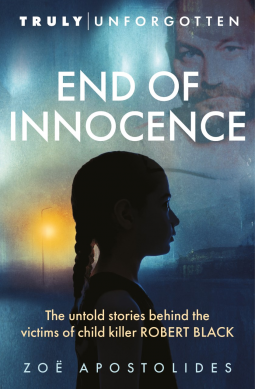
Book Review ~ End of Innocence by ZoΓ« Apostolides


Mardle Books
18 August 2022

Truly Unforgotten #1

My thanks to the publisher for my copy of this book
 

End of Innocence is the first in a non-fiction series ('Truly Unforgotten') exploring UK cold cases.

This book focuses on the 1978 disappearance of Genette Tate. The 13-year-old schoolgirl vanished while out delivering newspapers on her bicycle in the Exeter countryside; no trace of her was ever discovered. With new and rarely seen comments from family, police and inside the courtroom, the story links her case to the earlier abductions of April Fabb (also 13), Christine Markham (9) and Mary Boyle (6). 

None of these unsolved cases was assumed to be linked until 1990, when a man was apprehended having just kidnapped a six-year-old girl. That man was Robert Black, a notorious murderer about whom relatively little has been written. Black was eventually charged with four murders and sentenced to life, though the true number of his victims was very likely far higher. Police were preparing to charge Black with Genette Tate’s abduction and murder when he died in prison in 2016.


My Review ..

End of Innocence sees the start of a new crime series which explores infamous and unsolved cold cases. This first book explores the history behind the unresolved disappearances of young girls spanning from the 1960s, the 1970s and right up until the 1990s, all of which may be attributed to the notorious child kidnapper, and murderer, Robert Black.

Without sensationalisng the tragedy of the disappearances of so many young lives the book relates the facts which were available at the time and the police responses to complex investigations which left them baffled. Without the use of modern day technology the investigations relied on 'good old policing' methods, namely door to door conversations and a heavy reliance on witnesses and with paper trails which stretched endlessly it was never easy to correlate information. Although most of these crimes were committed in broad daylight no-one saw ever what happened until a major breakthrough in 1990 when an competent witness saw an abduction take place, and at long last Robert Black was apprehended.

End of Innocence is an interesting and well put together dossier of one man's alleged crimes, the dedication of those investigative teams, up and down the country, who never gave up hope that one day they would be able to offer some sort of resolution to those grieving families who never came to terms with the devastating loss of a beloved child.


About the Author..


ZoΓ« Apostolides has worked as a journalist for 10 years covering lifestyle, literature, art and education for the Financial Times, The Guardian, The Telegraph and others. She has ghost-written several memoirs and biographies and combines this with editorial work as a literary agent with a particular interest in crime, horror and narrative non-fiction across all genres.


Twitter@MardleBooks 


Monday, 15 August 2022

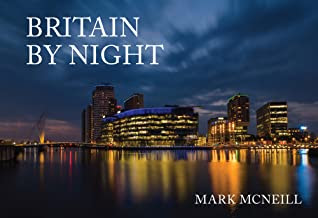
πŸ“– Publication Day ~ Britain by Night by Mark McNeill


Amberley Publishing
15 August 2022

My thanks to the publishers for my copy of this book

The landscape of Britain is transformed at night when its man-made and natural landmarks are illuminated against a backdrop of magnificent stellar skyscapes. In the heart of our cities iconic structures are picked out and away from the built-up areas in our darker spaces the astral and lunar world takes to the stage alongside the landscape.

In Britain by Night, photographer Mark McNeill has captured a huge variety of night scenery and skyscapes that show both natural and man-made Britain in a new light. He takes his camera from Scotland, the North East, the Lake District and the rest of the North West including Liverpool and Manchester, to Wales, the Midlands including Birmingham, the East of England, London, the South Coast and the South West. 

The images captured range from iconic locations such as the Sycamore Gap in the Northumberland National Park framing the Milky Way, the Ribblehead Viaduct, the Forth Viaduct, Jodrell Bank beneath the moon, to familiar landmarks such as the Cutty Sark picked out by light and the Liverpool skyline, our magnificent coast, atmospheric lakeside and mountain shots, and much, much more.

Look through these photographs and you will quickly see the fascination of the night-time world of Britain beneath the stars.


πŸ“– My review..

Over the last couple of years I think we have all come to appreciate the natural world and perhaps we now see our environment in a more enlightened way, but do we ever stop to consider what is happening when our night-time world goes dark? 

In Britain By Night photographer, Mark McNeill shines the spotlight, not just on places of natural beauty but also on the urban landscape of our towns and cities and this lovely book offers a tantalising glimpse into a fascinating world of night-time photography where images, colour and shape take on a very different form. The night sky offers a unique perspective and photographers especially love the challenge of capturing dark skies awash with myriad stars, or using their photographic skill to bring familiar landscapes to life in a kaleidoscope of colour.

The photographic images in Britain by Night are many and varied, some capturing iconic views which are instantly recognisable whilst others perhaps not so well known but equally captivating. I have really enjoyed looking through the 130 illustrations, which bring back memories of places I have visited like Gold Hill in Shaftesbury, Hermitage Castle in the Scottish borders and South Stack on Anglesey. Other images are places on my doorstep right here in the North West and having seen Media City in Salford many times in day light I was beguiled by its night time persona. However, no matter where you are in Britain there are multi-coloured images which will capture your attention and encourage an interest in our nocturnal landscape.

Britain By Night is a fascinating look at Britain under the stars by a talented and skillful photographer whose passion for his art comes across in his fine attention detail and his emotional connection to the rural, and urban, landscape around him.


πŸ“· Best read with... a flask of coffee and camera on a tripod.


Mark McNeill is a professional photographer based in the North West of England. He specialises in landscape photography and also has a particular interest in night-time photography and astrophotography. In 2018 he was highly commended in the prestigious Astronomy Photographer of the Year competition held by the Royal Observatory Greenwich celebrating the very best in astrophotography across the globe, judged by a panel of experts from the worlds of art and astronomy.


Twitter @marksmcneill #BritainByNight


@amberleybooks


Thursday, 2 June 2022

πŸ“– Paperback Publication Day ~ Goshawk Summer by James Aldred


Elliot & Thompson
Out in paperback 2 June 2022


In early 2020, wildlife cameraman James Aldred was commissioned to film the lives of a family of Goshawks in the New Forest, his childhood home. He began to plan a treetop hide in a remote site that would allow him to film the Gos nest, the newly hatched chicks and the lives of these elusive and enchanting birds.

Then lockdown. And as the world retreated, something remarkable happened. The noise of our everyday stilled. No more cars, no more off-roaders, no more airplanes roaring in the skies, no one in the Goshawk woods – except James.

At this unique moment, James was granted a once in a lifetime opportunity to keep filming. And so, over Spring and into Summer, he began to record his experiences in a place empty of people but filled with birdsong and new life.

Amidst the fragility and the fear, there was silver moonlight, tumbling fox cubs, calling curlew and, of course, the soaring Goshawks – shining like fire through one of our darkest times.

A Goshawk summer unlike any other.


πŸ“– My Review..


Over  the pandemic some of us were privileged to discover something of the beauty of the natural world and the calm mindfulness of walking in woodland, admiring the sounds of birds and the soft whisper of the wind in the trees. Whilst I didn't discover a Goshawk nest I did marvel at seeing things in nature I hadn't seen before, like watching a huge murmuration of starlings in the early dusk of a winter afternoon, and being in awe of the magnitude and magic of a natural spectacle of nature.

In Goshawk Summer, Emmy Award winning filmmaker, James Aldred writes very eloquently about his once in a lifetime privilege of observing, at close quarters, a female goshawk, and her mate, as they attempt to rear their offspring, in a place where even the hunters face their own immediate danger.

The country had been in lockdown for just two weeks in April 2020 when the author was given the unique opportunity to film a pair of mated goshawks in the New Forest. Magnificent hunting birds, who value their privacy so much that tracking their chosen nesting area makes for fascinating reading. However, it is in the description of these ancient hunters which brings the story to life with a lyricism which caught my attention from the very first page...

"The goshawk. Steel grey, the colour of chain mail. Sharp as a sword. A medieval bird for a medieval forest. A timeless scene..."

The book moves softly, and silently, through the months of summer from April, until the end of June 2020, and does so in diary entries which record just what James observed in the woods, his relationship with nature, and more importantly what he learned about, and from the goshawks, as they live out their challenging, but majestic lives. Sharply observed, every nuance of the woodland area is investigated and brought to life, and the narrative is so finely placed it feels cinematic in quality just as though you are cocooned high above the canopy of the New Forest watching as the ancient woodland unfolds deep below you to share its innermost secrets.

I found the whole of Goshawk Summer quite magical and if you enjoy the natural world, then I am sure you will too. A portion of royalties from Goshawk Summer are being donated to the Marie Curie charity.


James Aldred is an EMMY award-winning cameraman, adventurer and professional tree climber who has made a career out of travelling the world, filming wildlife for the BBC and climbing trees.


Twitter  @jraldred #GoshawkSummer

@eantbooks


Thursday, 14 April 2022

πŸ“– Publication Day Book Review ~ Snow Widows by Katherine MacInnes


William Collins
14 April 2022

My thanks to the publishers and Alison Menzies PR for my copy of this book


Katherine MacInnes' lively biography Snow Widows retells the story of Scott's expedition to the South Pole from the point of view of the five women closest to the ill-fated party. Her remarkable feat of historical reconstruction reveals a story of press intrusion, media management and the role of newly developed technology in bringing the story home. From fundraising to controlling the narrative, the women's influence runs right through this familiar story. Snow Widows offers a fresh perspective and a fascinating window onto a lost world

This group biography focusses on Kathleen Scott, who campaigned tirelessly to fund her husband's expedition and Catherine Oates, who sent prodigious funds in support of her son; Oriana Wilson, whose marriage was also a true scientific partnership and Empire Emily Bowers who had travelled the world as a missionary teacher; and set apart by her working class origins, Lois Evans, whose pension was a fraction of the other women’s, who suffered to see her husband (the only rating) scapegoated.


πŸ“– My Review ...

We know so much from history about those intrepid Antarctic explorers who risked life and limb to conquer places which, to most of us, still remain out of reach. And yet we rarely give a thought to the women they left behind to follow these ambitious dreams and of the consequences on the lives of their families. Snow Widows seeks to redress the balance and gives a comprehensive look at the five women behind the heroes, wives and mothers who, it must be said, are heroines in their own indomitable way.


Kathleen Scott - Wife
Oriana Wilson - Wife 
Emily Bowers -Mother
Caroline Oates - Mother
Lois Evans - Wife

Scott's ill fated final expedition to the Antarctic in 1912 is well documented but this unique account is shown through the eyes of each of the women who lived with the staunch ambition of their husbands and sons. Snow Widows brings, not only this vision to life in an authentically and meticulously researched account, but it also allows the Edwardian era to come alive with striking perception. I enjoyed getting to know these five very different women and by juxtaposing their individual accounts with what was happening to the Terra Nova we gain a remarkable insight into how much they all sacrificed in order to allow their menfolk the freedom they took for granted.

This is not a book to be rushed as the detail is considerable but it is definitely a fascinating and very readable biographical account by a writer whose passion for her subject shines through with every well written word. I felt immersed in detail, both large and small, transported back to the time of this fateful expedition and to those women who waited, in vain, for their return.


About the Author


Here's Katherine meeting the figurehead of the Terra Nova
©Kate Stuart Photography


Katherine MacInnes was shortlisted for the Biographer's Prize for an early proposal for Snow Widows over a decade agao. Since then she has continued to research the five women, both in the UK and New Zealand, the gateway to Antarctic exploration. Whilst bringing up her family she has written four children's books, three plays and graduated with a Masters degree from Oxford University. Formerly an arts journalist she has written features and reviewed popular literature and given talks on the invisible women behind polar exploration at the Royal Geographical Society. She is a member of the society of authors and the Biographer's Club.


Twitter @WmCollinsBooks


@alisonmenziespr


Monday, 7 February 2022

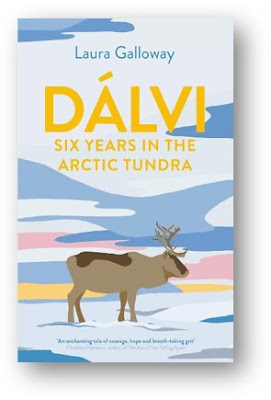
πŸ“– Blog Tour ~ DΓ‘lvi : Six Years in the Arctic Tundra by Laura Galloway


Allen & Unwin
3 February 2022

My thanks to the publisher for my copy of this book
and to Midas PR for the invitation to the blog tour


An ancestry test suggesting she shared some DNA with the SΓ‘mi people, the indigenous inhabitants of the Arctic tundra, tapped into Laura Galloway's wanderlust; an affair with a SΓ‘mi reindeer herder ultimately led her to leave New York for the tiny town of Kautokeino, Norway. When her new boyfriend left her unexpectedly after six months, it would have been easy, and perhaps prudent, to return home. But she stayed for six years.

DΓ‘lvi is the story of Laura's time in a reindeer-herding village in the Arctic, forging a solitary existence as she struggled to learn the language and make her way in a remote community for which there were no guidebooks or manuals for how to fit in. Her time in the North opened her to a new world. And it brought something else as well: reconciliation and peace with the traumatic events that had previously defined her - the sudden death of her mother when she was three, a difficult childhood and her lifelong search for connection and a sense of home.

Both a heart-rending memoir and a love letter to the singular landscape of the region, DΓ‘lvi explores with great warmth and humility what it means to truly belong.


πŸ“– My Review..

I don't often read memoirs but this story, along with the stunning book cover, really piqued my interest, especially as the author spent six years living in one the most beautiful but remote places in the world. Discovering that she shared DNA with the indigenous SΓ‘mi people, who live in the Arctic tundra, opened up a world of possibilities which came at a time in Laura's life when she needed a complete change of environment.

Told in alternate chapters I found the parts of the book about Laura's unconventional American upbringing particularly interesting but it is the chapters which take us on her Arctic adventure, which are fascinating, shining a new light on the idea of taking time out in the wilderness. Laura's relationship with a SΓ‘mi reindeer herder is short lived but rather than return to America, Laura stayed on in Kautokeino, the tiny Norwegian town, and with sheer determination she makes this her home and starts to make new friends.

The author is a good raconteur and describes her life in a candid and thought provoking detail. I admired her strength of spirit in taking up a new challenge in a place which had its own complicated language and customs and where she didn't always fit in but all credit to her for taking on the challenge and coping admirably with an adventure which had some scary moments.

Invoking the spirit of the Arctic Tundra and the remoteness of the landscape DΓ‘lvi : Six Years in the Arctic Tundra is an engaging read about life lessons and second chances.


About the Author


Laura with her dogs RΓ‘ssi andNilla
Photo credit: Bjarne Joakimsen


Laura Galloway is a writer and communications strategist. She began her career at the Los Angeles Times and holds a Master of Arts in Indigenous Journalism from the SΓ‘mi University of Applied Sciences in Kautokeino, Norway, and a Bachelor of Arts in Political Science from the University of Southern California. An ardent animal lover, she and her partner live with her two reindeer-herding dogs and two cats.


Twitter @LauraGalloway #DΓ‘lviBlogTour

Instagram @authorlauragalloway

@allenanaunwinuk

@midaspr


Thursday, 16 December 2021

πŸ“– Book Review ~ The Women of Rothschild by Natalie Livingstone


John Murray Press
11 November 2021

My thanks to the publishers and Stacey Jaffe at thisisespresso
fro my copy of this book


In The Women of Rothschild, Natalie Livingstone reveals the role of women in shaping the legacy of the famous Rothschild dynasty, synonymous with wealth and power.

From the East End of London to the Eastern seaboard of the United States, from Spitalfields to Scottish castles, from Bletchley Park to Buchenwald, and from the Vatican to Palestine, Natalie Livingstone follows the extraordinary lives of the English branch of the Rothschild women from the dawn of the nineteenth century to the early years of the twenty-first.

As Jews in a Christian society and women in a deeply patriarchal family, they were outsiders. Determined to challenge and subvert expectations, they supported each other, building on the legacies of their mothers and aunts. They became influential hostesses and talented diplomats, choreographing electoral campaigns, advising prime ministers, advocating for social reform, and trading on the stock exchange. Misfits and conformists, conservatives and idealists, performers and introverts, they mixed with Rossini and Mendelssohn, Disraeli, Gladstone and Chaim Weizmann, amphetamine-dealers, temperance campaigners, Queen Victoria, and Albert Einstein. They broke code, played a pioneering role in the environmental movement, scandalised the world of women's tennis by introducing the overarm serve and drag-raced with Miles Davies in Manhattan.

Absorbing and compulsive, The Women of Rothschild gives voice to the complicated, privileged, and gifted women whose vision and tenacity shaped history.


πŸ“– My thoughts..

The only thing I knew about the Rothschild family before starting this comprehensive book was that they were very rich, and that their name derived from the German, Rotes Schild, or Red Shield. From their humble origins in the Judengrasse in Frankfurt we see the start of the family when in 1770 Mayer Amschel Rothschild married Gutle Snapper and by hard work and enterprise the dynasty started to spread beyond the confines of Frankfurt into Europe and beyond. I found the early part of the book fascinating, the history of the period, the way the family accumulated their wealth and the way in which the Rothschild women were, by and large, overshadowed in favour of their more dominant male siblings and cousins.

The book is a comprehensive account of this dynastic family and as such it took me a little while to read it as it's not one to be rushed but rather savoured in small doses. Easy to dip into and out of and nicely divided into four distinct sections I found much to enjoy, especially learning more about some of the individual female members of the Rothschild family, enjoying getting to know more about their strengths and weaknesses. Meticulously researched and with a wide breadth of information I was surprised by just how accessible the book was, never overly complicated with too much historical detail and yet filled with a realistic sense of time passing. It's a beautifully presented book with some colour plates and a comprehensive notes and index section. I especially appreciated the teal colour which highlights the section changes.

The Women of Rothschild gives a strong voice to those women who, it must be said, played a huge role in the financial growth of this iconic family and yet whose important contributions have been seriously overlooked for generations.


About the Author


Natalie Livingstone was born and raised in London. She graduated with a first class degree in history from Christ's College, Cambridge in 1998. She began her career as a feature writer at the Daily Express and now contributes to Tatler, Harper's Bazaar, US Vogue, Elle, The Times and the Mail on Sunday. Natalie lives in London with her husband and two children.


Twitter @NatLivingstone #RothschildWomen

@johnmurrays @stacey_jaffe