Showing posts with label Witches. Show all posts

Wednesday, 30 October 2024

๐Ÿ“– Book review ~ The King’s Witches by Kate Foster


Mantle
 June 2024

Thanks to the publisher for my copy of this book


Women whisper secrets to each other; it is how we survive.

1589. Princess Anne of Denmark is betrothed to King James VI of Scotland – a royal union designed to forever unite the two countries. But first, she must pass the trial period: one year of marriage in which she must prove herself worthy of being Scotland's new Queen. If the King and the Scottish royal court in Edinburgh find her wanting, she faces permanent exile to a convent. Determined to fulfil her duties to King and country, Anne resolves to be the perfect royal bride. Until she meets Lord Henry.

By her side is Kirsten Sorenson, her loyal and pious lady's maid. But whilst tending to Anne's every need, she has her own secret motives for the royal marriage to be a success . . .

Meanwhile, in North Berwick, a young housemaid by the name of Jura is dreaming of a new life. She practices the healing charms taught to her by her mother, and when she realises she is no longer safe under her master’s roof, she escapes to Edinburgh. But it isn't long before she finds herself caught up in the witchcraft mania that has gripped not just the capital but the new queen.


๐Ÿ“– My review..

It is well documented that King James VI of Scotland had a dangerous obsession for witchcraft which led, in part, to the persecution of witches throughout Scotland. Later when he became King James I of England this determination to be rid of witches continued. This fascinating story looks at the very beginnings of this obsession with the arrival of Princess Anne of Denmark who is betrothed to James and whose journey to Scotland from Stockholm was delayed due to a great storm which is attributed to the work of witchcraft. With emotions running high in Edinburgh a young housemaid called Jura, who has inherited her mother's skill at healing, becomes caught up in in this deadly hysteria and so we start to feel the full force of witchcraft mania and how it affected those women who had little chance of escaping it.

The King's Witches is an interesting look at Scottish court intrigue and the demands placed upon the young Danish Princess who arrived in a strange country already betrothed to a man she had never met and with the added stipulation that Anne was to be on a years trial to determine her suitability to be Queen of Scotland. James I's suitability to be her husband was, of course, never questioned but he doesn't come across well and history continues to judge him harshly for his persecution of innocent women. There is a definite emotional pull to the story which focuses on the fear and superstition of living through a volatile and dangerous time.

Imaginatively written, filled with an authentic historical feel, the story moves along well and I was soon caught up in the fear and politics of sixteenth century Scotland.


About the Author


Kate Foster has been a national newspaper journalist for over twenty years. Growing up in Edinburgh, she became fascinated by its history and often uses it as inspiration for her stories. The Maiden won the Bloody Scotland Pitch Perfect 2020 prize for new writers. She lives in Edinburgh with her two children.


Friday, 9 December 2022

๐Ÿ“– Book Review ~ The Virago Book of Witches by Shahrukh Husain


Virago
8 September 2022

My thanks to the publisher for my copy of this book


Beware the women who are called witches, or those who claim the name for themselves…

Banshees – a howling night-witch and harbinger of death; She-devils – Lilith and her daughters; or Bitches – Hecate, whose chariot is drawn by dogs.

Alluring women, enchantresses, seekers of revenge, wise old women and badly-behaved girls. As Shahrukh Husain says, witches are ‘womanhood in all its complexity’.

Over fifty stories of crones and nixies, shape shifters and beauties are here, including the loving fox witch of Japan; Italy’s Witch-Bea-Witch; Scotland’s Goodwife of Laggan; Biddy Earl and the terrifying Kali and Baba Yaga who comes in many forms to haunt, entice, possess, transform and challenge.

From every corner of the globe, with tom-foolery, fun, strife and victory, these folklore and legends celebrate women who step out of line.


๐Ÿ“– My Review..

The fifty, or so, stories which form the basis of this anthology take the reader on a fascinating journey into the myths, legends and folklore which has so long been associated with witches and witchcraft. With a comprehensive preface and introduction the author gives a lengthy explanation of how women have, over many centuries, been persecuted for witchcraft often with no evidence of wrongdoing.

This is definitely a book to savour, not to read quickly, but rather to become immersed in the variety of stories on offer, so with that in mind, I dipped into and out of the book at whim, picking stories here and there which piqued my interest. The stories, from all around the globe, are immersive and quickly take you into a forgotten world of superstition, intrigue, magic and mayhem. Some were more compelling than others but all of them took me on an intricate journey in the best tradition of keeping the story telling art alive in the imagination.

Recently re-issued with a stunning new cover The Virago Book of Witchcraft is one of those wonderful anthologies which is happy to sit on your book shelf content to be taken down regularly and each time to find something new to read and enjoy, especially if you have an interest in global folklore and legend.

๐ŸทBest read with…a comforting cup of warm chocolate


About the Author


Shahrukh Husain was brought up in Pakistan and has studied myth and folklore from around the world. She is the editor of The Virago Book of Witches, author of Women Who Wear the Breeches, Temptresses :The Virago Book of Evil Women, a novel, several children's books and a play for children. She also writes screenplays and created the TV drama Beecham House. A practicing psychotherapist, she is married with two children and lives in London.


Twitter @shahusain  #TheViragoBookofWitches

@ViragoBooks @LittleBrownUK


Saturday, 30 March 2019

Blog Tour ~ Sunwise by Helen Steadman


On Hist Fic Saturday


Jaffareadstoo is thrilled to be part of the blog tour for Sunwise


43432108
Impress Books
1 April 2019

My thanks to the author and publisher for my copy of this book and my invitation to be part of the blog tour

"There is a madness come upon England of late..."

When Jane’s lover, Tom, returns from the navy to find her unhappily married to his betrayer, Jane is caught in an impossible situation. Still reeling from the loss of her mother at the hands of the witchfinder John Sharpe, Jane has no choice but to continue her dangerous work as a healer while keeping her young daughter safe. But, as Tom searches for a way for him and Jane to be together, the witchfinder is still at large. Filled with vengeance, John will stop at nothing in his quest to rid England of the scourge of witchcraft. Inspired by true events, Sunwise tells the story of one woman’s struggle for survival in a hostile and superstitious world.


My thoughts..


From the very start of Sunwise there is a real sense of foreboding and those who have read Widdershins will, like me, want to know what happened to Jane Driver and her baby daughter, Rose, in the aftermath of the Newcastle witch trials.

At the start of the story we discover that Jane, although still grieving her beloved mother, is kept busy looking after her young daughter. She continues to help the villagers of Mutton Clog, delivering their babies and carefully preparing the healing potions her mother once taught her to make.

John Sharpe, the notorious witch finder, is still at large and is just as determined to rid the north of England of the witches he is certain still hide amongst the ordinary God fearing folk. However, in his crazed quest to root out evil, he has never forgotten Jane Driver, or of his insane ambition to rid the country of the one woman he considers to be the most dangerous witch in all of England.

Beautifully written, Sunwise is a worthy continuation of the story, and is filled to bursting with all the trademarks of this author’s exceptional writing, however, it must also be said that it is not an easy read. It’s dark and dirty and so insidiously evil that the individual chapters which feature John Sharpe made my, already chilled blood, run even colder. The author’s undeniable skill with words brings the story to life in glorious detail, from the lure of superstition and the absolute torment of lost love, to the very real threat of danger and the undeniable evil which lurks in the shadow of an ancient church. From start to finish there is never a moment when the story doesn’t hold every scrap of your imagination, taking you very firmly by the hand towards an inevitable conclusion, which, it must be said, made me gasp out loud.

I started to read Sunwise on a rather dreary afternoon and didn't look up from the seventeenth century, except to make restorative cups of tea, until the whole of the story had played out, and even after I'd closed the book, vivid images still ran in my mind and I couldn't stop thinking about the  places, the people and the roles they had all played in this remarkable story.


Whilst Sunwise can be read as a standalone story, I do think that it will work so much better if you read Widdershins first.


Helen Steadman lives in the foothills of the North Pennines, and she particularly enjoys researching and writing about the history of the north east of England. Following her MA in creative writing at Manchester Met, Helen is now completing a PhD in English at the University of Aberdeen to determine whether a writer can use psycho-physical techniques to create authentic fictional characters.


Twitter @hsteadman1650 #Sunwise #Widdershins #Witch

@ImpressBooks1


Saturday, 5 August 2017

Close to Home ...Helen Steadman


As a book reviewer I have made contact with authors from all across the globe and feel immensely privileged to be able to share some amazing work. However, there is always something rather special when a book comes to my attention which has been written by an author in my part of the North of England. So with this in mind I have great pleasure in featuring some of those authors who are literally close to my home. Over the next few Saturdays, and hopefully beyond, I will be sharing the work of a very talented bunch of Northern authors and discovering just what being a Northerner means to them both in terms of inspiration and also in their writing.


Please welcome Northern Writer


Hi and welcome back to Jaffareadstoo, Helen. Tell us a little about yourself and how you got started as an author.

I always wanted to write from being little, and I was always making comics and writing stories, plays and poems, and so on. But when I read Peter Carey’s Illywhacker, I was so stunned by its brilliance that I found it impossible to write for many years after comparing my own efforts with this masterpiece. (What I didn’t know then was that between 1964 and 1969, Peter Carey wrote five novels, none of which were published. His novel, Bliss, was finally published in 1981. In a Guardian webchat, he said he’d have given up had he known how long it would take. Now, he has umpteen books under his belt, and of these, two won the Booker prize, two were shortlisted and two were longlisted.) 

Finally, I forced myself to start writing seriously in 2005 and committed to writing a thousand words per day, every day, whether I felt like it or not. In subsequent years came long rounds of rejections. Finally, I had a fairly savage (but well deserved) critique and as a result of that, signed up for some Open University courses: Creative Writing A215 and Advanced Creative Writing A363 (both highly recommended). These two courses improved my writing exponentially, and I kept writing and then took an MA in creative writing. Finally, years after starting to write seriously (and with five and a half unpublished novels stashed in ream boxes), I received The Email from Impress Books last October. Now, over a decade later, my first novel has been published. I once read a quote by Anne Enwright, (The Guardian 2010) and she said, ‘The first 12 years are the worst’. I remember my despair at reading this, but I just kept going because those 12 years were going to pass irrespective of whether I did any writing or not. And in the end, it has taken 12 years! So, my advice for writers is: be patient and persevere.


Your debut novel, Widdershins, is set in the North East of England. How did the people and its landscape shape your novel?

Most of this novel was written in my head while out walking the late, great Archie Scottie Dog. It was impossible to make notes while walking (due to fear of dog loss or tripping and falling down various gullies), so I developed a technique of ‘freethinking’ where I would wander about the woodland, bringing characters to life in my head and having them converse. Later that night, I would just write up whatever I could remember from my walks. So, if anyone ever sees me walking about with glazed eyes and talking to myself, there’s no need for concern as I’m just writing in my head.

I would say that the landscape shaped the book more than people. I spent so much time looking at the landscape and wandering about in it, that I feel I must have absorbed quite a lot of it by osmosis and channelled it into the book. I also took hundreds of photos on my travels. I’m not a skilled photographer by any means, so most of them are out of focus and badly taken, but they proved invaluable for going back and checking that such and such a plant was indeed in bloom or seed at certain times of the year.


Whilst writing Widdershins, you were inspired by the true events of the 1650 Newcastle Witch trials. How did your interest in this subject start?

My interest in this subject developed as part of a gradual process. At the back end of 2011, I decided to take an MA in Creative Writing, which gave me plenty of time to decide what to write about before the MA began in 2013. I knew I wanted to write a historical novel, but had no clue what it would be about. I was walking in the woods one day and Florence Welch’s song ‘Rabbit Heart (Raise it up)’ started going through my head. This made me think of sacrifice, ritual and magical goings on, which led me to witches. Although I knew in a flash that I wanted to write about witches, I didn’t have any firm ideas at that point. In truth, my initial thoughts veered towards something rather more magical and supernatural than what I eventually ended up with.


Widdershins - First Draft


As I began researching ahead of starting my MA, I read widely on the seventeenth century, local history, witches and witchcraft, and I joined paranormal groups and investigated all sorts of supernatural goings on. In the course of my research, I learned about the Newcastle witch trials, which I’d not known about until that point. I was quite shocked to learn that 16 people had been executed on one day in Newcastle for witchcraft. Of course, I knew about the Pendle witches in Lancashire and the Witchfinder General down south, but this was the first inkling of anything local to me. What shocked me most was that during the proceedings, the witchfinder was revealed as a fraud and one girl was set free, but the others were still executed. As my research continued, I could not get this unknown girl and the witchfinder out of my mind, and I realised that this was the story I had to write. In a sense, the fact that little was known about them gave me an enormous amount of writerly freedom.


Widdershins in the Woods
Impress Books
2017


In your research for your novel, did you visit any of the places you write about and which have made a lasting impression?

Because I live in the North East, it was very easy to visit many of the places again and again, and most of my time was spent outside in nature in all seasons. I spent a lot of time walking along the River Derwent at various points, for instance, at the part near to where Jane and Annie Chandler lived. I also walked next to its confluence with the River Tyne pretty much daily for over a year.

I did expect that the hardest place to visit would be the Town Moor, where the so-called witches were executed, but that’s not the place that most affected me. The hardest place to visit was St Andrew’s church in Newcastle. The wrongfully executed people were buried in its graveyard, and it gave me quite a hollow feeling standing there.


If you were pitching the North as an ideal place to live, work and write – how would you sell it and what makes it so special?

The wide-open countryside, the huge blue skies and the fresh air are why I love it so much. I grew up in the North, but took it for granted. It was only after a decade in London that I really came to appreciate how beautiful it is and how lucky I am to live here.


North East England


From a historical writer’s perspective, it’s steeped in history, and there are thousands of untold tales tucked away just waiting to be written about. As well as stunning nature and historical gems, Northerners are among the friendliest people you could hope to meet anywhere in the world, which means you’ll never be short of a friendly face.


As a writer based in the North, does this present any problems in terms of marketing and promoting your books and if so, how have you overcome them?

I don’t think it’s presented any real problems for me. I know there are issues around British publishing being London-centric, but my publisher is based in the South West, and I’m in the North East. The fact that we’re based at diametrically opposed ends of England hasn’t stood in our way. The internet has helped, and the advent of Facebook, Twitter, Instagram and blogging means that so much promotion work is done online these days, so location seems not to matter. Of course, it helps that my publicist (Natalie Clark) is a bit of a genie! She is very creative and has a great eye for social media. I must admit that with Natalie’s encouragement, I’ve had to leave behind my Luddite ways and properly join the twenty-first century this year. (‘Insta-what?’ is a phrase that I have been guilty of using in the not-so distant past.)


Writing is a solitary business - how do you interact with other authors?

I’ve met quite a lot of writers through local groups and writing courses. I know a few writers from local chapter meetings of the Romantic Novelists Association (hello lovely ladies of the Border Reivers Chapter!), and they are very friendly and supportive. Taking courses in creative writing was also a good move because it helped me develop my writing and introduced me to some great writing friends. I am part of a group that met during our MA, and we stay in touch and criticise each other’s work (hello lovely ladies and gents of the DIY Group!). We’re spread over several countries, so we mainly meet online, but we do have the occasional get together. Getting used to giving and taking constructive criticism has improved my writing hugely, and the thick skin I’ve grown as a result has stood me in good stead for dealing with rejection!


How supportive are local communities to your writing, and are there ever any opportunities for book shops, local reading groups, or libraries to be involved in promoting your work?

People locally have been very supportive, both in terms of sharing information and being interested in my writing. North East people are very proud of their heritage and lots of locals have shown interest in this novel. For instance, two local projects, the Consett and District Heritage Project and the Land of Oak and Iron, do a lot of work to encourage people to take an interest in the area’s heritage, and I plan to do some work with both groups. Similarly, there is a strong network of libraries and bookshops, who are always supportive, and I plan to do some reading sessions over the summer and autumn.


You can discover more about Helen and her writing on her website by clicking here
Follow on Twitter @hsteadman1650
Visit on Facebook


Witches Kitchen


Warmest thanks to Helen for being our very welcome guest today and for talking about her writing and sharing her love of the North East with us.


I hope that you have enjoyed this week's Close to Home feature


Coming next week : Alyson Rhodes


~***~

Friday, 16 June 2017

Blog Tour ~ Widdershins by Helen Steadman


Jaffareadstoo is delighted to be part of the Widdershins Blog Tour


I'm excited to be able to share this fascinating and informative guest post

 from 

Helen Steadman, the author of Widdershins


What kind of people were accused of witchcraft during the 17th century?


Many people who were tried as witches were often simply cunning women who provided plant-based medicine, midwifery and healthcare services for those who were unable (or unwilling) to pay for a physician. Likewise prone to suspicion were barber surgeons who also provided plant-based medicines and carried out blood-letting, bone-setting and amputations.

Other people who often fell under suspicion included the green women who gathered plants to provide the ingredients for cunning women and barber surgeons to prepare simples (herbal remedies made from a single plant) as well as more complex medicinal compounds. For instance, a green woman might pick elder berries and sell them to the cunning woman.

The cunning woman would then boil the elder berries with honey or sugar, along with warming spices, such as ginger or cinnamon, to create a curative linctus.

The resulting elder-berry linctus would then be sold to villagers to prevent or cure coughs, colds, flu and lung diseases. A close look at the freshly picked sprigs of elder berries will show that the sprigs resemble the inner lung, which may be why elder is associated with the lung. 

Beyond this, suspicion also fell on neighbours when times were hard. It seems it was easier to accuse a neighbour of witchcraft than to accept that sometimes bad luck was behind horses going lame, babies being miscarried or crops failing. It must have also been a convenient solution to anyone you didn’t like the look of, who posed any kind of threat (whether real or imagined), or who might have posed a burden on the community – for example, the old, the poor, the disabled.

But it wasn’t just those administering folk medicine who risked accusation of witchcraft. Men of the cloth were also not safe. In the south of England, John Lowes, the vicar of Brandeston was swum; because he floated, he was then further tested and interrogated after being kept awake for several nights, before finally confessing to witchcraft.

Interestingly, it seems that the Rev. Lowes conducted his own burial service shortly before his execution. It’s interesting, not just because it’s strange to conduct your own funeral, but because most witches found guilty of witchcraft were put to death ‘without benefit of clergy’, which imperilled their eternal souls. So perhaps this was Lowes' attempt to ensure that he at least had a Christian funeral.

Sources:

Wallace Notestein (2010) [1908] A History of Witchcraft in England from 1558 to 1718. New Haven, CT: Yale University.

Dilston Physic Garden runs excellent courses in botanical medicine. For more information, click here


About the Author

Helen Steadman lives in the foothills of the North Pennines, and she particularly enjoys researching and writing about the history of the north east of England. Following her MA in creative writing at Manchester Met, Helen is now completing a PhD in English at the University of Aberdeen. When she’s not studying or writing, Helen critiques, edits and proofreads other writers’ work, and she is a professional member of the Society for Editors and Proofreaders.


Impress Books
1st July 2017
'Did all women have something of the witch about them?’


Jane Chandler is an apprentice healer. From childhood, she and her mother have used herbs to cure the sick. But Jane will soon learn that her sheltered life in a small village is not safe from the troubles of the wider world.

From his father’s beatings to his uncle’s raging sermons, John Sharpe is beset by bad fortune. Fighting through personal tragedy, he finds his purpose: to become a witch-finder and save innocents from the scourge of witchcraft.

Inspired by true events, Widdershins tells the story of the women who were persecuted and the men who condemned them.


Huge thanks to the author and also to Natalie at Impress Books  for the kind invitation to be 

part of this blog tour. You  can follow the Tour on Twitter #Widdershins

You can read my review Widdershins by clicking here


~***~


Tuesday, 16 May 2017

Review ~ Widdershins by Helen Steadman


Impress Books


What's it all about...

Jane Chandler is an apprentice healer. From childhood, she and her mother have used herbs to cure the sick. But Jane will soon learn that her sheltered life in a small village is not safe from the troubles of the wider world.

From his father’s beatings to his uncle’s raging sermons, John Sharpe is beset by bad fortune. Fighting through personal tragedy, he finds his purpose: to become a witch-finder and save innocents from the scourge of witchcraft.

Inspired by true events, Widdershins tells the story of the women who were persecuted and the men who condemned them.


What did I think about it...

Living in Lancashire I am well aware of the lure of stories which feature witchcraft. Tales steeped in legend that tell of unfortunate women accused of hexing and bewitching local communities, so that when babies died, people fell ill, crops failed or general misfortune came a-calling there was always someone to blame.

Did all women have something of the witch about them?

Widdershins takes us into the North East of the mid-seventeenth century and back to a dark, dark place where superstition and mischance are as dangerous as stumbling widdershins around a graveyard in the chill of night.

Jane Chandler has learned the use of herbs and healing from her mother, Anna, and Meg, both local wise women. These generous women taught her the old ways and the cunning ways, the traditions and teachings of country folk and how to watch for signs that creep and crumble in the dark.

John Sharpe, a product of his time and Scottish upbringing, seeks to clear the world around him of evil. Evil that he feels can be found in the shape of a woman's body, in a wife that trembles before him, in the savage fury of his fist and in his absolute belief that witches lurk in all the dark recesses of daily life.

The narrative within Widdershins is superbly controlled by a very talented writer, someone who is a definite weaver of tales, and who has brought to perfect life the inner workings of a disturbed mind. A mind which is convinced that, with God on his side, he can do no wrong. Intertwining Jane and John’s story is inspired and gives a disturbing account of how lives can be brought together and changed irrevocably by the sly capriciousness of fate.

I am intrigued by stories that coalesce, which creep ever so carefully, which cleverly intertwine lives so that truth and fiction merge and blend and become so terrifyingly convincing that it hurts to read about lives which are tumbling out of control. The last section of Widdershins strikes at the very heart of terror. Its calculated evil scared me and I wasn’t anywhere near the witch pricker as he sought to condemn the innocent to their death and send them to lie forever in an unmarked grave, unshriven and unblessed.

Based on the true events of the 1650 Newcastle Witch Trials where sixteen petrified souls were taken to a needless death, the author has brought to life a chilling story of persecution, superstitious mania and terrifying ineptitude.

I can't praise Widdershins highly enough, and for someone brought up with the stories of witchcraft, believe me, this one stands up with the best I've read.


Best read with...a sip of mead and a slice of Beltane cake , carefully avoiding the carline...


Helen Steadman lives in the foothills of the North Pennines, and she particularly enjoys researching and writing about the history of the north east of England. Following her MA in creative writing at Manchester Met, Helen is now completing a PhD in English at the University of Aberdeen.

When she’s not studying or writing, Helen critiques, edits and proofreads other writers’ work, and she is a professional member of the Society for Editors and Proofreaders.

Twitter @hsteadman1650 #Widdershins


My thanks to Natalie at Impress Books for the opportunity to read 


Widdershins in advance of its publication.


Coming : 1 July 2017 


~***~


Tuesday, 9 February 2016

Jaffa welcomes Yin the Black Cat....


Jaffa is delighted to welcome to the blog his very special friend


Yin the Black Cat shares her love of witchy historicals


Ever since I was a kitten I’ve always wanted a witch of my own. Unfortunately my human companion won’t let me have one – something to do with making a mess in the kitchen with spells, and too many explosions. And I have to say, my human has a very dull profession which seems to involve sighing a lot and filling the waste paper basket with reject paper. Every now and then a big box of books arrives, but what I can’t understand is, why are they all the same? Why would anyone order fifty books that are all the same? Anyway, she gives a lot of these away, and I get to sleep in the empty box.


When she is not looking I paw through her bookshelves anxious to read all the novels I can about witches. And I have found some gems, which allow me to fantasize about riding a broomstick, or sitting on a shoulder next to a big black hat. That would really make me purr!

Here are my top ten witchy books:


1. My all-time children’s favourite: Gobbolino, The Witch’s Cat by Ursula Moray Williams. Fantastic! Do any of you remember this?

 Here's a reminder.


My human companion likes historicals, and being a Lancashire cat, I have a passion for the Lancashire Witches. Two of the best novels I have read on this subject are:


2. The Witch and her Soul by Christine Middleton, and 


3. Daughters of the Witching Hill by Mary Sharratt. 

Both books follow the historical facts and are truly chilling. Sixteen women were tried for witchcraft in 1612, and you can find out more about the real history here.


4. The Book of Life by Deborah Harkness (the last in the excellent A Discovery of Witches series) - Diana Bishop, a historian and witch, along with vampire scientist Matthew Clairmont, return from the past to the present, and face their old enemies.


5. Witch Child by Celia Rees – the gripping diary of Mary Newbury, whose self-penned story begins in 1659, the year her grandmother is hanged in the public square as a witch. 


6. The Silver Witch by Paula Brackston – in this Celtic witch fantasy, Tilda, a widow and ceramic artist moves to Wales, where Seren, a witch, lived thousands of years ago. Strangely, Tilda starts to have visions of the past…


7 and 8 The Heretic’s Daughter and The Traitor’s Wife by Kathleen Kent - Martha Carrier was one of the first women to be accused, tried and hanged as a witch in Salem, Massachusetts. These two spine-chilling books follow her extraordinary life.


9. Jonathan Strange and Mr Norrell by Susanna Clarke – Now I know it’s not strictly speaking about witches, but it is about magic. And if you like gothic Victoriana, you’ll love this.


10. I Coriander by Sally Gardner - (children’s) Coriander tells the story of her childhood in seventeenth-century London, and of her discovery that she has inherited magical powers from her mother, who was, by the way, not a witch but a fairy princess. 


Bonus! The Wild Girl by Kate Forsyth. Any cat interested in magic should check out Kate Forsyth’s books. This particular one, delicate and haunting, revolves around Grimm’s fairy tales, but all her books have a magic at their core.


21098147


Now, it’s time for my nap in the sock drawer. Don’t suppose I’ll get a broomstick ride today. Thank you to Jaffa for hosting me. Of course there are ginger cats who get involved in magic (Crookshanks, Hermione Granger’s cat for example). So if any opportunities come your way, Jaffa, please let me know.


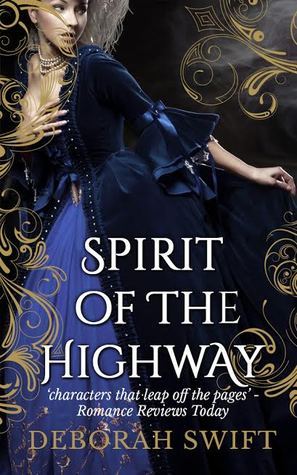
Oh, suppose I should say, my human has a website with her books. It’s wwww.deborahswift.com. She writes historical fiction. Her latest is Spirit of the Highway. It features a ghost. A ghost. I ask you. What’s wrong with witches?


Yin the Cat


Follow Deborah on Twitter @swiftstory
Find Deborah on her website
Follow on Facebook


26521390


Huge thanks to Yin for this fabulous witchery guest post


Jaffa is always pleased to welcome his particular friends to the blog


Come back and see us again soon


~***~