Showing posts with label Lucienne Boyce. Show all posts

Sunday, 1 December 2019

Blog Tour ~ Death Makes No Distinction by Lucienne Boyce


✨✨ Delighted to be hosting today's stop on this Blog Tour ✨✨


October 2019

My thanks to the author and to Rachel's Random Resources for my invitation to this blog tour

Two women at opposite ends of the social scale, both brutally murdered. 

Principal Officer Dan Foster of the Bow Street Runners is surprised when his old rival John Townsend requests his help to investigate the murder of Louise Parmeter, a beautiful writer who once shared the bed of the Prince of Wales.

Frustrated by the chief magistrate’s demand that he drop the investigation into the death of the unknown beggar woman, found savagely raped and beaten and left to die in the outhouse of a Holborn tavern, Dan is determined to get to the bottom of both murders. But as his enquiries take him into both the richest and the foulest places in London, and Townsend’s real reason for requesting his help gradually becomes clear, Dan is forced to face a shocking new reality when the people he loves are targeted by a shadowy and merciless adversary.

The investigation has suddenly got personal..


What did I think about it..

Returning to dark and dangerous world of Georgian England in the company of Dan Foster is always a real treat and in Death Makes No Distinction, Foster is once again caught up in an investigation which is as difficult as it is complex. Caught up in the events surrounding two very different murders, one at the lower end of the social spectrum and the other at the very highest, Foster finds that he is moving in some very strange circumstances, particularly when one of the murder investigations brings him into the presence of the Prince of Wales.

The two murder mysteries at the heart of the novel are tight and intricately plotted and the story surrounding the death of socialite, Louise Parmeter is particularly compelling.The author writes with real historical authenticity and brings all the sights, sounds and atmosphere of Georgian London to life. The dark and moody streets, with their foul smelling alleyways and dark and creepy corners come vibrantly to life, and following Dan Foster as he goes about his role as one of the Bow Street Runners, attempting to keep law and order on the streets of London, always makes for an exciting historical adventure.

This is now the third full length novel in the Dan Foster Mystery series and there is much to enjoy in returning to this exciting world of Georgian crime. This time around Foster finds himself, as always, at the very centre of the action however, when the investigation threatens his own personal circumstances it is a race against time to solve the case before his own family get hurt in the process. 

Beautifully written and intricately plotted Death Makes No Distinction continues this exciting historical series with another compelling murder mystery. I can't wait to see where the series takes us to next.


Lucienne Boyce writes historical fiction, nonfiction and biography. After gaining an MA in English Literature (with Distinction) with the Open University in 2007, specialising in eighteenth century fiction, she published her first historical novel, To The Fair Land, in 2012, an eighteenth century thriller set in Bristol and the South Seas.

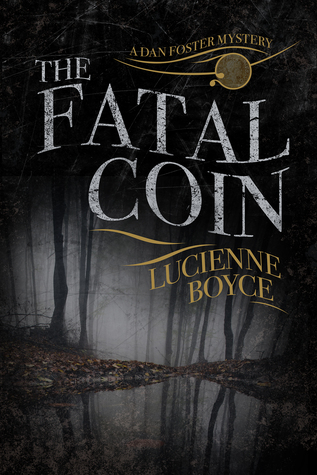
Her second novel, Bloodie Bones: A Dan Foster Mystery(2015) is the first of the Dan Foster Mysteries and follows the fortunes of a Bow Street Runner who is also an amateur pugilist. Bloodie Bones was joint winner of the Historical Novel Society Indie Award 2016, and was also a semi finalist for the M M Bennetts Award for Historical Fiction 2016. The second Dan Foster Mystery, The Butcher’s Block, was published in 2017 and was awarded an Indie Brag Medallion in 2018. The third in the series, Death Makes No Distinction, was published in 2019. In 2017 an ebook Dan Foster novella, The Fatal Coin,was trade published by S Books

In 2013, Lucienne published The Bristol Suffragettes, a history of the suffragette movement in Bristol and the west country. In 2017 she published a collection of short essays, The Road to RepresentationEssays on the Women’s Suffrage Campaign.

Contributions to other publications include:

‘Not So Militant Browne’ in Suffrage Stories: Tales from Knebworth, Stevenage, Hitchin and Letchworth (Stevenage Museum, 2019) Victoria Lidiard’ in The Women Who Built Bristol, Jane Duffus (Tangent Books, 2018) ‘Tramgirls, Tommies and the Vote’ in Bristol and the First World WarThe Great Reading Adventure 2014(Bristol Cultural Development Partnership/Bristol Festival of Ideas, 2014)

Articles, interviews and reviews in various publications including Bristol Times, Clifton Life, The Local Historian, Historical Novels Review (Historical Novel Society), Nonesuch, Bristol 24/7, Bristol History Podcast, etc.

Lucienne has appeared on television and radio in connection with her fiction and non fiction work.
She regularly gives talks and leads walks about the women’s suffrage movement. She also gives talks
and runs workshops on historical fiction for literary festivals, Women’s Institutes, local history societies, and other organisations. She has been a radio presenter on BCfm, and a course tutor.

In 2018 she was instrumental in devising and delivering Votes for Women 100, a programme of commemorative events by the West of England and South Wales Women’s History Network in partnership with Bristol M Shed and others. She also campaigned and raised funds for a Blue Plaque for the Bristol and West of England Women’s Suffrage Society. She is on the steering committee of the West of England and South Wales Women’s History Network, and is also a member of the Historical Novel Society, the Society of Authors, and the Alliance of Independent Authors.

She is currently working on the fourth full length Dan Foster Mystery, and a biography of suffrage
campaigner Millicent Browne.  Lucienne was born in Wolverhampton and now lives in Bristol.


Twitter @LucienneWrite


Saturday, 18 November 2017

Hist Fic Saturday ~ The Butcher's Block by Lucienne Boyce


On Hist Fic Saturday


Let's go back to ...18th Century, London 


35917840
SilverWood Books
August 2017


My thanks to the author for my review copy of this book

I first met Bow Street Runner Dan Foster in Bloodie Bones which is the book which starts this excellent historical fiction series, and where I was transported to the dark and dangerous world of Georgian crime. In this second book, Dan is again caught up in a distinctly murky underworld, this time with body-snatchers who are visibly connected with the grisly discovery of some rather interesting human remains. Arresting the culprits is only the first step in a long process which will take Dan into some dark and dangerous places, and which will put him and others in grave danger.

The Butcher's Block is a really exciting continuation of the series, rather darker in content than the first book, but no less compelling and just as intricately plotted. Eighteenth century London, with its dark and shadowy corners, and mean and moody criminal fraternity, really sparkles with intent. And Dan finds to his cost that investigating the activities of the aptly named resurrection men will lead him right into the heart of some dangerous hidden societies who are hell bent on causing insurrection and rebellion.

Discovering the multi-layers and the hidden depths of the story is one of the absolute joys of reading this author's very cleverly controlled novels. Throughout The Butchers Block there is much to take in, not just in terms of plot and malice, but also in the wonderful array of new characters who arrive in the story fully fleshed and with enough deadly intent to keep the story rollicking along at a fast pace.

In this story, it is also interesting to discover a little more about Dan Foster. We see him very much on his own turf, and walking out with him in the areas of London he calls home, makes both the place and the people come vividly to life. In the treacherous undercurrent of Georgian London, Dan Foster strides out with all the gusto of a super hero and I can't wait to see where his adventures will take him next.


25587091 35917840

35166071


Monday, 27 July 2015

The Author in my Spotlight is.... Lucienne Boyce


I am delighted to welcome 


Sharing her thoughts about her latest novel


25587091
Silverwood Books
2015


Lucienne ~ welcome back to Jaffareadstoo....


What can you tell us about Bloodie Bones that won't give too much away?

Bloodie Bones is the first in a proposed series of historical detective novels featuring Bow Street Runner and amateur pugilist Dan Foster. Although the Runners were based in Bow Street in London, they were often sent around the country to help solve cases. In Bloodie Bones Dan is sent to a village near Bath to solve the murder of a gamekeeper. The murder is connected with recent protests by the local people against the enclosure of ancient woodland, and Dan finds himself in the middle of a volatile situation as they vent their rage in vandalism, arson and riot.


When you were doing your research for the story, did you discover anything which surprised you?

I was surprised by the extent of the protests against the enclosure movement, and it was in fact these discoveries that were a major inspiration for the novel. People tend to regard the enclosure movements as part of a progressive narrative of history – as by and large “good things” that benefitted the country, for example in improved agricultural efficiency and output. But if you look more closely you’ll see that this interpretation is open to question, and it’s soon clear that the benefits, if any, were not widely shared. In fact, land enclosures often spelt disaster for rural working people, who lost their homes and their livelihoods, and were forced into the growing cities to form the cheap labour force for expanding industrialisation. I was particularly taken by the realisation of the emotional impact of land enclosures on people, which are given eloquent and heart-rending expression in John Clare’s amazing poem The Mores – a poem which underpins the novel. 


Are you a plotter ...or a start writing and see where we go kind of writer?

I’m a plotter. I work out a synopsis in advance of writing, but I don’t sketch in every detail. So, for example, I’ll know Dan has to get from Place A to Place B but I haven’t decided exactly how that will happen. I’ll have a few ideas in my head and as the story develops I can gauge what works best in terms of both plot and characterisation.  


Bloodie Bones is the first in a series of mystery stories featuring Dan Foster - where did the original idea for the series come from, and is Dan the person you expected him to be?

I’d been pleasantly surprised by how much I enjoyed writing the mystery elements of my first novel, To The Fair Land (also set in the eighteenth century – about the search for the anonymous author of a book about a voyage to the South Seas which involves the hero getting to the bottom of old and new crimes), and more to the point that readers were telling me they enjoyed those aspects of the story. I’ve always loved detective fiction – I’m a huge fan of Lord Peter Wimsey for example. And I have a long-standing interest in the eighteenth century, a period when I think many of the systems we live with today were established or developed – including the policing system. The Bow Street Runners were the forerunners of our CID, and even without the assistance of modern forensic processes many of their investigative methods are remarkably familiar. So it seemed natural to combine all that and come up with a Bow Street Runner as the main character.

As for Dan’s pugilism, well the eighteenth century was a violent era, blood sports were tremendously popular, and I prefer not to gloss over that. On the other hand, Dan isn’t a thug, so for him boxing is form of defence; it’s also a noble art – as indeed it was to many people of the time; and it’s something that redeemed him, a former street child, from a brutal, violent life.

Is he who I expected him to be? In many ways yes, he is, but as the series develops we’ll see him struggling with his personal issues too – his unhappy marriage, his love for his sister-in-law, his growing distaste for an oppressive legal system. Where will all that take him? I’m not absolutely sure yet!   


What's the most enjoyable thing about writing ...and what's the most frustrating ?

I love everything about writing: the research, the drafting, even the editing though it can be nerve-wracking! Research involves reading so many wonderful and fascinating books, visiting locations, museums, art galleries, talking to people...Drafting is when you sit down and out of all that try to coax your imagination into creating the story: the feeling when that happens is tremendously rewarding. Editing is absorbing and if you love and care about language even the knotty points of grammar have a strange allure. Above all, there’s a real pleasure in seeing your work improve with the help of professional editors – though it is hard work and there’s often initial despondency when you realise something you thought was good actually doesn’t work all that well.  

The most frustrating thing is when I feel I don’t have time to write!


What do you want readers to take away from your books?

I’d like them to enjoy them, of course, but also share me with me some of the things that are important to me and that the books are trying to express: the qualities of compassion, equality, care for the environment, hatred of cruelty to animals, of oppression, injustice and poverty. Dan’s own background as an abandoned child destined for a life of crime, and the cases he’s involved in, all reflect these preoccupations.


What's next for Dan?

I’m working on the second Dan Foster Mystery, in which he’s sent to work undercover on the trail of what I might anachronistically call a “cop-killer” in one of the reform societies of the 1790s. This was the London Corresponding Society, which campaigned for an end to government corruption and changes to the electoral system, including adult male suffrage. Inevitably, of course, the idea of female suffrage was still regarded as something very outlandish except by wonderful women like Mary Wollstonecraft! The government tried to stamp out these societies by arresting the leaders, clamping down on their publications, banning meetings and so on. Dan, who prefers a straightforward murder any day, is drawn into these murky dealings much against his will in a chase that will lead him from the radical clubs of London to the mutinous decks of the Royal Navy’s ships at the Nore. And meantime, relations with his wife continue to deteriorate and the novel ends with him getting quite a life-changing surprise!    


©Lucienne Boyce
July 2015

You can find Lucienne on her website
or on Twitter @LucienneWrite


My review of Bloodie Bones 


Huge thanks to Lucienne for taking the time to answer our questions so thoughtfully. 

Jaffa and I look forward to meeting up with Dan again, hopefully... very soon...!


~***~


Monday, 6 July 2015

Review ~ Bloodie Bones by Lucienne Boyce

25587091
Silverwood Books
2015


There's something rather special about the combination of good historical fiction and complex crime, and in this, the first book in the Dan Foster mysteries, we are introduced to a talented protagonist, who has his foot firmly placed in the reality of eighteenth century life, and yet, he attacks crime enquiry with all the gung-ho of a seasoned crime scene investigator.

We are introduced to Dan Foster, an officer in the Bow Street Runners, as he goes undercover to try to wheedle out the perpetrator of a crime, which involves the local gentry of a country estate, with the unexplained death of the estate’s gamekeeper. As Dan infiltrates himself into local culture, including some rather rollicking good fist fights, he discovers that local feelings against the Lord of the Manor run high and whilst the lure of illicit poaching is necessary to keep food on the table, it doesn’t help to foster good relations between the gentry and the working classes.

The historical accuracy of the novel shines through, with fine attention to detail, and some really interesting observations about the political and social ramifications of  rural life in the latter part of the eighteenth century. The fictional village of Barcombe in Somerset is described in such detail that both the place and its people come gloriously alive. It feels like you work in the heat of blacksmith’s forge with Dan and enjoy a well-earned beer with him, in the evening, at the Fox and Badger . The crime at the heart of the mystery is both complex and convoluted, and the many twists and turns in the plot adds realistic depth to the story and keeps you turning the pages in order to find out what happens next.

Weaving together history and mystery with great flair and fine attention to detail make this a most enjoyable historical crime story. There is no doubt that the author has given us a worthy protagonist in Dan Foster, and I can’t wait to meet up with him again soon, as there is much to discover about this enigmatic crime investigator, and I am sure that he has many exciting adventures still to come.


My thanks to the author for sharing her book with me.