Showing posts with label Jane Cable. Show all posts

Tuesday, 16 November 2021

📖 Blog Tour ~ The Forgotten Maid by Jane Cable


I am thrilled to host a stop on the concluding day of this blog tour 


Sapere Books
3 November 2021

Cornish Echoes Mystery #1

My thanks to publisher for my copy of this book
and to Rachel's Random Resources for the invitation to the blog tour


Two centuries apart, two lonely women seek a place to call home…

Cornwall, England, 2015

Nomadic project manager Anna Pritchard has arrived in the village of Porthnevek to oversee the construction of a trendy new glamping site. But with many members of the local community strongly opposed to the development, she quickly finds herself ostracised and isolated.

Seeking to ease her loneliness, Anna begins volunteering at a nearby National Trust house in Trelissick, once owned by the aristocratic Daniell family. In her new role, Anna soon feels her attachment to both Porthnevek and Trelissick deepening. And as she spends more and more time steeped in local history, it seems that the past and the present are beginning to collide…

Belgium, 1815

After losing her brother in the Battle of Waterloo, French army seamstress Thérèse Ruguel is taken to London by war artist Thomas Chalmers, becoming his reluctant muse. But with Thomas’s mother unhappy with the arrangement, Thérèse is soon sent to Cornwall as a lady’s maid to Elizabeth Daniell, a kindly relative of the Chalmers family.

Able to speak only a little English — and with the other servants suspicious of her — Thérèse feels lost and alienated. And when she discovers her brother may still be alive, she must decide whether to continue with her new life in England, or brave the dangerous journey back to her homeland…

What became of Thérèse? Can Anna unearth the ghosts of the past?

And has Anna finally found where she belongs…?


📖 My thoughts..

From the very start of the novel I was engrossed in the story of Anna Pritchard who, newly arrived in Cornwall, has the task of supervising the construction of a development site which should bring growth and expansion to the area, but which only seems to have roused the wrath of the local people. In seeking a distraction, Anna volunteers, as a guide, at the nearby Trelissick House, a National trust property which still retains the echoes of its troubled past.

Moving seamlessly back and forwards in time, this imaginatively described dual time story also introduces us to, Thérèse Ruguel, a French refugee, who, in 1815, takes up the position of lady’s maid to Elizabeth Daniell. Living at Trelissick house with the Daniell family is something of an escape after the horrors of Waterloo, however, Thérèse brings her own troubles with her to England.

Dual timelines are notoriously tricky to get right but there's no such trouble with this beautifully written story. Both time elements blend seamlessly with neither one trying to outdo the other in terms of story content and impact. I was equally engrossed in Anna's struggle with the locals in the twenty-first century as I was I going back to experience Thérèse Ruguel's complicated life in the early part of the nineteenth century. 

The Forgotten Maid brings with it a true sense of history allowing the tiny streets of Cornwall to come to life in a very believable way and yet I was also equally at home in the present sipping a glass of local golden ale with Anna in The Tinners Arms. The story is intricately detailed, peopled with wonderful characters, some you'll grow to love, whilst there are definitely others you'll love to hate. However, what shines throughout the story is the natural rugged beauty of Cornwall and the way this talented author brings its evocative history to life.

The Forgotten Maid certainly gets this new Cornish Echoes Mysteries series off to wonderful start. 


About the Author


Jane Cable writes romance with a twist for Sapere Books, and The Forgotten Maid her first novel set in her adopted county of Cornwall. She is lucky enough to have been married to the love of her life for more than twenty-five years, and loves spending time outdoors, preferably close to the sea on the wild and rugged north Cornwall coast.

She also writes emotional women’s fiction as Eva Glyn, published by One More Chapter.

Twitter @JaneCable

Facebook

Purchase link  99p for a limited time

Website and newsletter sign up


@SapereBooks @rararesources


Thursday, 22 October 2020

Mini Blog Blitz ~ Endless Skies by Jane Cable


Delighted to host one of the stops on this Mini Blog Blitz


Sapere Books
July 2020

My thanks to the author, publisher and Rachel's random Resources for my copy of the book
and the invitation to this Mini Blog Blitz


After yet another disastrous love affair – this time with her married boss – Rachel Ward has been forced to leave her long-term position in Southampton for a temporary role as an Archaeology Lecturer at Lincoln University.

Rachel has sworn off men and is determined to spend her time away clearing her head and sorting her life out.

But when one of her students begins flirting with her, it seems she could be about to make the same mistakes again...

She distracts herself by taking on some freelance work for local property developer, Jonathan Daubney.

He introduces her to an old Second World War RAF base. And from her very first visit something about it gives Rachel chills…

As Rachel makes new friends and delves into local history, she is also forced to confront her own troubled past.


What did I think about it..

After a disastrous love affair, Rebecca Ward is advised to relocate from her home in Southampton, to take up a lecturer's post at the University of Lincoln. Once there she gets drawn into a mystery surrounding a proposed business project on a disused WW2 airbase. In Rachel's capacity as an archaeology specialist she is intrigued by what she discovers at the airbase and is soon determined to do all she can to unlock its secrets.

With her troubles behind her, Rachel begins to enjoy her life in Lincoln and makes some rather special friends, especially, Jem and his gorgeous dog, Toast, the rather handsome student, Ben, and lovely, Esther who lives in a local care home and who knows rather more about the WW2 airbase than at first appears. However, it is the charismatic business man, Jonathan Daubney, who comes play such an important part in Rachel's life. 

With echoes of the past seeping into the present there is a lovely sense of anticipation throughout the novel as we are left wondering just what Rachel will discover as she delves further into the history of the airbase and the secrets of those people, from the past, whose shadows seems to linger in the air. 

Beautifully written, as I knew it would be, as this author can always be relied upon to tell a good story. Endless Skies has all the right ingredients for an engrossing read, there's a smattering of intrigue, a hint of danger and a delicious sense of romance. The characters fairly zing with life, the setting is entirely authentic and, whether in the past, or the present, there is always a strong, and totally believable, sense of time and place. 

In these troubled times, escaping into a good story is my comfort and for the past few days I have been truly comforted by reading this lovely story about friendship, betrayal, intrigue and ultimately, love.


About the Author


I write romance with a twist, that extra something to keep readers guessing right to the end. While my books are character driven my inspiration is always a British setting; so far a village in Yorkshire(The Cheesemaker’s House), a Hampshire wood (The Faerie Tree), gorgeous Studland Bay in Dorset(Another You) and rural Lincolnshire (Endless Skies). 

I was born and raised in Cardiff but spent most of my adult life living near Chichester before my husband and I upped sticks and moved to Cornwall three years ago.I published my first two novels independently and have now been signed by Sapere Books. I am an active member of the Romantic Novelists' Association and contributing editor to Frost online magazine


Twitter @JaneCable #Endless Skies


Amazon UK currently on offer at 99p until the 23rd October

@rararesources

@SapereBooks


Wednesday, 18 March 2020

Mini Blog Blitz (Giveaway) ~ The Faerie Tree by Jane Cable


Delighted to be part of this mini blog blitz


25133311

My thanks to the author and Rachel's Random Resources
for the invitation to be part of this Mini Blog Blitz


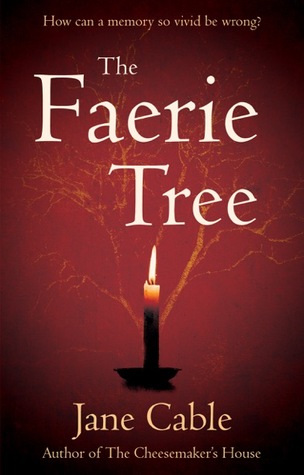
In the summer of 1986 Robin and Izzie hold hands under The Faerie Tree and wish for a future together. Within hours tragedy rips their dreams apart. In the winter of 2006, each carrying their own burden of grief, they stumble back into each other’s lives and try to create a second chance. But why are their memories of 1986 so different? And which one of them is right?

With strong themes of memory, love and grief, The Faerie Tree is a novel as gripping and unputdownable as Jane Cables first book, The Cheesemaker’s House , which won the Suspense & Crime category of The Alan Titchmarsh Shows Peoples Novelist competition. It is a story that will resonate with fans of romance, suspense, and folklore.


My thoughts..

When Izzie meets Robin again after a gap of several years, there is much about them that lays hidden. Shared memories are hidden deeply away, locked in a place where hurt can no longer find them. Both Izzie and Robin have known loss and heartbreak and both have found love but in the intervening years they have never found the passion they once felt for each other.

In The Faerie Tree, the author sensitively explores the layers of memory that bind us together and just how deeply we lock away those memories when they seek to confuse and baffle us. The Faerie Tree itself hidden deep in the woodland is the place where Izzy and Robin made their memories. It’s a magical place but firmly bound in the rites and rituals of the earth, people often leave their secrets there and hope that their wishes will, one day, come true.

I was drawn into the story of The Faerie Tree from the beginning. Izzie and Robin’s story is beautifully realistic to the point where you find yourself looking with new eyes at people in the street, and wonder what their lives are like. The story is easy to read and nicely divided so that we see what’s happening from both Izzie’s and Robin's point of view, and although their memories sometime coalesce, often they don’t and once you get used to the quirkiness of the storyline, the book becomes unputdownable. Both Izzie and Robin dominate the story, they are superbly flawed and filled with so much angst and heartbreak that at times the storyline becomes almost a battle to see who hurts the most, and yet, there is a lightness to the narrative, in the shape of Izzy’s daughter Claire who is the still small voice of calm in an often emotionally fraught situation.

To say more about the plot would be to give too much away. This is one of those rather special stories which is all the better for reading knowing nothing of what is to come.


About the Author


Jane Cable writes romantic fiction with the over-riding theme that the past is never dead. She published her first two books independently (the multi award winning The Cheesemaker’s House and The Faerie Tree) and is now signed by Sapere Books. Two years ago she moved to Cornwall to concentrate on her writing full time, but struggles a little in such a beautiful location. Luckily she’s discovered the joys of the plot walk.


Twitter @JaneCable


Giveaway to win paperback copies of The Faerie Tree and The Cheesemaker's House

(UK only)


Terms and Conditions

UK entries welcome.

Please enter using the Rafflecopter box below.


The winner will be selected at random via Rafflecopter from all valid entries and will be notified by Twitter and/or email. If no response is received within 7 days then Rachel’s Random Resources reserves the right to select an alternative winner. Open to all entrants aged 18 or over.

Any personal data given as part of the competition entry is used for this purpose only and will not be shared with third parties, with the exception of the winners’ information. This will passed to the giveaway organiser and used only for fulfilment of the prize, after which time Rachel’s Random Resources will delete the data. I am not responsible for despatch or delivery of the prize.


Wednesday, 14 August 2019

Blog Tour ~ Another You by Jane Cable


Delighted to be involved in the blog tour for this lovely dual time story


45441159. sy475
Sapere Books
27 June 2019

My thanks to the author and publisher for my invitation to be part of this blog tour

I'm delighted to be able to share this exclusive book extract from Another You 

I am about to turn on the shower when I hear it. Distant at first, almost thunder — but with a definite pulse. I throw open the bathroom window and look to the skies: heavy, low and revealing nothing.

Studland Bay is shrouded in early morning mist, still and silent over the sea. The dampness clings to the folded umbrellas in the pub garden, staining the fabric with dark streaks. With the habit born of years I listen for the sea, but all I can hear is thrum, thrum, thrum from above.

The sea is beyond the garden. Figures move along the shoreline, somehow lacking the randomness of dog walkers. Something unfamiliar jars. Thrum, thrum, thrum.

The mist makes Studland a strange, enclosed world. On a clear day I can see the cliffs to my right rise to meet the sky at Old Harry rocks, a wall of chalk which dazzles in the sunlight before plummeting into the surf. Now it is as though there is nothing there. I shiver and wrap my towel more closely around me.

As the thrumming fades into the distance my attention is caught by a jeep bumping over the field in the direction of Fort Henry, its concrete mass just visible between the trees to my left. Two men jump out and call to each other, their words indistinct on the breeze. That’s it — I remember now — the re-enactment.

Music from Jude’s radio alarm reaches me through the wall. Time I was getting on, but a movement in the bay catches my eye. The mist is breaking a little, wisps like candyfloss spiralling past the window. The prevailing wind has changed but there is something else… I sniff the air. The merest hint of cordite.

Shapes shift beyond the thinning curtain: huge, beige, intangible. I lean out further. The men from the jeep are dragging a wooden crate towards the fort. Gears grind in the lane as an army truck negotiates the bend at the bottom of the cliff path. It stops in the dip and soldiers stream out, disappearing down the gully to the beach.

The wind is an unfamiliar visitor to the bay but this morning it sweeps in from the east with a vengeance, whipping the water into angry furrows and peaks. The shapes in the sea edge into view, pitching and tossing in the swell. I can only count three of them, but something makes me think there are more beyond. I strain my eyes — what in heaven’s name are they?

There is a tap on the bathroom door. “Just putting the kettle on, Mum. Want some toast?”

“Please.” I shake myself and turn on the shower.

But still I am drawn to the window and the sea, gunmetal grey as the shapes emerge from the mist. Steam fills the room behind me as they appear then disappear, never quite reaching the shore.

Jude has the Bournemouth Echo spread out in front of him on the kitchen table. I pause at the bottom of the stairs — he’s so like his father was when I first met him: tall, blue-eyed and with a smile to melt hearts at fifty paces. All he’s inherited from me is my coppery-blonde hair.

“Morning, Mum. Just checking the timings for today.”

“The re-enactment?”

“No, that’s in a couple of weeks — today’s the memorial service for the tank crews.”

I sit down next to him and pour myself a mug of tea from the pot. “Are you sure? It’s crawling with soldiers out there.”

His finger moves across the paper. “Well, there is a bit of historical stuff going on; Bovington Museum’s bringing down a tank to drive ashore from a carrier and there’ll be an old plane flying over to drop some poppies.”

I lean towards him so I can read over his shoulder. It’s a big day for Studland; exactly sixty years ago the village stood silent witness to the first of a string of rehearsals for D-Day, which went horribly wrong when the amphibious tanks that were meant to float didn’t. The army picked the Studland peninsular because the terrain, with cliffs at one end and sand dunes at the other, was similar to Normandy. And it was secret; the paper says during the war it was almost completely cut off from the world.

Exercise Smash was so hush-hush it’s only recently that anyone’s heard about it and today a memorial to the men who died will be unveiled. The editorial proclaims that without their sacrifice the story of D-Day might have been very different, but I bet their families didn’t think so. There’s an interview with the last remaining widow, who says they were told nothing in 1944 and just accepted it. Stiff upper lips and all that. What a time to live.

Jude stands up and stretches. “I’d best go prep the bar. It was busy last night, and if we’re opening for coffee we’ll need stacks of cups and saucers.”

“What time’s your father coming in?”

He rolls his eyes. “Who knows? Said he had a date last night, remember?”

Nothing new there.

As Jude clatters down the stairs to the pub the feeling washes over me. Drab, familiar, bleak as the misty dawn. How the hell did the six inches of cold sheet between Stephen and me stretch until it became three miles of chalk headland? And would I change it? No. Not now, anyway.

Jude was conceived in this grey prison of a place, long before the mullions grew bars. Upstairs, on the lumpy mattress of Uncle Ted’s spare bed, before we knew it would become our future. Even before we knew we had one. We curled together under the blankets, star-struck by the novelty of a whole weekend together, oblivious to the fact I’d forgotten my pills.

In the morning we walked along the beach, barefoot, my skirt trailing in the sand. Behind the tide, with salt and a bucket we pulled up razor clams. I cooked them for supper, with pork, wine and garlic. Uncle Ted said I should be running the kitchen in his pub. Oh, how we laughed at the idea.

I’ll never forget waking here for the first time. We arrived in the dark, not long before closing time. Smoke filled The Smugglers’ public bar and Stephen’s Uncle Ted, a narrow whippet of a man, was polishing glasses behind it. He grasped my hand.

“Welcome to Studland, Marie.” His voice was gentle, his smile slow. I miss him to this day.

©Jane Cable


About the Author


Although brought up in Cardiff, Jane Cable now lives in Cornwall and is a full time writer. Another You is a moving saga of family life in the 21st century which draws on the horrors of combat, both in modern times and World War Two as down-trodden Marie fights to reclaim her identity and discover what really matters to her. Jane’s next book, Winter Skies, will be available for pre-order from Sapere Books soon.

Twitter @JaneCable #AnotherYou

@SapereBooks

More about the author can be found on her website by clicking here  or on Facebook by clicking here 


Friday, 14 July 2017

First Remembered Read ~ Poem...


Those of us who read, and who are influenced by books, tend to squirrel away our memories of all the stories we have read over the years. 


And yet, there is always that one special book tucked away in the far corner of your mind which reminds you just why you love reading so much…


During July and August I've invited a few friends to share their First Remembered Read


My First Remembered ~ Poem


I'm thrilled to welcome


Anna Belfrage, author of Under the Approaching Dark


When I was a child, my mother would often read me poetry. Most of the time, it would be Swedish poetry, but now and then she’d open her well-worn books of English verse, leafing swiftly back and forth to find her favourites. Her books were dog-eared and splotched – like my own books of verse are – testament to how often she opened them, fingers caressing the words as she spoke them.

At the time, we were living in South America, and my mother was badly affected by what the Welsh call Hiraeth, a melancholic longing for home. Hence, most of the Swedish poetry she read us was by poets describing Sweden at its most nostalgic best—whether it be in the purple shadows of the very short Midsummer night, or the dappled sunlight of a forest glade—places that screamed “home” to my mother, but not so much for me, as I had little recollection of the land of my birth. 

I preferred the English poems as they never affected my mother quite as much. Well, they usually didn’t, until the day she cleared her throat and started reading Michael Drayton to me:

Since there’s no help, come let us kiss and part.
Nay, I have done, you get no more of me,
And I am glad, yea, glad with all my heart,
That thus so cleanly I myself can free;
Shake hands forever, cancel all my vows,
And when we meet at any time again,
Be it not seen in either of our brows
That we one jot of former love retain.
Now at the last gasp of Love’s latest breath,
When, his pulse failing, Passion speechless lies,
When Faith is kneeling by his bed of death,
And Innocence is closing up his eyes,
Now, if thou wouldst, when all have given him over,
From death to life thou mightst him yet recover.

Clearly, this poem held a lot of significance for her, as her eyes moistened slightly. She cleared her voice and explained this was a poem about how love can suddenly end, leaving the lovers angry and hurting even while they (or at least one of them) hope that somehow things could be mended. “Once broken, it’s difficult to do,” she added. “The break never heals completely.”

Well, that was well over my eleven-year-old head, but I nodded all the same and scooted closer to her, offering what wordless comfort I could.

My mother cleared her throat and went on to read some more. Robert Herrick’s “Gather ye rosebuds while ye may” made her smile as she told me this had been a favourite of a boy she’d met at university. These days, I wonder if maybe that same boy was the one she thought of when declaiming Drayton. Back then, I asked her to read some more.

“Alright,” she said, thumbing through the pages until she reached the John Donne section:

Go and catch a falling star,
Get with child a mandrake root,
Tell me where all past years are,
Or who cleft the Devil’s foot:
Teach me to hear the mermaids singing,
Or to keep off envy’s stinging,
And find
What wind
Serves to advance an honest mind

If thou beest born to strange sights,
Things Invisible to see,
Ride ten thousand days and night,
Till Age snow white hairs on thee;
Thou, when thou return’st, wilt tell me,
All strange wonders that befell thee,
And swear,
No where,
Lives a woman true and fair.

If thou find’st one let me know;
Such a pilgrimage were sweet.
Yet do not: I would not go,
Though at next door we might meet.
Though she were true when you met her,
And last till you write your letter,
Yet she
Will be
False, ere I come, to two or three.

When she finished, she was crying. So was I, struck through the heart by the bitterness of the poet. Once again, I didn’t fully understand, but I was amazed at how such beautiful words could contain so much anger. I went about for days murmuring the first few lines over and over again. When my mother was busy elsewhere, I pulled out her precious book and found the poem, reading it silently to myself while I wondered what a mandrake was, and why he disliked women so much. What I also found was a folded slip of paper, worn so thin it was see-through. Faded blue ink in an unfamiliar handwriting covered the page, beginning with “Go and catch a falling star”.

Many years later, I bought a historical novel called The Moon in the Water by Pamela Belle. It has a sequel called The Chains of Fate, and these two books count among the best historical fiction I have ever read. It was while reading these books that I fully understood Donne’s poem, weeping until my eyes itched as Thomazine and Francis loved, lost, hated, loved, lost…

This is also when I understood that maybe my mother wept because she was never given the chance to explain herself. Maybe that boy (and yes, I’m stuck on that boy who shared her love of English poetry) thought her false and sent her that paper on which he’d copied Donne’s poem. Maybe she wanted to tell him otherwise, maybe she quoted Drayton at him, beseeching him to try again.  Or maybe it is as simple as two poet-lovers comparing notes over tea, one very long-gone spring day in the 1950s. I’ll never know, as I have no intention of asking. 


Matador 2017


Jane Cable, author of Another You


My first poem is Robert Louis Stevenson's 'From a Railway Carriage' which is from 'A Child's Garden of Verses'. My 1971 copy is illustrated by Hilda Boswell and I still think it's beautiful.


To be fair, it isn't the first poem I remember but it's the first I committed to memory and can still recite today. Because my father wrote poetry my early years were full of it, starting with his own childhood copy of A A Milne's 'When We Were Very Young'. I did go through it to see if I could pick a first or favourite but failed miserably. Every weekend morning I'd climb onto his bed and he'd read to me and very often it was poetry of some sort.

What I especially love about 'From a Railway Carriage' is that it can be read aloud in the rhythm of a train rattling along a track - try it and it works perfectly, speeding up and slowing down just like the real carriages would. As a child that fascinated me and I expect it's why the poem has stayed with me for so long. My father was really good at breathing life into poems and as he loved trains too I expect we were both swept up on a wonderful journey through the countryside, far away from the semi in Cardiff where I grew up, our noses pressed to the windows together as the fairies, witches and tramp all flashed past.

It's a really lovely memory!


33400567
Endeavour Press
2016


Harriet Steel, author of Dark Clouds Over Nuala


I’ve chosen The Listeners by Walter de la Mare, the first poem to make a strong impression on me when I learnt it at school. It’s a lovely piece and still one of the most evocative I know. Moonlight shines on the lonely forest clearing as the traveller reaches the mysterious door. Apart from his knocks, the champ of his horse eating grass, and the whirr of wings of a startled bird, there’s an eerie silence. He knocks repeatedly, his impatience growing. No one answers. But the host of phantom listeners who live in the dark house hear him, and, as he senses their presence, the eeriness increases. At last, he makes a final, desperate appeal:

‘Tell them I came and no one answered,

That I kept my word,’ he said.

Still no reply. Dejected, he rides away, and the silence surges softly back.

De la Mare was celebrated for his ghost stories and, on one level, that’s what the poem is. When I was a child, the story fascinated me as well as making me shiver, and it still does. Why has the traveller come? Is it to return something to its rightful owners, or to claim something? The ghostly atmosphere brings back memories of childhood nights spent reading spooky stories by torchlight under the bedcovers.

However although de la Mare said there was no hidden meaning in his poem, some people have seen it as an allegory of man’s soul searching for answers to the eternal questions. Often, literature affects us differently as different times of our lives. As I grow older, the idea of an allegory has an increasing resonance.


35187542
Stane Street Press
2017


Huge thanks to Anna, Jane and Harriet for sharing their memories with me today.


Next week : My First Classic


Thursday, 30 March 2017

Review ~ Another You by Jane Cable

33400567
Endeavour Press
2017


What's it all about..

When the present is unbearable, can you be saved by the past?

Marie Johnson is trapped by her job as a chef in a Dorset pub and by her increasingly poisonous marriage to its landlord. Worn down by his string of affairs she has no self-confidence, no self-respect and the only thing that keeps her going is watching her son turn into a talented artist.

But the sixtieth anniversary of a D-Day exercise which ended in disaster triggers chance meetings which prove unlikely catalysts for change as Marie discovers that sometimes the hardest person to save is yourself.


What did I think about it ..

Marie Johnson cuts rather a solitary figure and is often to be found walking the headland, near to her home, in Studland Bay. Often lost in her own thoughts, Marie has much to consider, not just about her life and destructive marriage, but also about what she wants for herself and her son, Jude. And as she watches the preparations take place on the beach below for the sixtieth anniversary of a D-Day exercise, Marie gets caught up in the excitement of the commemoration, and also in the history of what happened sixty years ago during World War Two.

As always, this clever author gets right into the emotional heart of a story which looks at all the complexities of living life both in the here and now, and also of the repercussions of the past, which, at times, threatens to overshadow the future. The story is beautifully atmospheric, with lots of enticing threads and thought-provoking layers. I enjoyed seeing how the story played out in the wider context, and of how Marie’s rather lonely character developed and changed as the story progressed. Setting Another You with the stunning Studland Bay as its backdrop allows the author to give full rein to her descriptive talents. It is obvious that a great deal of historical research has been done in order to give the WW2 element such an authentic feel, and as the story progresses both time and place really start to come alive in the imagination.

This is now the third book I have had the pleasure to read by this talented author and I can say that I have enjoyed them all immensely. Jane Cable writes with such passion and love for her subject that each story is a real joy to read.


Best Read with..a sausage butty and a strong cup of tea..


Jane Cable writes romance stories with a strong element of mystery and suspense. Her first novel, The Cheesemaker’s House, was a finalist in The Alan Titchmarsh Show’s People’s Novelist competition and won the Words for the Wounded Independent Book of the Year Award in 2015

More about the author can be found on her website by clicking here  or on Facebook by clicking here 


Follow on Twitter @JaneCable 

Another You is published by Endeavour Press

Read an interview by the author by clicking here.


My thanks to the author for providing a review copy of Another You


~***~


Wednesday, 1 February 2017

Blog Tour ~Another You by Jane Cable


Jaffareadstoo is delighted be part of the Another You Blog Tour   


And to welcome back to the blog the author Jane Cable


Today , Jane is explaining to us the connection between her latest novel, Another You and World War II...


Like most novels Another You had many iterations before the final story fell into place. The first version was based on a real ghost story from Studland in Dorset where the book is set, but as I began to research the history of the area I realised there was actually something far more interesting going on.

On my first visit to Studland in 2009 a friend had taken me to Fort Henry, a huge concrete blockhouse overlooking the beach, and explained it had been built for D-Day rehearsals witnessed by the very top brass including Churchill and King George VI. What I didn’t realise at the time was the extent of those rehearsals, and the tragic fact that six men died during the first of them.

This was, in fact, kept secret for a very long while. I stumbled across the story when googling Studland in World War II led me to a naval history message board. On it was a thread about the rehearsals including a heartfelt plea for information from the son of one of the men who died. It was answered by tank restorer and WWII historian, John Pearson, and I got in touch with him.

John was generous with his time and his knowledge. His starting point had been the restoration of his Valentine Double Duplex tank which had been used in the first of the Studland D-Day rehearsals, code named Exercise Smash. Double Duplex meant that the tank was made seaworthy (or not, as the case may be) by the addition of a canvas skirt held up by hydraulics so it could power ashore from landing craft and be in action on the beaches straight away.

At Studland things did not go according to plan. Normally the most peaceful of bays, on the morning of the exercise the wind turned and came in from the east making the sea unusually choppy. The tanks were launched three miles out and seven of them did not make it to shore with the lives of six soldiers from the 4/7 Dragoon Guards being lost. Lessons were learnt by the British at least and on D-Day the tanks were launched much closer to the beaches. At Omaha, however, the Americans launched from 5,000 yards and only three of their tanks made it which had a massive effect on the loss of life there.

On the sixtieth anniversary of D-Day, helped by the National Trust and various arms of the military, John Pearson organised a permanent memorial to the men who died in Smash which was unveiled by one of their widows. He also brought his newly restored Valentine DD to Studland to put it through its paces. Ten years later it was back there again and I was lucky enough to meet John and to attend a moving memorial service at Fort Henry.

By then I knew that wartime memories would be central to my story. One of the few surviving veterans was there that day and so I created the character of George, a former soldier with a proud but cynical view of the war effort, who provides my heroine Marie with a direct link to the past. After The Cheesemaker’s House I had really wanted to write in a time where this was possible, where there was a character who could ground the smoke and mirrors in historical truth.

Even when I was close to finishing the book I felt there were huge gaps in my knowledge about everyday life in wartime Studland. I had joined the Facebook group of the local historical society and they put me in touch with National Trust warden Stewart Rainbird who had pulled together an oral history of the time by talking to locals who had lived through it. His knowledge enabled me to bring the whole period to life in more subtle ways, such as the constant noise of the shelling which went on for weeks – but stopped at weekends so that the ranges could be cleared.

Although Another You is set in 2004, what happened sixty years before is the vital beating heart of the story and the catalyst for change in Marie’s life. As a tribute to the men who died and in order to help survivors of combat I will be donating £1 to Words for the Wounded for every review on Amazon in the UK and in the US.


 Another You


Marie Johnson is trapped by her job as a chef in a Dorset pub and by her increasingly poisonous marriage to its landlord. Worn down by his string of affairs she has no self-confidence, no self-respect and the only thing that keeps her going is watching her son turn into a talented artist.

But the sixtieth anniversary of a D-Day exercise which ended in disaster triggers chance meetings which prove unlikely catalysts for change as Marie discovers that sometimes the hardest person to save is yourself.


More about the author can be found on her website by clicking here  or on Facebook by clicking here 

Follow on Twitter @JaneCable 

Huge thanks to Jane for this fascinating guest post and for the invitation to be part of her Blog Tour.

Another You is published by Endeavour Press


~***~


Saturday, 28 March 2015

Blog Tour : The Faerie Tree by Jane Cable


I am delighted to welcome


Author

of


25133311
February 2015
Matador


I asked Jane what inspired her to write The Faerie Tree.....


Inspiration is like an onion. Honestly – it is. Not that it makes you cry (although that’s possible) but that it’s multi-layered. Look at the skin and it’s pretty obvious what you’ve got, but start peeling the layers back and goodness only knows what you’ll find.

When Jaffa and Jo asked me to write about my inspiration for The Faerie Tree, the first answer was the tree. I visited it in 2010 and just knew it had to be part of a story; its beautiful setting, the people who visit it and the hidden hand who helps the faeries with their correspondence. Not to mention the sprinkling of ancient magic it brings to the woods.

So if the faerie tree on the banks of the River Hamble is the onion’s skin, what else do we find as we work through the layers? As with The Cheesemaker’s House, I think we find folklore – in its very broadest sense. With the faerie tree it is perhaps a little more obvious as special trees have been the focus of ancient rites for generations. So I thought – why not make some of my characters people who follow these beliefs now?

Ah yes, characters. For me they aren’t inspired by real people – but pieces of people I know must find their way into them. That the young Robin is a carer; that he’s far from honest about it; that he has to keep up a façade – yes, I know people like that. I also know that it’s almost inevitable they will break. But what I find more inspirational is that Robin found a way back from the darkness and became a much stronger person. It would be wonderful if Robin’s journey could give hope to people who are struggling right now.

Of course at the beginning of the book Robin’s situation doesn’t look great. When Izzie first sees him again after twenty years he is living on the streets of Winchester. That was the second real moment of inspiration for me, sitting in Caffe Nero opposite the Buttercross one freezing Sunday morning, watching the homeless men gather there and wondering about their stories. Had they known love at some stage in their lives? What would happen if the person who loved them saw them now?

At the beginning of a book I find inspiration comes easily, but I never really know where the story is going to go. It may sound crazy – and I know a lot of writers who plan their work in meticulous detail before putting pen to paper – but I love allowing the characters to carry me along. The problem with The Faerie Tree was that I found myself writing that Robin’s and Izzie’s memories of their affair in 1986 were different, without really having a clue why. They had found the hook to their own story, but it took me a great deal of research, indecision and anguish before coming to a conclusion on why it happened that way.

Naturally I’m not going to tell you what I discovered…


My thoughts about The Faerie Tree


When Izzie meets Robin again after a gap of several years, there is much about them that lays hidden. Shared memories are hidden deeply away, locked in a place where hurt can no longer find them. Both Izzie and Robin have known loss and heartbreak and both have found love but in the intervening years they have never found the passion they once felt for each other.

In The Faerie Tree, the author sensitively explores the layers of memory that bind us together and just how deeply we lock away those memories when they seek to confuse and baffle us. The Faerie Tree itself  hidden deep in the woodland, is the place where Izzy and Robin made their memories. It’s a magical place but firmly bound in the rites and rituals of the earth, people often leave their secrets there and hope that their wishes will, one day, come true.

I was drawn into the story of The Faerie Tree from the beginning. Izzie and Robin’s story is beautifully realistic to the point where you find yourself looking with new eyes at people in the street, and wonder what their lives are like. The story is easy to read and nicely divided so that we see what’s happening from both Izzie’s and Robin's point of view, and although their memories sometime coalesce, often they don’t and once you get used to the quirkiness of the storyline, the book becomes unputdownable. Both Izzie and Robin dominate the story, they are superbly flawed and filled with so much angst and heartbreak that at times the storyline becomes almost a battle to see who hurts the most, and yet, there is a lightness to the narrative, in the shape of Izzy’s daughter Claire who is the still small voice of calm in an often emotionally fraught situation.

To say more about the plot would be to give too much away. This is one of those rather special stories which is all the better for reading knowing nothing of what is to come.

However, by the end of the novel I was in awe of vagaries of fate and of the powerful and unshakeable bond of memories.


You can find Jane on her website 
Follow her on Facebook
Find her on Twitter @JaneCable
Buy the book on Amazon UK


Jane is very kindly offering one lucky UK a paperback copy of The Faerie Tree


a Rafflecopter giveaway


Huge thanks to Jane for inviting us to be part of her Blog Tour.

We wish The Faerie Tree much success.


~***~

Sunday, 2 November 2014

Sunday War Poet ~ Author's Choice ~ Jane Cable

I am delighted to announce that
over the next five Sundays in this special month of Remembrance
some of my favourite authors are sharing their choice of WW1 poetry.

***


Sharing her Sunday War Poem


WW1 is a fascinating period and I have always been interested in the literature it spawned - for me it's mainly novels as I suppose that's more my area of interest than poetry. My father was a poet and I suppose I was always a little rebellious in not following his tastes!

Both my grandfathers survived WW1 and my grandmother had a brother who died in the Somme in 1918. Since finding a load of papers relating to my father's father's war service I've becoming interested in researching them all and their very different histories are fascinating. Neither of them had the war we envisage in the trenches of the western front and my father's father's war continued for years afterwards as he was a neurologist treating shell shocked soldiers. Having read Pat Barker's Regeneration, I just hope his methods were on the sympathetic side of the argument!

I've been thinking long and hard about a poem to contribute which was a little out of the ordinary and perhaps personal to me. In May, my husband Jim and I had a holiday in France and on the way back we found ourselves near the village of Craonne near Reims. It rang a bell with me and I looked it up on my trusty iPad to discover that the original village had been completely destroyed - it was part of the notorious Chemin des Dames salient - and is now planted as an arboretum.

It made such a big impression that I tried to find a poem about it and a Google search led me to a page of poems written by American field ambulance volunteers and I like to think that poem  'War Ruins', is about Craonne although in reality there was more than one village close to Chemin des Dames which was obliterated.


War Ruins

From a full moon new mounted in the east
The golden light slants o'er the ruined town;
Slants o'er the empty shops with windows wide,
The fallen church, the houses battered down. 

Here in this courtyard where was once a fount,
And overhanging trees, and walls vineclad,
Now rests a mass of stones and splintered boughs --
A vestige of the past, so strange, so sad. 

Down through the lonesomeness the road runs white,
And follows past the village and the mill;
Now jagged is the silhouetted crest
Of yonder woodland which once crowned the hill. 

Gone all the handiwork of years of toil,
Gone the quaint beauty of this rural life,
Ruined these rolling fields, this fertile soil --
All, all a sacrifice to human strife.


R. A. D., 
S.S.U. 70

Chemin des Dames
September, 1917 


My husband and I are fascinated by WW1 history so we went to take a look. It was the most incredible place, sitting under a chalk escarpment where the Germans dug in in 1914 and weren't shifted until May 1917 in a battle so bloody it sparked the French mutiny. We walked around the top of the ridge and it is the sort of place where the air is still so heavy you wonder that the birds are singing. Below, what's left of the village (just a few humps and lumps in the grass), is planted with a huge variety of beautiful trees.


18342969


Huge thanks to Jane for sharing her thoughts and choice of WW1 poem

 for my Sunday feature

 on the 

War Poets of World War One.


*~*~*