Thursday, 14 July 2016

The author in my spotlight is ...J. A. Corrigan


**Happy Publication Day **


Accent Press
14th July


 I am delighted to welcome the author J A Corrigan on the publication day of her novel


Falling Suns


Hi Julie-Ann, thanks for taking the time out of your busy schedule. It's a pleasure to have you as our guest today and especially on the publication day of Falling Suns..


Tell us a little about yourself and what got you started as an author?


I’m married with one teenage daughter and 18 months ago we welcomed a little cockapoo into our family! I’m a qualified physiotherapist, but gave up practicing last year to concentrate on my writing.

I decided to follow the strong urge I’d to write when it dawned on me that my time on this earth is finite – a realisation that hits many of us at a certain age. 

I started off by signing up for an online beginners fiction-writing course with the Open University, and I was immediately hooked. I was lucky and saw my first articles and short stories published quite early on. 


When you first sat down to write Falling Suns -what came first – the idea or theme, the plot, place or characters?


I think that firstly came the theme: what I wanted the book to be about, its underlying themes and motifs. Having said that, the mother, Rachel, and Michael Hemmings were in my mind’s eye very early on. The plot built organically, although I did ‘know’ that certain events were going to happen, and basically I wrote the story around those events.


Will you explain to us a little more about the plot without giving too much away.


The book opens with Rachel in turmoil because her son has gone missing. Early on Joe is found brutally murdered. It is a family member who admits to the murder and who is later placed in a psychiatric hospital.

When four years later Rachel is informed that he may well be released to a less secure step-down unit she becomes engulfed in grief and anger, and powered by a strong need for revenge Rachel sets up her plan. 


What do you consider to be your strongest points as a writer?


I am very disciplined. I have a routine and generally stick to that routine. I get up early to write and since giving up my job last year, I write every day, and for most of the day. Unless there is something to finish (which there always seems to be!) I try not to write at weekends – that is my reading and having fun time.


What is your idea of writing Heaven and writing Hell?


Writing Heaven would be a study with a window over-looking the sea in Spain. It would also involve a housekeeper and a cook!

Writing Hell would be working full-time in a professional and demanding job and never having time to concentrate properly. I do know that many writers manage this – I know a few – but for me and in the long term, I wouldn’t last very long. One of the jobs would have to give. Writing novels is hard work and very time-consuming.


Are you your worst critic and why?


I think I am my worst critic, but then again I do believe that many writers are in fact their own worst judge.

I often don’t like how something reads after I’ve written it; but it takes distance from the work to know how to fix it, and giving yourself that distance means being patient – not a trait I’m known for. 


And finally - how can readers find out more about you and your writing?

I have a new website:

Twitter: @julieannwriter

Author Facebook Page

Amazon 

Publisher 


My thoughts about Falling Suns...


Accent Press
14th July


The story starts with every parent's worst nightmare, that of a child missing and as parents Rachel and Liam wait for news of their missing son, Joe, you can sense their collective unease and the fragmented state of their marriage. I'm not giving any spoilers away when I say that this book takes a very dark and disturbing look into the lives of all those who are affected by the loss of this child. For Rachel, there are no limits to the places she will go to seek vengeance.

Falling Suns is not an easy to story to read as it explores some quite disturbing and distressing psychological scenarios all of which are well explored but which leave a lasting resonance which made me feel quite uneasy. However, that’s where the strength of the book lies, in the way it turns such a dark and complex story completely on its head and gives you something that you really don’t expect.

I read the book comfortably over the space of a couple of afternoons but with my emotions skimming all over the place as there is just so much to take in. Not just about the psychological aspects of loss but also about the dark and disturbing aspect of long buried family secrets and of the hellish demons that, sometimes, exist far below the surface.

This is a very good debut novel from a talented new author who I am sure will continue to go from strength to strength,


Best Read With....Toffee popcorn and a strong slug of restorative brandy.....


My thanks to the author and publisher for sharing this book with me.


~***~


Wednesday, 13 July 2016

Review ~ Dead to Me by Lesley Pearse


27162607
Michael Joseph
14th July 2016

There is something really comforting about the latest Lesley Pearse novel dropping through the letter-box. It's not just that the cover always looks really appealing, but I also know that, in the time that it takes to read the novel, I will have been taken into a wonderful world of genuinely, good story telling, by author at the top of her game.

In Dead to Me the story begins in 1935 in the years just before the outbreak of the Second World War.  We are introduced into the lives of two teenage girls who couldn't be more different. Verity with her beautiful manners and sumptuous lifestyle is as far removed from dirty and dishevelled Ruby as is possible. However, against the odds, the two girls become friends and their lives start to intertwine and through great adversity the friendship endures, that is until, one of the girls sends a note with the words you are Dead to Me. What then follows is the story of how their friendship survives through the unpredictability of the war years and how both Verity and Ruby find out to their cost that friendship can take a battering when the odds are stacked heavily against you.

Whenever I  read one of this author's finely written novels I discover that I am taken away from my ordinary life and plunged into a rich and varied world which is peopled with characters who tug away at your heartstrings and for whom life is never going to be straightforward. And of course, you can't help but be drawn emotionally towards such heartfelt characters whose lives are so often overshadowed by hardship and heartbreak.

At the end of the novel, there's always a sense of a good story well told and, even more importantly, there's always the promise of another fine novel to come by this talented and prolific author. I am sure that fans of Lesley Pearse's writing will not be disappointed by this, her 24th novel, and for those who haven't read one of her books before, well, Dead to Me is as good a place as any to start.


Best Read With ....A nice cuppa tea and a toasted teacake, heavy on the butter.


Lesley Pearse


Visit the author's website

Visit on Facebook 

Follow on Twitter @Lesley Pearse

Dead to Me is out in Hardback and e-book from the 14th July 2016

Amazon UK


My thanks to the publishers and Emma at edpr for sending me a copy of this book to review in advance of its publication.


~***~


Tuesday, 12 July 2016

The author in my spotlight is ....Susan Beale


I am delighted to introduce debut author


Susan Beale


Author of The Good Guy


28820018
John Murray
June2016


Susan ~ welcome to Jaffareadstoo and thanks for answering our questions about your debut novel ~ The Good Guy


Tell us a little about yourself and what got you started as an author?


I grew up in Falmouth, Massachusetts, on Cape Cod. I’ve spent most of my adult life in the UK, France, and Belgium. My writing career started in journalism and editing and gradually turned towards fiction. A move from Brussels to Somerset for my husband’s job, four years ago, gave me the chance to do the MA in creative writing course at Bath Spa. That’s where I wrote the first draft of my novel, The Good Guy. 


When you first started writing The Good Guy – what came first – the idea or theme, the plot, place or characters?

The Good Guy was inspired by my adoption papers which, in addition to having the story arc of a summer pot-boiler romance – Jane Eyre meets The Scarlet Letter –, provided a fascinating snapshot of life in mid-1960s New England. Reading them for the first time several decades after they were written, I kept thinking about the sexual revolution. Tremendous social upheaval was just around the corner and yet none of the people in the papers could see it. The basic framework and setting for the novel came from those papers. From there, my goal was to create characters who were truly of their time. I gave them conflicting desires and only partial knowledge of key facts so that each character could fill in the blanks according to their perceptions and misconceptions.


In your research for the novel, did you discover anything which surprised you?

Definitely! I’d always thought of my home state of Massachusetts as a bastion of progressive thought, but in 1965, Massachusetts was positively regressive. Its Crimes Against Chastity, Morality, Decency and Good Order (that’s the actual name of the statute) not only outlawed birth control, it effectively outlawed sex education! Other laws meant divorced persons had to wait two years before they could legally marry again, and anyone who tried to get around it by marrying out of state faced harsh penalties.

I was equally surprised by the faith people put in authority. My generation grew up in the shadow of the Vietnam War and Watergate. ‘Sceptic’ is our default setting. In the mid-1960s, though, people genuinely believed their leaders knew best and would always do what was right. 


Have you always wanted to write and how did you get started?

I’ve always wanted to write fiction. However, it took me about 35 years to admit it. My parents are pragmatic, prudent people and they passed these values on to me. A writing life is neither pragmatic nor prudent. I became a journalist because it was a trade, not an art, with a steady (though meagre) pay cheque. I took a career break to raise my four boys. By the time I began considering a return to work, I knew I’d be starting from scratch in an industry that was being thoroughly disrupted by market forces. There was no reason not to go for the moonshot of writing fiction. I had nothing to lose.


Do you write the type of books you like to read and which authors influence you?

I try to. It feels natural to explore in my writing the same themes I’m drawn to as a reader. For me, that’s often about relationships: the daily struggle to understand ourselves and one another, to balance our expectations with our reality, and to square our desires with those of the people we love. Jane Austen is the all-time master of this; Richard Yates, too, though in a darker way. For contemporary writers, Elizabeth Strout, Karen Joy Fowler, and Tessa Hadley are writers I admire and whose books always teach me something.


What do you hope readers will take away from your stories?

Empathy, I hope, and shared wonder at the complexity of human nature. I’d like, too, for readers to take note of the progress society has made over the past fifty years, most notably towards gender equality, even if total equality is still a dream.


What’s next?

I’m currently writing about loss and adapting to sudden changed circumstances.


More about the author

Susan Beale’s first novel, The Good Guy, sold to John Murray at auction. It is set in New England in the years leading up to the sexual revolution: a suburban husband and father constructs a perfect double life, but when fantasy collides with reality, he is not the only one caught in the ensuing maelstrom. Based on a true story, the book explores the human capacity for deception, particularly self-deception.

Susan Beale was brought up on Cape Cod but lives in the UK. She is a recent graduate of the Bath Spa MA in creative writing.


Huge thanks to Susan for this insightful interview and also to Ruby Mitchell at John Murray for kindly sending me a copy of the book to read.


~***~


Monday, 11 July 2016

My Guest Author today is ...Deborah Swift


I'm always delighted to welcome back to Jaffareadstoo the historical fiction author


Today Deborah's guest post  is about  Three Real-life Highwaywomen


There is something very appealing about the highwayman’s disguise – the tricorne hat, the cloak, the breeches and boots – and even more so when this disguise is worn by a woman. Contrary to popular belief, records show that there were women who risked the noose, to make their living on England’s rutted and treacherous roads, and who showed their own unique brand of ruthlessness and courage.


Double Crosser  - Joan Phillips


Joan was the daughter of a rich and well-established farmer. Her beauty (and wealth) brought her to the attention of Edward Bracey, a small-time crook, who planned to seduce her, persuade her to marry him, and then abscond with her dowry, leaving her flat. 

Joan was intelligent enough not to fall for this plan, and though allowing herself to be seduced, foiled the rest of the plan. Edward Bracey, according to the Newgate Calendar ‘was very agreeably deceived; for Joan was as good as he … she consented to rob her father, and go along with him on the pad; all which she accordingly accomplished.’ 

So Joan was determined to gain an upper hand, and they never did marry, but Joan and Edward frequently robbed together on the highway, though it seems Joan was always the one in control.

Joan had a long criminal career including running an inn, but eventually, the Law caught up with her and she was arrested in 1685 after robbing a coach.  She was tried under the name Joan Bracey, found guilty, and executed the same year in Nottingham. Records diverge on how old she was when she died, some saying she was as young as twenty-one.  


Tudor Highwaywoman - Mary Frith 


Mary Frith (nickname - Moll Cutpurse) was the daughter of a shoemaker and lived in Aldersgate Street near St Paul’s Cathedral. From an early age she was often in trouble with the law for stealing. To try to reform her, a minister tried to ship her off to New England in America, but Mary dived off the ship and swam back to shore.


From then on, she was arrested frequently for robbery and was held in various prisons - The Old Bridewell, the Compters and Newgate. She was branded on the hand on several occasions – this was a common punishment for thieves. Her stamping ground was St Paul’s Church (now the re-built Cathedral) where she would cut the strings of purses, (hence her nickname) and she also traded as a ‘fence’ for stolen goods and a pimp for younger women. Victims of pickpockets who had lost jewellery or valuables would come to Mary, and she would trade with the criminal underworld to return the items for a cost. 


Mary was nearly always dressed as a man, drank in taverns and carried a sword. She is also credited with being the first woman to smoke a long clay pipe. She had a long association with the theatre and by the turn of the century she was performing on stage in men's clothing at the Fortune Theatre. On stage she bantered with the audience, fenced in mock fights, and sang, accompanying herself on the lute. 


She was a keen horsewoman and was once bet twenty pounds that she wouldn’t ride from Charing Cross to Shoreditch dressed as a man. Of course she won the bet, and made it all the more entertaining by doing it on Morocco, the most famous performing horse of the day. Her riding skills enabled her to turn highwaywoman during the English Civil War. A staunch Royalist, she robbed the Roundhead general, Sir Thomas Fairfax by holding up his coach on Hounslow Heath. 


We know a lot about her because The Life of Mrs Mary Frith of 1662 was one of the first biographies of a female criminal to be published in England and was highly influential in bringing women’s lives to the public interest. It is thought that Defoe’s book, MollFlanders, was based on her life.


Heiress and Highwaywoman - Katherine Ferrers


Lady Katherine Ferrers was the inspiration for the 1945 film The Wicked Lady, starring Margaret Lockwood and James Mason, which tells the story of a 17th century aristocrat and heiress who turns to highway robbery. Katherine was persuaded to a life of crime by her highwayman lover Ralph Chaplin, but he was caught and hanged on Finchley Common. After his death she worked alone, but was caught when she held up a coach and shot the driver; unfortunately it was a trap, and two of the occupants of the coach were armed and shot back. Fatally wounded, she galloped home to Markyate Manor, where she was found lying on the front steps - dead, but still dressed as a highwayman. 


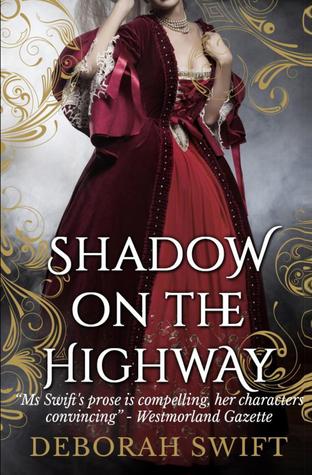
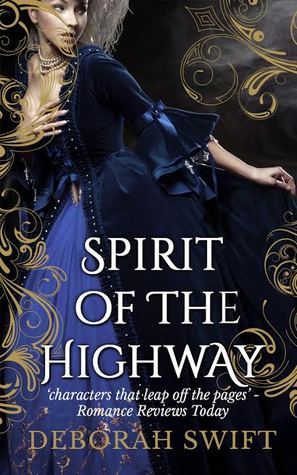
For more about her see my blog here, or why not try one of my books in the Highway Trilogy.


22876730 26521390 30361963


Sources:

Outlaws and Highwaymen - Gillian Spraggs 
The Elizabethan Underworld – Gamini Salvado

And – for cats like Jaffa who want to read about a highwayman turned cat, why not try this.


My thoughts about Spirit of the Highway can be found here.


Huge thanks, as always, to Deborah for giving us this really interesting and fascinating post about three famous highway-women.


More about Deborah can be found on her Website


Twitter @swiftstory


~***~


Sunday, 10 July 2016

Sunday WW1 Remembered ...


Photographers in WW1


Ernest Brooks


1838 - 1936


Ernest Brooks was assigned to the Western Front in 1916 as the first official WW1 photographer. Brooks had previously worked with the Daily Mirror newspaper and his orders, as an honorary Second Lieutenant, was to take as many photographs as possible. He went on to produce several thousand war images between 1916 - 1918.

Brooks had previously enlisted in 1915 in the Royal Naval Volunteer Reserve and was appointed as the Admiralty's official photographer as they prepared for the Gallipoli landings. However, in March 1916 Brookes was transferred to the War Office where he was appointed official war photographer. He was the only professional photographer to take photographs of the Battle of the Somme.


This is one of his most iconic war images which was taken at the Battle of Broodseinde near Ypres in October 1917


Ernest Brooks

Many other images were captured by the ordinary soldier on small pocket sized cameras. The Vest Pocket Kodak Camera (1912) and the Vest Pocket Autographic Kodak Camera (1915) were produced in the United States by the Kodak Eastman company between 1912 and 1926. During that period the company sold well over 2,000,000 models. In 1914 about 5,500 Vest Pocket Kodaks were sold in Britain. The following year, in 1915 this number had increased to over 28,000.

The convenient size of the camera (2.5 x 6 x 12 cms ) made it a popular choice for soldiers. The cameras were small, reliable and simple and could fit easily into a tunic pocket. The soldiers going out to the Western Front in 1914 were initially encouraged to make a visual record of events, but as the war progressed and the threat from increasing propaganda escalated, amateur photography was actively discouraged, with the threat of Court Marshall if the soldiers were found to have a camera on their person.

Taking pictures with 127 roll film, the black & white images, measuring just 4 x 6.4 cms, provided a comprehensive visual account of the life, and death, of the ordinary soldier during the First World War.


Very often photographs were collected as souvenirs and my husband's grandfather Sam Whalley, who served in the First World War with the Royal Fusiliers as a sixteen year old stable lad, and later with the 17th Lancers, had this German WW1 photograph amongst his war effects. 


Showing German soldiers waiting at a food wagon.


Barton Family Archive


It's worth mentioning, perhaps, and to put it into context, that today's modern iPhone is roughly the same height and width as the Vest Kodak Camera but what a difference a hundred years brings !!


Saturday, 9 July 2016

Review ~ All Things Cease to Appear by Elizabeth Brundage


25731953
Riverrun
May 2016


A bit of book blurb..

Upstate New York, 1980s

The farm stood at the foot of the hill. Around it, an aching emptiness of fields and wind. Within, a weight, a sense of being occupied, with more than its inhabitants. The Clares got it cheap.

George knew why, though he didn't let on- he didn't want to give Catherine any excuses. He'd given her an easy excuse to get married. He wasn't prepared to give away much anymore. 

Catherine, at home, with their young daughter, has the feeling they're not alone. She is helped by the Hale boys, young Cole and his brothers, Though they never tell her what happened to their mother there.


My thoughts...


All Things Cease to Appear is a beautifully written psychological thriller, which is both complex and complicated, spanning, as it does, over twenty years. The story which gradually unfolds is one of lies and deceit, of sadness and heartbreak, and of the unbearable agony of loss. The intricacy of its plot and story development makes it difficult to say anything about the story without giving too much away as this is one of those stories which should be read without any preconceptions.

Right from the start there's a creepy edginess to the story, which is quite unsettling, and that's what makes reading it so absorbing. Multiple points of view, from narrators who can only be described as unstable, invoke a story which is heartbreakingly sad in places , and yet, so disturbing, that in the light of so many different voices, it becomes progressively more difficult to determine who, if anyone, has an accurate viewpoint. And that’s not a criticism of the book, far from it, it’s merely an observation that you have to keep your wits about you as you read, and don’t be put off by the lack of quotation marks or of the exchange between narrators and timescales, as this, in a way, helps to maintain the book's overall stability. So, just relax and let the story wash over you, and all will be revealed.

There is a quiet confidence to the writing which I found rather refreshing. I liked the way that the characters, frustratingly, both forthright and enigmatic in equal measure, were allowed the space to tell their own version of the story. Some I liked more than others, it was difficult not to fall in love with Catherine and Franny, less easy to like George, or to understand what was going on in several marriages which were both fragile and brittle.

For me All Things Cease to Appear is about the power of the unknown, of people and the essence of what’s left behind when we are gone, it’s about the unexplainable and the suggestible, and it’s also about love and loss in all of its many guises. It was such a compelling read that I got through  the first two hundred pages without ever looking up and, believe me ,that interest didn’t diminish until I had read the book to its conclusion in one sitting.


Best Read with …a batch of stained glass cookies and a glass of milk, fresh from the farm


ELIZABETH BRUNDAGE graduated from Hampshire College, attended the NYU film school, was a screenwriting fellow at the American Film Institute in Los Angeles, and received an MFA as well as a James Michener Award from the University of Iowa Writers' Workshop.She lives near Albany in upstate New York.

Elizabeth Brundage


Visit the Author's website
Visit on Facebook


My thanks to the publishers and Real Readers for the opportunity to read and review this book.


~***~

Friday, 8 July 2016

Review ~ Cleopatra's Shadows by Emily Holleman

30627077
Sphere
June 2016


There's just something about a well-placed Egyptian eye that conjures Cleopatra's Egypt like nothing else and yet, this book, in a refreshing twist, focuses on Cleopatra's sisters, namely Arsinoe and Berenice, who find themselves out of Cleopatra's shadow when in 58 BC Berenice usurps the throne to become the first queen of Egypt in a thousand years.  Arsinoe, then just eight years old, is in constant fear for her life as Berenice is not as supportive a sister as Cleopatra, and to Arsinoe's dismay, Cleopatra is now in exile and can no longer be of help to her.

What then follows is an atmospheric tale of two sisters who find themselves at the centre of Egyptian politics, in a court which is rife with intrigue, alive with danger and ridden with superstitions. Cleverly divided into alternate chapters, the story brings together both the elder and the younger sister thus giving vibrant life to Arsinoe and Berenice, and at the same time allowing a unique perspective into the intimate details of their lives.

As very little is known about either Berenice or Arsinoe I think that the author has done a credible job in bringing them to life so that they feel authentic, without being too contrived. Time and place is cleverly described and the opulence of living within the confines of the Egyptian court is cleverly juxtaposed against the collusion and conspiracies which lured the unsuspecting to their violent deaths.

Time and place comes alive in the imagination. The constant hint of danger, the uncertainty of life which was so easily destroyed, at whim, shows very cleverly the destructive nature of a family constantly at odds with itself. Of course, it must not be forgotten that this is historical fiction, but by blending together known facts, a fascinating story of the Ptolemaic dynasty emerges, and as I became immersed in the plots and machinations of Upper Egypt, Cleopatra’s Shadow was never very far away.


A good debut novel from a talented new author of Historical fiction.


Best Read with ..goblets of spiced Egyptian wine and platters of minted veal and honeyed duck


Emily Holleman became fascinated with Cleopatra's younger sister Arsinoe on a in 2011 trip to Egypt and has been researching and writing about the Ptolemies ever since. A graduate of Yale university, Holleman spent several years as an editor for salon.com - a job she left to follow Arsinoe and her quest for the throne of Alexandria. She lives and works in Brooklyn and is, unsurprisingly, a younger sister.


Emily Holleman


Find the author on Facebook and Twitter @emilyjholleman


My thanks to the publishers for my copy of this book.


~***~