Wednesday, 17 February 2016

Book Extract from Dangerous Promises by Roberta Kray


I am delighted to feature an extract from the exciting new novel by Roberta Kray


Dangerous Promises


Published by Sphere
11th February 2016


Sadie Wise has finally tracked down her husband Eddie, who left her five years ago, taking all her savings with him. Now in a new relationship, all she cares about is getting him to agree to sign the divorce papers so that she can move on. On the train to London to confront him, Sadie finds herself confiding the whole story to a stranger, Mona Farrell. In her mind, it’s a throwaway moment. In Mona’s mind, it’s a promise: she will rid her new friend of her husband, and in exchange, Sadie will kill Mona’s domineering father.

After securing the divorce, Sadie wants to put the whole experience behind her – but then she learns that just after she left, Eddie was stabbed to death. Mona took their chance encounter very seriously, and she won’t leave Sadie alone until she’s fulfilled her end of their ‘deal.’ Meanwhile, Eddie’s death has attracted the unwanted attention of the Gissings, a family Sadie doesn’t want to get on the wrong side of. They hold Sadie firmly responsible, and they want revenge.


Read this exciting snippet from Dangerous Promises.....


‘I hate men,’ Mona said, worrying on her lower lip. ‘They’re all bastards, the whole damn lot of them.’

‘Not all of them,’ Sadie said, thinking of Joel. He was a gem, sweet and smart and understanding. She still couldn’t believe her luck. After all the miserable years with Eddie, she’d wondered if she would ever be happy again. But she was happy now, except for one small fly in the ointment.
She really needed this divorce. Once she’d legally disentangled herself, she could have a fresh start in a marriage that was based on something deeper than a mutual appreciation of real ale and The Clash.

‘Have you met someone else?’

Sadie nodded. ‘Yes. He’s a nice guy, really nice. I just want to get the papers signed and move on with my life.’

Mona pulled a face as if to imply there was no such thing as a nice guy, before returning to her earlier subject. ‘My dad’s a control freak, wants to know what I’m doing every minute of the day. It’s weird. He’s weird. Actually he’s worse than that. He’s fat and vile and disgusting.’ She put her elbows on the table and stared at Sadie. ‘I wish he was dead.’

Sadie looked back at her, startled. ‘You don’t mean that.’

‘I’d kill him myself if I could get away with it. I’d creep up on him in the middle of the night and slit his throat from ear to ear.’ She made a cutting motion with the side of her hand. ‘Straight through the arteries. It wouldn’t take long. He’d be dead in minutes.’

Sadie gave an involuntary shiver. Was she serious? There was a smile tugging at the corners of the girl’s mouth, but there was also a malevolent glint in her eyes. ‘You’d spend a long time inside for that.’

‘Only if I got caught. That’s the trick you see, not to get caught.’ Mona paused, her forehead creasing into a frown.  ‘People do get away with murder. Have you ever seen that film, Strangers on a Train?’
‘I’ve read the book,’ Sadie said cautiously.

‘Oh, is there a book? I don’t read much. I don’t like reading. But it was the perfect plan, don’t you think? You get a total stranger to kill the person you hate and because they’ve got no motive, there’s no reason for the cops to ever suspect them. It’s a done deal. You could kill my father and I could
kill Eddie.’

Sadie shifted in her seat. The conversation was starting to unnerve her. ‘Except I don’t want Eddie dead. All I want is a divorce.’

‘But what if he won’t sign the papers? You might have to wait years to get it sorted. By then your new guy could have lost interest. And anyway this Eddie sounds like a real piece of work. I mean, what sort of bloke behaves like that? It’s sick.’

Sadie pulled the file back across the table, snapped it shut and stored it in her holdall. ‘It didn’t work, though, did it?’ she said in what she hoped was a suitably dismissive tone. ‘In the book, I mean. The two of them didn’t get away with it. And one of them didn’t even want his wife dead.’

‘Sometimes people don’t know what they want. And the plan only went wrong because Bruno was a drunk and didn’t stick to the rules. If there’s no communication, there’s no connection. The cops wouldn’t have anything to go on.’

Sadie had the feeling that this wasn’t the first time Mona had thought about such an arrangement. The girl, she decided, was a fantasist. Did that make her dangerous? Probably not, but it still didn’t make for comfortable listening. Thankfully the train had picked up speed again and would soon be arriving in Kellston. She tried to steer the conversation back on to neutral territory. ‘So where do you live, then?’

‘Hampstead, 12 Constance Avenue. You can’t miss it. It’s a bloody great mansion, got turrets on the roof and everything. Tennis courts, swimming pool, eight bedrooms – and there’s only the three of us living there. How ridiculous is that? And there are marble floors everywhere. I hate it. The
place is like a goddamn mausoleum.’

Sadie’s eyebrows shifted up again. ‘I dare say there are worse places. I’ve lived in some real dives in my time.’

But Mona, even if she’d heard, didn’t take any notice. ‘You know how he gets his money, don’t you? He makes guns and rockets and stuff, shit for people to kill each other with.’ Her face took on a hard, angry expression. ‘People like him shouldn’t be allowed to live. All he brings is pain and misery. I’d be doing the world a favour by getting rid. Of course the house is alarmed – he’s bloody terrified of anyone breaking in – but I know the code. I could easily turn it off.’

Sadie began to gather her things together, willing the train to get into the station. Mona was freaking her out. The sooner she was away from her the happier she’d be. Feeling the train beginning to slow, she breathed out a sigh of relief. Quickly she rose to her feet and grabbed her holdall.

‘Well, nice to meet you. Take care.’

‘I hope you find him.’

‘Thanks.’ Sadie made her way through the compartment, resisting the urge to glance over her shoulder. She had a sudden fear that the girl might decide to follow her, like one of those stray dogs that attach themselves and refuse to go away. It was only when the doors opened and she was about to step out on to the platform that she risked a quick look back. The seat was empty. Mona was gone. And suddenly the whole strange encounter felt like a figment of her imagination.

©Dangerous Promises by Roberta Kray 


Published 11th February by Sphere, price £7.99 in paperback. 


About the Author

Through her marriage to Reggie Kray, Roberta Kray has a unique insight into London's East End. Born in Southport, Roberta met Reggie in early 1996 and they married the following year; they were together until Reggie's death in 2000. Roberta Kray is author of the bestselling Nothing But Trouble, Strong Women, The Villain’s Daughter, Broken Home and Bad Girl. She lives in Norfolk.


Roberta Kray Author is on Facebook


Praise for Roberta Kray

‘Well into Martina Cole territory’ Independent

‘A cracking good read’ Jessie Keane

‘There can be few people better placed to write about East End gangsters than Reggie Kray’s widow Roberta, and her unique insight into the murky world of organised crime shines through in this gritty fiction thriller… Kray’s storytelling is intelligent, gripping and sure to entertain.’

News of the World


My thanks to Sophie at ED Public relations 
and to Sphere for my review copy of


~***~


Tuesday, 16 February 2016

The author in my spotlight is .....B A Paris


I am delighted to welcome to Jaffareadstoo


B A Paris


Sharing her thoughts about her debut novel


26050845
Mira Books
11 February 2016


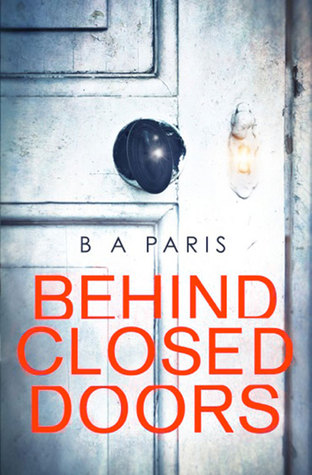
Where did you get the first flash of inspiration for Behind Closed Doors?


There were a few little incidents with a couple I used to know some years back which made me wonder what their relationship was really like when they were on their own. It gave me the idea for a story, my imagination took a giant leap and Behind Closed Doors was born.


Without revealing too much, what can you tell us about the story?


It’s about a couple who, on the outside, have it all, but on the inside, it’s a very different story. It starts with them hosting a perfect dinner party but as you read, you realise that all is not quite as it seems. 


Were you inspired by people and places you knew, or were your ideas drawn purely from your imagination?


For Behind Closed Doors, I was inspired by the characters themselves. I never expected it to turn out as it did - I had an idea of where the story would go but as soon as I started writing, the characters stepped in and took over, driving the story in a direction I hadn’t at all expected. It was a hugely exciting process, especially when it came to Jack. Even I was shocked by some of the things he said and did! 


Whilst researching the novel, did you discover anything which surprised you?


It was more once I’d completed the novel. I’d thought that no-one could possibly live the life that Grace does, that I had over-exaggerated her situation. But then I read the stories of two women who had been completely controlled by their partners, to such an extent that when they could have got away – when they were allowed out on their own, for example – it didn’t occur to them to ask for help because they were no longer able to think for themselves. They were so used to doing exactly what they were told and never questioning anything. And I realised that there are women out there who do actually lead a life similar to Grace’s, where the abuse is psychological rather than physical, but just as damaging.


Do you write the type of books you most like to read? Which authors most influence you?


The books I enjoy most are those that are well-written, whatever the genre, and by that I mean those where the language is beautifully controlled, not those where there are so many adjectives littering the pages that they become a distraction. One of my favourite books, for that very reason, is The Reluctant Fundamentalist by Mohsin Hamid. His command of language is just wonderful. Other than that, I am influenced by authors who have great story-telling skills, who are able to weave complex plots whilst keeping a firm hold on all the different threads. George R R Martin is an amazing example of this. 


What do you hope readers will take away from your stories?


From Behind Closed Doors, I hope that anyone who is in a situation remotely similar to Grace’s will take their courage in both hands and do the thing that is hardest, which is admit that they are in an abusive situation and find help. On a lighter note, I hope people will stop looking over the garden fence and worrying that everybody else’s relationship is better than theirs!


What can we expect to come from you next?


Another psychological drama. I enjoyed writing Behind Closed Doors so much that, for the moment, I’m sticking to the genre!


Huge thanks to B A Paris for answering my questions so thoughtfully.

It's been a real treat to have you visit our blog. 


Jaffa and I wish you continued success with your writing career and look forward to what's coming next.


About the Author


B A Paris grew up in England but has spent most of her adult life in France. She has worked both in finance and as a teacher and has five daughters. Behind Closed Doors is her first novel.


Follow B A Paris on Twitter @BAParisAuthor 
#StaySingle


26050845


"Sometimes, the perfect marriage is the perfect lie..."


My review of Behind Closed Doors


My thanks to Mira Books for my review copy of Behind Closed Doors


And also to Cara at Mira for her help with this interview 


~***~

Monday, 15 February 2016

Blog Tour ~ Elemental by Amanda Curtin


Jaffareadstoo is delighted to be hosting today's concluding stop on the


Elemental Blog Tour


Introducing the author


AMANDA CURTIN is a critically acclaimed writer and book editor who lives in Perth, Western Australia. Of Scottish ancestry, she spent years researching Elemental, travelling to The Shetlands, Aberdeen, Peterhead, Great Yarmouth, Edinburgh and all along Scotland’s north-east coast, discovering the superstitions, folklore and customs of fishermen in the nineteenth and early twentieth century. Using archival images and documents — and even teaching herself the Doric and Shetland languages — in Elemental she crafts a vivid portrait of a lost world, and connects it compellingly to our own.


Amanda ~ welcome to Jaffareadstoo and thank you for inviting us to be a part of your blog tour for your novel, Elemental...

Where did you get your inspiration for the novel?


Three little scraps of paper in a file where I squirrel away ideas could be said to have inspired Elemental: one said ‘fishermen’; one, ‘consequences’; one, ‘butterflies’. The second of these was the most obvious and formative, but if you read Elemental you’ll also see the other two weaving through the novel.

I was intrigued with some of the Scottish fishermen’s superstitions I had come across years ago, and then my reading started to expand in wider circles—to fishing villages, fishing boats, fishing methods, fish curing, fishwives… Eventually I came across a reference to the herring girls, and I was (if you’ll forgive the pun) hooked; I knew that the character that had been beginning to form in my head would be a herring girl.

I was—and remain—fascinated by those teams of women and girls in the early twentieth century who left their isolated villages in the north of Scotland to follow the seasonal migration of the herring from the north-west islands to the Shetlands, down to the north-east mainland and as far south as Great Yarmouth and Lowestoft—a journey that began around late February or March and ended just before Christmas, by which time the girls were having to break the ice in the farlins (tubs) of fish. Imagine what it would be like to be on your feet, gutting herring all day, sometimes for ten hours, or twelve or sixteen—just as long as the boats kept coming in. I admired their skill, their endurance, their incredible speed with the knife; I loved their camaraderie and their pride. I wanted to write about those strong, brave ‘quinies’.

My main character, Meggie Duthie Tulloch, is fictional, but everything I read about the women and girls of that time—in newspapers, oral histories, memoirs, government reports—helped to shape her, along with her sister Kitta and friend Clementina. I saw some wonderful photographs at museums and libraries during my research, and I kept photocopies of some on the wall above my desk. I began with the word ‘fishermen’, but it is women who became the heart of Elemental.


Scribe Publications
11 February 2016

It has taken a lifetime for me to see that the more afraid people are of the darkness, the further into it they will flee.

Nearing the end of her life, Meggie Tulloch takes up her pen to write a story for her granddaughter. It begins in the first years of the twentieth century, in a place where howling winds spin salt and sleet sucked up from icefloes.

A place where lives are ruled by men, and men by the witchy sea. A place where the only thing lower than a girl in the order of things is a clever girl with accursed red hair. A place schooled in keeping secrets.
Moving from the north-east of Scotland, to the Shetland Isles, to Fremantle, Australia, Elemental is a novel about the life you make from the life you are given.


Find Amanda on her website 

Follow her on Twitter @lookingupdown


Huge thanks to Amanda for her guest post today and also to Molly at Scribe for her invitation to join in with this exciting blog tour


Do take a look at what has been happening on the other stops on the tour


~***~

Sunday, 14 February 2016

Sunday WW1 Remembered...


World War 1 Silk Postcards for Valentine Sunday


Silk embroidered greetings cards first became popular in the early twentieth century when they appeared for the first time at the Great Exhibition of 1900.

However, it was during the years of the First World War that postcards sent by soldiers to their mothers, sisters and sweethearts became very popular. 

Created by the clever embroiderers of France and Belgium the cards were created from small scraps of silk and lace and used as souvenirs. Inevitably, as demand for the cards grew, manufacturing was moved to Paris factories where it is estimated that over 10 million silk embroidered postcards were produced.The postcards were cheaply made and sold for just a few francs.


The postcards, with their cheery pictures of birds and flowers were sent home to cheer the ones left behind, giving no clue to the horror that was being experienced by the soldiers on the Western Front.


©Digital Images


These photographs and silk postcard belong to our family archive.

The WW1 Silk was sent home by my husband's grandfather, Sam, when he spent time 

in  Poperinghe. 


The little card insert simply states " Best Kiss"


The colours of the silk are as vibrant as the day they were stitched and act as a poignant

 reminder that we should cherish our loved ones, wherever they may be.


My best kiss to you all on Valentine's Day


~***~


Saturday, 13 February 2016

Da Mi Basia Mille ... 💙


My favourite literary couple

is


Jamie and Claire Fraser


from 


Diana Gabaldon's


Da Mi Basia Mille


Come and let us live my Deare,


Let us love and never feare,


What the sowrest Fathers say:


Brightest Sol that dyes to day


Lives againe as blith to morrow,


But if we darke sons of sorrow


Set, then, how long a Night


Shuts the Eyes of our short light!


Then let amorous kisses dwell


On our lips, begin and tell


A Thousand, and a Hundred, score


a Hundred, and a Thousand more,


Till another Thousand smother


That, and that wipe off another.


Thus at last when we have numbered


Many a Thousand, many a Hundred;


Wee'l confound the reckoning quite,


And lose our selves in wild delight:


While our joyes so multiply,


As shall mocke the envious eye


RICHARD CRASHAW (1612/3 - 1649)


Jamie Fraser quotes the highlighted piece of poetry to Claire


da mi basia mille, deinde centum,
dein mille altera, dein secunda centum,
deinde usque altera mille, deinde centum.


~***~


Thursday, 11 February 2016

Review ~ Tainted Love by Kimberley Chambers


***Happy Publication Day ***


26198463
Harper Collins
February 11th 2016


Nobody can hurt you like the ones you love…


Tainted Love starts, with a prologue, in the Autumn 2001, but very quickly moves back in time to the Spring of 1986, when Vinny and Michael Butler were very much in control of the mean, and it must be said, moody streets of the East End of London. Family history runs deep, and there is much antagonism between the various factions who make up the hangers on, and associates, of this violent, and often vicious, brotherly duo. So dangerous is the world in which the Butler’s live, that there is never any sign of a companionable softening between them, there is certainly no love lost, and there is never any condemnation that ever goes unnoticed. Tempers fare and spill over, old resentments are allowed to fester and bitterness flourishes in the dark corners of their shady world.

As always, the skill of the writing draws you in with realistic fervour. There is much to take in, both in terms of deadly domestic undercurrents, and also of the dark and poisonous secrets which start to unfold, and you soon start to realise that, deep down, it’s not going to end well. Truthfully, I really can’t say much more about Tainted Love without spoiling the whole story, but suffice it to say that for those readers who have followed this series from the beginning, there is no doubt that this fourth book will have you on the edge of your seat.

For anyone new to this series, this really is NOT the book to start with, as you need to truly understand the complicated Butler family dynamics in order to comprehend the depth of animosity that continually gnaws away at the central characters. However, if you like your gangster crime to have a frighteningly realistic edge, then I highly recommend this series, but please start at the beginning in order to enjoy the journey.


Best read with …Eggs Benedict and copious amounts of decent champagne…


Visit her website
Follow on Twitter @kimbochambers
Find her on Facebook

Tainted Love is published on the 11 February in hardback and ebook


My thanks to Felicity Denham at Harper Collins for my review copy of this book.


~***~

Wednesday, 10 February 2016

Blog Tour ~ Song of the Sea Maid


I am excited to be hosting today's stop on the Song of the Sea Maid Blog Tour


and to welcome


Welcome back to Jaffareadstoo Rebecca. 

You must be so exited at the paperback publication of
 Song of the Sea Maid. 

Thanks for being our guest today and for answering our questions.


Paperback Edition
Hodder & Stoughton
2016


Song of the Sea Maid is a story about a female scientist. Have you a particular interest in science and in your research for the novel did you discover anything which surprised you?


Hello Jo! *waves* Hello Jaffa! *tickles under chin* Well, I do have a particular fascination with science. I’ve had that since I was a child, but sadly not a scientific brain to go with it. My brother David does have that kind of mind, and he kindly spent many nights when we were younger trying to explain scientific theories to me, such as chaos theory or quantum physics. And I would understand it for about five minutes before my brain decided it was far too complicated to bother holding onto, and then it was gone! So, I read books about science and scientists and watch TV documentaries about them. I love films like A Beautiful Mind and so forth. Thus, it was inevitable that I would want to write about scientists one day. I had a box labelled ‘Science Novel’ for years, in which I would squirrel away articles from newspapers and the New Scientist magazine, usually about palaeontology, which is probably my favourite part of science. So, when I came to think about my second novel after The Visitors, my science story beckoned. I knew a bit about palaeontology, evolution and Charles Darwin – my mum is a bit of a Darwin expert - but I learned so much by researching this novel. The thing that surprised me most was how many theories akin to evolution were being developed a long time before Darwin was even born. The most surprising one was learning that Leonardo da Vinci came up with theories about fossils way back when, which I didn’t know at all. I found the most marvellous book in a second-hand bookshop called ‘I Searched for Adam’, which was all about theories of early humans from the past. It was perfect for me because I really needed to know what my main character’s contemporaries in the 18th-century would have known and understood by the time she comes to develop her own theories.


The novel is set in the early part of the eighteenth century, why did you choose this particular era?


I had a very particular reason for choosing the 18th-century in the first place and that was because I wanted my character to be developing theories that were similar to Darwin’s but a good few generations before Darwin came on the scene. The premise behind the novel was this: what if a poor, unconnected female in times past came up with an extraordinary scientific theory – would it ever see the light of day? So I felt it would be an even more interesting experiment if this scientist was living in an age where science was in its early days in terms of palaeontology and particularly in an era where myth, religion and science were all coexisting and bumping up against each other i.e. the 18th-century. I chose to set the story from the 1730s to the 1750s because there were some particular historical events I was interested in that I wanted to incorporate into the narrative and they took place in those decades. Also, in my research, I’d come across a lot of stories that took place later in the 18th-century, particularly during the Napoleonic wars and beyond into the Regency period of the 19th century, so I felt the earlier part of the century was the less trodden path and thus might be interesting to readers. I really wanted to escape that idea that the 18th-century was all massive frocks and huge wigs and Let them eat cake. I wanted to show another side of the 18th-century that perhaps was less familiar.


C18 Cabinet of Curiosties


Where do you get your inspiration from – are you inspired by people, places or do you draw purely from your imagination?


I’d say it’s all of those things! You can’t predict it. There are going to be topics that are naturally interesting to me – like science – or settings that particularly appeal to me, for example, places I’ve actually visited, such as Portugal (see Sea Maid!) or where I grew up (e.g. Kent in The Visitors). Other than that, there might be a snippet of something on a radio programme or film or book or something that I see when I’m walking in the park or driving on the school run – something that sparks a train of thought, perhaps a What If type question, or simply a luminous moment – that Virginia Woolf called a ‘moment of being’ and James Joyce called an ‘epiphany’ – where some truth comes to you. So, as you can see, inspiration is a complicated beast and not something you can wholly plan or perhaps even plan at all. Once I have my idea, after that it’s months of reading and research to which my imagination is applied in order to come up with what I hope is an engaging story. Inspiration and perspiration and all that…


The Berlengas Islands
Off the coast of Portugal


Whilst you are writing you must live with your characters. How do you feel about them when the book is finished? Are they what you expected them to be?


Characters are mercurial things. You may believe you create them but they have the strange habit of wandering off and doing as they please. (See ‘Six Characters in Search of an Author’ by Luigi Pirandello for a brilliant rendition of this). Of course, what’s really happening is that your subconscious is in charge of creation and your conscious mind is trying to organise it, sometimes without success. So, I’ve learnt to listen to that and not try to shoehorn it into something my conscious mind thinks is a good idea. I may have plans for how my character is going to be, their personality, the way they think. But most of this magic happens in the telling i.e. once the voice is off and running, it creates its own nuances that perhaps you hadn’t planned for. This can happen with first or third person narratives, I’ve found – for example, my current work in progress is told in third person limited view i.e. limited to the consciousness of one character. And I’ve still found that pushiness of the main character to assert her own personality has been exactly the same as when I was writing in first person for my first two novels. A writing friend of mine, the actress Juliette Burton, told me the other day that she heard a lovely version of this: that creating a character is like finding Michelangelo’s David in a block of stone i.e. the character already exists and you are chipping away at the stone to reveal it. I thought that was beautiful and very true. With Adeliza (from The Visitors) and Dawnay (Sea Maid), I absolutely felt that they were extant characters who I just needed to get to know. It a very mysterious process! As for how I feel about them when the book is finished, well, so far, I’ve loved them all and miss them dreadfully when the book is done. It’s like a separation that is permanent, once they leave your mind and inhabit the story and when the book is finished it gets up and walks away from you and it’s never wholly yours again. Of course, that’s what you want for it, you want it to go out into the world and be read and thought about. But there’s a sadness there too, that it will never belong to you again like it once did. A bit like being a parent!


Song of the Sea Maid is your second novel, The Visitors being the first – did you feel more pressure writing a second novel?


Well, like quite a few authors I know, The Visitors wasn’t the first novel I’d written. I have a few in metaphorical drawers gathering dust. So Sea Maid wasn’t my second ever novel, but it was my second published novel and yes, that does bring with it its own unique pressures. You have expectations all of a sudden, something that perhaps you didn’t have in the same way before publication. Now, you need to please other people as well as yourself e.g. your agent, your editor and beyond that the readers of your first novel who liked it. If your editor doesn’t like it, specifically if you don’t already have a deal in place with that publisher for that book, you may well have it rejected! After all that work and maybe two years of your life devoted to it. That’s terrifying and happens often. Having one novel published is absolutely no guarantee of getting your next project published too. The book is the thing (unless you are already famous, then it’s easier. But even then, if you write a complete turkey, I imagine your editor would have something to say about it. However, I would just say one word to sum up the folly of this: Morrissey…). This is why authors talk about ‘second novel syndrome’ i.e. can I pull off this magic trick again? It’s very hard because you don’t know how you did it in the first place, so how can you possibly be asked to do it again, when you’re not allowed to reproduce what you did, as you still have to come up with something new, that’s similar enough to the last time to please people who liked that one and yet different enough to avoid accusations of being a one-trick pony! It’s a minefield! The best advice I would give is to shut out all that crap and just write the bloody thing, write it from your heart and sod the rest.


What do you hope readers will take away from your stories?

Oh gosh, that is an interesting question! Well, first and foremost, I want to entertain them! I want them to have a good time when they’re reading my books and escape a little from the everyday world. I want them to be compelled to read on. They don’t have to necessarily adore my characters – although that’s nice! – but to be interested in them and want to follow them on their journeys. A secondary thing, I guess, is that the themes and situations I present my novels will make them think about the status quo and perhaps question it, just a little bit. With Sea Maid, it would be good to think that at least some readers will walk away with the knowledge that there were female scientists throughout history doing amazing work – we just aren’t taught about them. This is why I have come to write such a detailed Author’s Note as the one you will find in the back of this book, which explains the true history behind the story I’m telling. It is annoying when, as an author who has worked really hard to do the research properly, reads a review that says something like, This would never happen; this is impossible; someone in this era would never do this or think this. So, you can’t please everyone. But I hope that some readers at least will go away thinking about such things as why there are hardly any statues of women scientists in the world. Or on a more philosophical level, things like, I wonder what other marvellous mysteries – such as hidden ancient caves – there are out there in the world left to discover… But that’s all icing on the cake. Mostly, I’d be delighted if the reader enjoyed their time with my book and perhaps it stayed in their mind for a while after reading.


Cave Art depicting Mermaid


Can you tell us what you are writing next?


I am three chapters away from finishing the first draft of my third novel for Hodder and Stoughton. The end is in sight! I can tell you it’s set in the Edwardian era, taking place from 1909 to 1919, beginning in my current hometown of Cleethorpes. More details will follow, all in good time…*mysterious*…*actually, not so much mysterious as paranoid...!*


Thanks for brilliant questions and for having me on your blog, Jo.


All about the author


Rebecca Mascull is the author of THE VISITORS and SONG OF THE SEA MAID. She works in education and lives by the sea in the east of England


Song of the Sea Maid is published on the 11 February 2016 


Find her on her website
Follow on Twitter @rebeccamascull
Visit her Facebook page


Here is my review of the earlier edition of Song of the Sea Maid


Huge thanks to Rebecca for inviting Jaffareadstoo to be part of this exciting blog tour 
and to Ruby Mitchell at Hodder & Stoughton for my review copy of this book.


Do visit the other stops on the tour.


~***~