Showing posts with label Composers of WW1. Show all posts

Sunday, 20 May 2018

Sunday WW1 Remembered..


Morale Boosting Songs of WW1


Florrie Forde


Florrie Forde was a popular music hall entertainer who came to England, aged 21, from Australia. She made her first appearance on the London stage in 1897 and her powerful performances and charismatic stage presence meant that she was soon in demand. Her popularity, as a vaudeville act, made her one of the most sought after entertainers of the early twentieth century,

Her morale boosting songs during World War One were some of the most popular songs of the time.

These included songs which are still remembered today.

Down at the Old Bull and Bush
Pack Up Your Troubles in your old kit bag
It's a long way to Tipperary
Take Me Back to Dear Old Blighty


Take Me Back to Dear Old Blighty

Jack Dunn, son of a gun, somewhere in France today
Keeps fit doing his bit, up to his eyes in clay
Each night after a fight to pass the time along
He's got a little gramophone that plays this song

Take me back to dear old Blighty!
Put me on the train for London town
Take me over there
Drop me anywhere
Birmingham, Leeds, or Manchester, well, I don't care!
I should love to see my best girl
Cuddling up again we soon should be
(Whoa!)
Tiddley-iddley-ighty
Hurry me back to Blighty
Blighty is the place for me!

One day, Mickey O'Shea, out in a trench somewhere
So brave, having a shave, trying to part his hair
Mick yells, dodging the shells and lumps of dynamite:
"Talk of the Crystal Palace on a firework night!"


Take me back to dear old Blighty!
Put me on the train for London town
Take me over there
Drop me anywhere
Birmingham, Leeds, or Manchester, well, I don't care!
I should love to see my best girl
Cuddling up again we soon should be
(Whoa!)
Tiddley-iddley-ighty
Hurry me back to Blighty


Take Me Back to Dear Old Blighty was written by Arthur J. Mills, Fred Godfrey and Bennett Scott in 1916. It was popular during the First World War and tells a story of fictional soldiers on the Western Front suffering from homesickness and their longing to return to "Blighty"..

During a recent visit to the IWM (North) I bought a set of WW1 memorabilia which contained a few replica WW1 morale boosting postcards and came across this image of a soldier in the trenches listening to this song and imagining himself back home with his folks and his sweetheart.


You can listen to Florrie Forde sing Take Me Back to Dear Old Blighty 
by clicking on the You Tube link below.


Sunday, 18 September 2016

Sunday WW1 Remembered..


Musicians of The Great War


Joseph Maurice Ravel (1837 - 1937) was a French composer, pianist and conductor,  born in the Basque town of Ciboure in France. During the war Ravel tried to enlist in the French Air Force as a pilot but both his age and health thwarted his ambition, so instead he joined the Thirteenth  Artillery Regiment as a lorry driver. He was distressed by what he saw during his war years and composed little, however his most substantial wartime composition Le Tombeau de Couperin was composed between 1914 - 1917 and each movement is dedicated to one of Ravel's friends who was lost during these years.


Le Tombeau de Couperin


~***~

Sunday, 12 June 2016

Sunday WW1 Remembered ..


Composers of the Great War

Gustav Holst

 1874 - 1934


Gustavus Theodore von Holst was an English composer, arranger and teacher who is best known for his orchestral suite, The Planets. He was born in Cheltenham in September 1874 to Adolph von Holst, a professional musician and his wife, Clara Cox. Gustav had an aptitude for music and could play the violin, the piano and the trombone. He went on to study music at the Royal College of Music and later went on to teach music at Morley College and St Pauls' Girls School.

At the outbreak of WW1 Holst tried to enlist but was considered medically unfit, he suffered from neuritis in his right arm. His wife, Isobel, enrolled as an ambulance driver and Holst saw his contemporaries George Butterworth and Ralph Vaughan William sign up for active service.

Holst had an interest in astrology and came up with the idea for The Planets Suite in 1913 and began writing the music in 1914. Mars was the first to be written in 1914, followed by Venus, Jupiter, Saturn, and Uranus in 1915, with Mercury following in 1916. Mars is thought to express the brutality of war rather to to glorify it's heroism.


 "Music, being identical with heaven, isn't a thing of momentary thrills, or even hourly ones. It's a condition of eternity." Gustav Holst


You can listen to Mars here - its over 7 minutes long but such a strong piece of music. This version is played by the Liverpool Philharmonic Orchestra


The Planets, Opus 32

Mars, the bringer of War


The Planets Suite premiered to a select group of people at The Queen's Hall, London on the 28th September 1918 during the last few weeks of WW1. It's first public concert was held five months later in February 1919 under the auspices of the Royal Philharmonic Society and was conducted by Adrian Boult, who had been instrumental in persuading Holst to compose the music.


Due to the international success of The Planets in the years immediately after WW1, Holst became a well known figure. He died in 1934 and is buried in Cheltenham Cathedral.


~***~


Sunday, 17 April 2016

Sunday WW1 Remembered...


Composers of the Great War


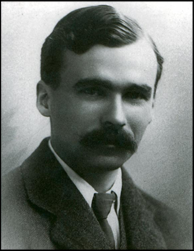
George Butterworth


1885 - 1916


Butterworth, circa 1913


George Butterworth joined the British Army as a private in the Duke of Cornwall's Light Infantry but later accepted a commission as a subaltern in the 13th Battalion Durham Light Infantry where he was promoted to temporary Lieutenant. He was awarded the Military Cross in August 1916 but did not live to receive it. He was shot by a sniper in the Battle of the Somme and his body hastily buried where he fell, at the side of the trench. Tragically, his body was never recovered, however, his name is inscribed on Thiepval Memorial.


Butterworth's music dates between 1910-1913 with this, The Banks of Green Willow, perhaps his most poignant work , which was composed in 1913.


~***~