Showing posts with label Gothic Fiction. Show all posts

Monday, 3 August 2026

๐Ÿ“– Book Review~ Gentle Things by Danielle Giles

Pan MacMillan
23 July 2026

My thanks to the publisher for the invitation to read this book

 
The plague has passed, the fire has cooled, and Lucy North is in desperate need of a husband . . . From the acclaimed author of Mere comes a thrilling new tale of medicine, marriage and madness set in seventeenth-century London.

London, 1668. Though the streets hum with promise following the restoration of the crown, Lucy North is trapped. Her father’s recent death has left her mother saddled with debts she cannot pay. Lucy must marry the first man willing to take her without a dowry.

So when she meets Thomas Ashwell, a young and charming apothecary, Lucy quickly identifies an attractive route out. She falls in love easily, and when Thomas proposes she believes her future is finally secured.

But when Lucy falls and injures her head during their wedding party, things start to warp. Confined to her bedroom her dreams refuse to leave her at daybreak, and the voice in her head no longer sounds like her own. As Thomas plies her with tinctures and cures, a creeping fear takes root: Has this marriage saved her? Or will it bring about her end?


๐Ÿ“– My Review..

Set in London during the momentous years following the Plague and the Great Fire we meet Lucy North who lives with her mother in the Dolphin Inn, a bustling tavern which provides hospitality and entertainment for a teeming city. Inclined towards a profitable marriage for her daughter Lucy’s mother attempts to make a match with a man who is definitely not to her daughter’s liking. Thus taking matrimonial matters into her own hands Lucy sets about securing her own husband and quickly forms an attachment to the handsome young apothecary, Thomas Ashwell. Their betrothal has all the hallmarks of success that is until Lucy suffers a serious accident on her wedding day, resulting in a severe head injury. Left to the ministrations of her apothecary husband, Lucy is confined to her bedroom where she experiences vivid and possibly hallucinogenic dreams which may, or may not, have any basis in reality.

This is a really atmospheric historical novel which places us very firmly in seventeenth century London, a place filled with scurrilous gossip, fascinating superstitions and medical practises that were very much experimental, particularly medicinal cannibalism, which I have to admit to never having heard of before. It all points towards a distinctly disturbing element and a fascinating glimpse into seventeenth century cure-alls. The abundant richness of characters particularly the apothecary’s assistants, Brigit and Kate, add a subtle nuance and more than a sense of shock to the gothic outcome of the story.

Slow and considered, Gentle Things doesn’t rush towards its conclusion but rather leads us gently by the hand into the shadowy world of seventeenth century medical practices and of toxic relationships made worse by difficult circumstances.


About the Author


Danielle Giles is a writer and researcher based in Bristol. She has been published (writing as Danielle Vrublevskis) in Extra Teeth and Dear Damsels, shortlisted for the Bristol Short Story Prize and the Brick Lane Bookshop Short Story Prize, and longlisted for the Galley Beggar Press Short Story Prize. She won the Local Prize in the 2023 Bath Short Story Award. Mere, her first novel, was published by Mantle in 2025; Gentle Things is her second novel.


Thursday, 5 March 2026

๐Ÿ“– Blog Tour ~ Catherine : A Retelling of Wuthering Heights by Essie Fox

Orenda Books
12 February 2026

My thanks to the publisher for my copy of this book
and to Random Things Tours for the invitation to the blog tour


The greatest tragic love story ever told – but this time, Catherine tells it herself. In Catherine, Essie Fox breathes new life into Wuthering Heights, transforming a gothic masterpiece into a haunting confession of obsession, madness and love that even death cannot end.

With a nature as wild as the moors she loves to roam, Catherine Earnshaw grows up alongside Heathcliff, a foundling her father rescued from the streets of Liverpool. Their fierce, untamed bond deepens as they grow – until Mr Earnshaw’s death leaves Hindley, Catherine’s brutal brother, in control and Heathcliff reduced to servitude.

Desperate to protect him, Catherine turns to Edgar Linton, the handsome heir to Thrushcross Grange. She believes his wealth might free Heathcliff from cruelty – but her choice is fatally misunderstood, and their lives spiral into a storm of passion, jealousy and revenge.

Now, eighteen years later, Catherine rises from her grave to tell her story – and seek redemption.


๐Ÿ“– My Review..

Catherine is told from Catherine Earnshaw’s point of view, firstly as a child, then a young teenager on the cusp of womanhood and finally as a ghost following her untimely death.  Both Heathcliff and Catherine come forcefully to life and as we experience the intensity of their ill-fated relationship so we gain an insight into the unpredictable nature of their characters and the cause and effect of their upbringing at Wuthering Heights. 

By no stretch of the imagination is this a comfortable tale and there’s certainly no guarantee of a happy ever after ending but the sheer lyricism of the writing brings the whole of this tragic story to life. It compares really well with Emily Brontรซ’s original and offers a different perspective and one which is no less powerful than the 1847 classic. This retelling encapsulates the very essence of Heathcliff and Catherine Earnshaw’s fateful relationship, a relationship which was tormented and filled with passionate intensity which spiralled into a dark and dangerous world of sadness, grief and desperate obsession.

There’s a certain amount of trepidation in reading a retelling of a much loved classic however, if anyone can retell Cathy and Heathcliff’s story, and do the book justice, it is Essie Fox whose work I love to read. As I settled down on a rather grey, wintery afternoon, so the stark beauty of this timeless story began to take shape and I was back on the high moors with Cathy and Heathcliff as they whisper together in the shadow of Penistone Crags, leaving their tokens in the Fairy Cave and dreaming of an uncertain future.


๐Ÿณ Best read with…Nelly Dean’s buttered eggs..


About the Author


Essie Fox is the Sunday Times bestselling author of seven historical novels, including The Somnambulist, shortlisted for the National Book Awards, and The Fascination, an instant Sunday Times bestseller. Her work has twice been selected as The Times Historical Book of the Month, most recently for her gothic mystery Dangerous. She appears regularly at literary festivals and cultural institutions and is the host of the podcast Talking the Gothic. She lives in Windsor.


X@essiefox #Catherine

X@ OrendaBooks

X@RandomTTours


Friday, 31 October 2025

๐Ÿง™๐Ÿป Halloween Book Review ~ The House on the Cliff by Victoria Scott

Boldwood Books
4 October 2025

Thanks to the publisher for the opportunity to review this book


1966: Standing on the rugged Cornish coast, Hallows Abbey can be a lonely place for the boys boarding there. For Theresa, however, it offers an escape from her father’s long shadow, and as the school nurse, she tries to be a comfort to those students struggling to adjust to their remote life. But, before the year is over, Theresa will make a terrible decision – and the consequences for the children in her care will change everything…

2025: With her own children having just left home, Amanda’s emotions are in turmoil when she arrives at the isolated school where her husband is to be Deputy Head. When she learns of the school’s tragic history, in which a group of boys went out on a boat trip and disappeared, she becomes obsessed with finding out what happened, even when her research risks upsetting the fragile equilibrium of the school. But when she starts to hear voices in the gardens and crying in the halls at night, she begins to wonder if she’s losing her mind.

Only one thing seems certain: this corner of Cornwall could well be Amanda’s undoing.


๐Ÿง™๐ŸปMy Review..

This dual time story is a spooky read for Halloween. A remote boarding school perched on the end of a Cornish cliff, a secret which has been hidden for years, a distinctly creepy atmosphere and you have all the right ingredients for a haunting story which captures the imagination from the start.

In the present day Amanda and her husband are settling into living at Hallows Abbey, an isolated Catholic boarding school, which is situated in a remote part of Cornwall. Whilst Mike gets used to being deputy headmaster, Amanda is pretty much left to her own devices and so she becomes intrigued by the mysterious disappearance, many years ago, of a group of school boys, who went out in a boat and never returned. Moving quietly back to 1966 we begin to put together the threads of the mystery and develop a rapport with Theresa, a school nurse, who has her own secrets. 

The dual time aspect is well done and I found myself looking forward to both parts of the narrative. The author writes well and keeps up the momentum of the story creating a decidedly chilly atmosphere whilst at the same time looking more closely into the lives of Amanda and Theresa and the problems they were facing in their personal lives. The wild beauty of the Cornish coast is well described and adds another dynamic to the story.

I thought The House in the Cliff was an interesting story, with enough creepiness for an entertaining Halloween read.


About the Author 


Victoria Scott has been a journalist for many media outlets including the BBC and The Telegraph. She is the author of three novels published by Head of Zeus. 


X : @Toryscott 


X @BoldwoodBooks


Wednesday, 30 April 2025

๐Ÿ“– Blog Tour ~ Dangerous by Essie Fox


When fiction is fatal…

Living in exile in Venice, the disgraced Lord Byron revels in the freedoms of the city

But when he is associated with the deaths of local women, found with wounds to their throats, and then a novel called The Vampyre is published under his name, rumours begin to spread that Byron may be the murderer…

As events escalate and tensions rise – and his own life is endangered, as well as those he holds most dear – Byron is forced to play detective, to discover who is really behind these heinous crimes. Meanwhile, the scandals of his own infamous past come back to haunt him…

Rich in gothic atmosphere and drawing on real events and characters from Byron's life, Dangerous is a riveting, dazzling historical thriller, as decadent, dark and seductive as the poet himself…


๐Ÿ“–My Review..

Mad, bad and dangerous to know is the epithet by which we view George Gordon Byron whose poetic genius is often overshadowed by his public exploits. This deliciously creepy gothic novel takes us directly into the life of this charismatic English poet during his exile in Venice in 1818. 

With impeccable research, Lord Byron comes so realistically to life that we stroll alongside him as he gains entry into a high class brothel, a place to seek pleasure and oblivion only to discover that he wakes to a nightmare scenario. When Byron’s name becomes inextricably linked to the gruesome deaths of local women he must do everything he can to discover who is trying to discredit him in such a terrible way, especially when a publication known simply as The Vampyre is published fraudulently in his name. 

Beautifully imagined, and with a cleverly contrived murder mystery at its heart, the story pulls you into a world of subterfuge and deceit whilst at the same time issuing a tantalising invitation to joint Byron in his hedonistic pursuit of pleasure, watching as he seduces beautiful women who are easy prey to his charm. Rich in detail, strong on atmosphere, and by cleverly blending fact and fiction, we are immediately immersed in Byron’s nineteenth century life in Venice, from visiting grand palazzos on the Grand Canal, to the dark underbelly of a city hiding terrible secrets, whilst at its centre is a man tormented by dark thoughts who is determined to clear his name.


About the Author


Essie Fox was born and raised in rural Herefordshire, which inspires much of her writing. After studying English Literature at Sheffield University, she moved to London where she worked for the Telegraph Sunday Magazine, and then book publishers George Allen & Unwin, before becoming self-employed in the world of art and design. Essie now spends her time writing historical gothic novels. Her debut, The Somnambulist, was shortlisted for the National Book Awards, and featured on Channel 4’s TV Book Club. The Last Days of Leda Grey, set in the early years of silent film, was selected as The Times Historical Book of the Month. Essie’s Victorian gothic novel, The Fascination, debuted at number 10 on the Sunday Times bestseller list, and was widely acclaimed. Essie is also the creator of the popular blog: The Virtual Victorian. She has lectured on this era at the V&A, and the National Gallery in London. She lives in Windsor.


X @essiefox

X @OrendaBooks

XRandomTTours


Sunday, 1 October 2023

๐Ÿ“– Featured Book of the Month ~ The Unpicking by Donna Moore


Fly on the Wall Press
27 October 2023

My thanks to Isabelle at Fly on the Wall Press for my copy of this book


"I had read enough mystery stories to know that girls who went out to meet strangers at night never came to a good end..."

Stirling, 1877. Lillias Gilfillan, a recently orphaned girl of sixteen, falls in love and elopes with a man who sees her as wealthy and naรฏve: ‘a little boat without its oars’. In a sea of rising debt and deception, Lillias must learn quickly, or drown.

Glasgow, 1894. Clementina knows little mercy living in a home for ‘wayward girls’. With the ‘Jingling Devil’ always lurking in the shadows and a child growing inside her, can she outrun him and save her best friend in the process?

Glasgow, 1919. Mabel is one of the first policewomen in Glasgow, on a mission to find a murderer. In doing so, she finds a web of corruption and now the ‘Jingling Devil’ wants her dead.

‘The Unpicking’ spans three generations of ‘hysterical women’ who take on systemic corruption and injustice, despite all odds.


๐Ÿ“– My Review..

The Unpicking is a story of three parts and there is definitely a sense of the unpicking of lives which have been shaped and altered by the difficult circumstances of their lives. Often quite stark, the individual stories of Lillias, Clementina and Mabel, although bonded by blood, their lives have been very different. Whilst the stories are very self contained there is a definite theme running through the stories which I don't want to spoil as that would be to do the book, and the author a great disservice. 

History is recreated well, the latter part of the nineteenth century was very much a period of great social and moral changes however, as we see from Lillias Gilfillan's sad story nothing much changed for women who could still be manipulated and have their lives destroyed by men who were supposed to care for them. Parts of the story made me rail against the injustice of it all and I think that, for me, this is where the strength of the story lies. It brought into sharp focus what it was like to be a vulnerable woman in the late nineteenth century and even as we move forward with Mabel's story into a new century there is still a real sense of abuse, hurt and wrong-doing. The author has recreated time and place with a fine eye for detail and both Stirling and Glasgow, places which feature strongly in the story, are very much part of the narrative.

The Unpicking is a difficult read in places but beautifully done and quite compelling and is a story which stays with you long after the last page is turned. I am delighted to make it my Featured Book of the Month for October.


About the Author


Donna Moore is the author of crime fiction and historical fiction. Her first novel,a Private Eye spoof called Go To Helena Handbasket, won the Lefty Award for most humorous crime fiction novel and her second novel, Old Dogs, was shortlisted for both the Lefty and Last Laugh Awards. Her short stories havebeen published in various anthologies. In her day job she works as an adultliteracy tutor for marginalised and vulnerable women, facilitates creativewriting workshops and has a PhD in creative writing around women’s historyand gender-based violence. She is also co-host of the CrimeFest crime fictionconvention and is a fan of film noir, 1970s punk rock and German Expressionist.


Twitter @BadsvilleBroad

@fly_press


Monday, 4 January 2021

๐Ÿ“– Blog Tour ~ The Wife Upstairs by Rachel Hawkins


๐Ÿ“– Delighted to start the New Year with this blog tour๐Ÿ“– 


Harper Collins
5 January 2021

My thanks to the publishers and Random Things Tours for my copy of the book
and the invitation to this blog tour


A girl looking for love… When Jane, a broke dog-walker newly arrived in town, meets Eddie Rochester, she can’t believe her luck. Eddie is handsome, rich and lives alone in a beautiful mansion since the tragic death of his beloved wife a year ago. 

A man who seems perfect… Eddie can give Jane everything she’s always wanted: stability, acceptance, and a picture-perfect life. 

A wife who just won’t stay buried… But what Jane doesn’t know is that Eddie is keeping a secret – a big secret. And when the truth comes out, the consequences are far more deadly than anyone could ever have imagined… 

A delicious twist on a Gothic classic..


My thoughts...

I'm a huge fan of Charlotte Brontรซ's Jane Eyre, and have read the novel several times so it is always with some trepidation that I read a modern day re-imagining of this classic psychological suspense story.

The Wife Upstairs brings the story right into modern day America and we meet a rather mysterious Jane who is employed as a dog-walker for those bored housewives who live on an exclusive estate of prestigious mansions in Birmingham, Alabama. Whilst on one of her daily dog walks Jane is intrigued by a house which, although stunning in its design, appears to stand quite alone. When she meets Eddie Rochester, the enigmatic owner of the property, Jane is soon engulfed in a whirlwind romance with this handsome, but troubled widower.

What then follows has all the Gothic twists of the original story but which brings everything bang up to date with characters that, although similar to Jane Eyre, have modern day dilemmas to face. There is an air of creeping menace from the start, from the cloying and self-obsessed women who befriend Jane, to the shadowy figures which haunt her past. The sense of mystery is brought sharply into focus when Jane comes up against some rather deadly secrets in Eddie's past. 

It's not an easy task to re-imagine a classic but all credit to the author for keeping the splendid Gothic elements of surprise, which is just what is needed to keep the story suspenseful, and for placing Jane and Eddie very firmly in the twenty-first century. The Wife Upstairs has enough twists to keep you guessing and there’s a deliciously creepy air of tension especially when Jane starts to realise that all is not as it seems in this rather too good be true world.


About the Author

Rachel Hawkins is the New York Times bestselling author of multiple books for young readers, and her work has been translated in over a dozen countries. She studied gender and sexuality in Victorian literature at Auburn University and currently lives in Alabama with her husband and son. The Wife Upstairs is her first adult novel.


Twitter @LadyHawkins #TheWifeUpstairs

@HarperFiction @fictionpbteam

@RandomTTours


Friday, 3 April 2020

Book review ~ The Animals at Lockwood Manor by Jane Healey


48117977. sy475
Mantle
5 March 2020

My thanks to the publishers for my copy of this book

Some secrets are unspoken. Others are unspeakable . . .

August 1939.

Thirty-year-old Hetty Cartwright is tasked with the evacuation and safekeeping of the natural history museum’s collection of mammals. Once she and her exhibits arrive at Lockwood Manor, however, where they are to stay for the duration of the war, Hetty soon realizes that she’s taken on more than she’d bargained for.

Protecting her charges from the irascible Lord Lockwood and resentful servants is work enough, but when some of the animals go missing, and worse, Hetty begins to suspect someone – or something – is stalking her through the darkened corridors of the house.

As the disasters mount, Hetty finds herself falling under the spell of Lucy, Lord Lockwood’s beautiful but clearly haunted daughter. But why is Lucy so traumatized? Does she know something she’s not telling? And is there any truth to local rumours of ghosts and curses?

Part love story, part mystery, The Animals at Lockwood Manor by Jane Healey is a gripping and atmospheric tale of family madness, long-buried secrets and hidden desires.


What did I think about it..

At the start of the second world war, Hetty Cartwright is the museum curator who is in charge of relocating the mammal exhibits from the Natural History Museum in London to a safer environment in the countryside. Lockwood Manor is the place which has been chosen to store the precious collection but right from Hetty's arrival it is obvious that there is something rather dark and dangerous about Lockwood Manor and it's inhabitants.

Combining a strong sense of history with the natural world and setting it against a backdrop of gothic gloom is an interesting one, and this is certainly a creepy story, especially when some of the artifacts go missing and Hetty begins to doubt not just her own sanity but that of those around her, particularly the daughter of the house, Lucy Lockwood, who has her own share of insecurities and terrifying nightmares.

Combining a haunting ghost story with a tentative and rather sweet love story, the author brings several  strands of the story together in an interesting and unusual way. I enjoyed the attention to detail  and the particularly lyrical way of explaining time and place.  Some of the narrative is a little slow in places but I think this works as it helps to create a certain amount of tension.

With more than a nod towards those gothic classics- Jane Eyre, Woman in White and more recently Fingersmith and Affinity, The Animals of Lockwood Manor is an interesting addition to the genre.


About the Author

Jane Healey studied English Literature at Warwick University. She has been shortlisted for the Bristol Short Story Prize 2013, the Costa Short Story Award 2014, the Commonwealth Short Story Prize 2016 and the Penguin Random House WriteNow mentoring programme 2017. The Animals at Lockwood Manor is her first novel. She lives in Edinburgh.

Twitter @Healey_Jane #TheAnimalsatLockwoodManor

@MantleBooks


Thursday, 31 October 2019

Halloween Read ~ Wakenhyrst by Michelle Paver


๐Ÿ‘ป๐Ÿ‘ป Happy Halloween Publication Day ๐Ÿ‘ป๐Ÿ‘ป


Head of Zeus
Paperback 31 October 2019

My thanks to the publishers and ed Public Relations for my copy of this book
‘Wakenhyrst is the story I’ve wanted to write for years’ Michelle Paver


Inspired by a series of real events and fuelled by secrets from her maternal past: from Michelle’s sighting of a murmuration of starlings on a Suffolk marsh; to the discovery of a battered copy of The Book of Margery Kempe by a 15th Century mystic; to the story of the Wenhaston Doom, a medieval painting of the Last Judgement; to the real-life story of Richard Dadd, the Victorian murderer and artist; this is Michelle Paver’s most evocative and personal masterpiece to date. 

In Edwardian Suffolk, a manor house stands alone in a lost corner of the Fens; a glinting wilderness of water whose whispering reeds guard primeval secrets. Here, Maud grows up as a lonely child without a mother, ruled by her repressive and emotionally-absent historian father. When Maud’s father finds a painted medieval ‘Doom’ in a graveyard, an ancient evil is disturbed, and her battle begins. In a world steeped in witchcraft, legend and the even more nightmarish demons of her father’s past, Maud must find a way, not only to survive, but to fly free.

What did I think about it..

In the shadow of the ancient land, Maud Stearne lives with her family at Wake’s End the house which nudges the nearby water of the Suffolk fen, but which for many reasons stands apart from the landscape, for the house has too many secrets and many dark corners, where glimpses of an evil past sometimes surface.

In 1966, when the story opens, three unusual paintings have been discovered which direct public interest back to Edward Stearne, Mauds’s father, who was incarcerated in a mental asylum for many years. The reason for this curiosity in Stearne’s work becomes apparent as we move back in time to the early part of the twentieth century when Maud was growing up in the shadow of her dictatorial father and beautiful, but totally compliant, mother.

Filled with a wealth of supernatural imaginings and with more than a hint towards the gothic gloom of the Edwardian era, Wakenhyrst is an incredibly detailed story, with a wonderful dark imagery, which immediately places the reader right in the centre of the action. To say I devoured this story is absolutely correct, the place, the people, the inherent danger, all drew me in from the very beginning, and I couldn’t wait to see how the story played out.

There is an undeniable darkness to the story for all is not quiet at Wake’s End and Maud’s childhood is a deeply lonely affair, and whilst she is brutally aware of the undercurrents of the dark and dangerous emotion which plague her parents’ marriage, she finds what comfort she can in the myths and legends of the place she calls home. The stark beauty of the Suffolk fens, and the ancient superstitions which are at the very heart of local folklore are described in such beautiful detail that I could picture myself with Maud in the damp and cold, watching the creeping shadows of the fen come to life as a murmuration of starlings glide and dance in the early evening twilight.

To say much of what happens in the three hundred or so pages of Wakenhyrst would do both the author and the story a complete disservice as this is one of those beautifully plotted stories which takes time to emerge and is all the stronger for taking things slowly.

I’ve now read most of this author’s work, with the exception of her books for children, and I am always aware of how beautifully intuitive her writing is, and how she does her utmost to include the reader every step of the way so that the engagement with the story is utterly consuming from start to finish. There is no doubt that Wakenhyrst is a glorious example of this author writing at her absolute best.


About the Author

©Anthony Upton

Michelle Paver is an international bestselling author with over 3 million copies of her books sold in 37 countries across the globe. She writes for both adults and children and her work includes two of the most critically and commercially acclaimed ghost stories of modern times, Dark Matter and Thin Air and the prize-winning, million copy selling, children’s series, Chronicles of Ancient Darkness. A new book in the series, Viper’s Daughter, will be published by Head of Zeus in April 2020. Born in Malawi, Michelle Paver came to England as a child. She studied Biochemistry at Oxford University before becoming a partner in a City of London law firm. She began to write after her father’s death prompted her to take a one-year sabbatical. She has never looked back. Known for her extensive research, Wakenhyrst was inspired by the rich and haunting folklore of the Suffolk fens, chance encounters, and both the personal and universal stories of women’s quest for independence. 


Twitter @MichellePaver #Wakenhyrst

@HOZ_books

@ed_pr

Amazon UK


Sunday, 7 April 2019

Blog Tour ~ Wakenhyrst by Michelle Paver


Jaffareadstoo is delighted to host today's stop on the Wakenhyrst Blog Tour


Head of Zeus
4 April 2019

My thanks to the publishers and Annabelle at edpr for my ecopy of this book and the invitation to be part of the blog tour

Inspired by a series of real events and fuelled by secrets from her maternal past: from Michelle’s sighting of a murmuration of starlings on a Suffolk marsh; to the discovery of a battered copy of The Book of Margery Kempe by a 15th Century mystic; to the story of the Wenhaston Doom, a medieval painting of the Last Judgement; to the real-life story of Richard Dadd, the Victorian murderer and artist; this is Michelle Paver’s most evocative and personal masterpiece to date.

In Edwardian Suffolk, a manor house stands alone in a lost corner of the Fens: a glinting wilderness of water whose whispering reeds guard ancient secrets. Maud is a lonely child growing up without a mother, ruled by her repressive father.

When he finds a painted medieval devil in a graveyard, unhallowed forces are awakened. Maud's battle has begun. She must survive a world haunted by witchcraft, the age-old legends of her beloved fen – and the even more nightmarish demons of her father's past.

Spanning five centuries, Wakenhyrst is a darkly gothic thriller about murderous obsession and one girl's longing to fly free by the bestselling author of Dark Matter and Thin Air. 


My thoughts..

In the shadow of the ancient land, Maud Stearne lives with her family at Wake’s End the house which nudges the nearby water of the Suffolk fen, but which for many reasons stands apart from the landscape, for the house has too many secrets and many dark corners, where glimpses of an evil past sometimes surface. 

In 1966, when the story opens, three unusual paintings have been discovered which direct public interest back to Edward Stearne, Mauds’s father, who was incarcerated in a mental asylum for many years. The reason for this curiosity in Stearne’s work becomes apparent as we move back in time to the early part of the twentieth century when Maud was growing up in the shadow of her dictatorial father and beautiful, but totally compliant, mother.

Filled with a wealth of supernatural imaginings and with more than a hint towards the gothic gloom of the Edwardian era, Wakenhyrst is an incredibly detailed story, with a wonderful dark imagery, which immediately places the reader right in the centre of the action. To say I devoured this story is absolutely correct, the place, the people, the inherent danger, all drew me in from the very beginning, and I couldn’t wait to see how the story played out.

There is an undeniable darkness to the story for all is not quiet at Wake’s End and Maud’s childhood is a deeply lonely affair, and whilst she is brutally aware of the undercurrents of the dark and dangerous emotion which plague her parents’ marriage, she finds what comfort she can in the myths and legends of the place she calls home. The stark beauty of the Suffolk fens, and the ancient superstitions which are at the very heart of local folklore are described in such beautiful detail that I could picture myself with Maud in the damp and cold, watching the creeping shadows of the fen come to life as a murmuration of starlings glide and dance in the early evening twilight.

To say much of what happens in the three hundred or so pages of Wakenhyrst would do both the author and the story a complete disservice as this is one of those beautifully plotted stories which takes time to emerge and is all the stronger for taking things slowly.

I’ve now read most of this author’s work, with the exception of her books for children, and I am always aware of how beautifully intuitive her writing is, and how she does her utmost to include the reader every step of the way so that the engagement with the story is utterly consuming from start to finish. There is no doubt that Wakenhyrst is a glorious example of this author writing at her absolute best.


Photo Credit: Anthony Upton

Michelle Paver is an international bestselling author with over 3 million copies of her books sold in 37 countries across the globe. She writes for both adults and children and her work includes two of the most critically and commercially acclaimed ghost stories of modern times, Dark Matter and Thin Air and the prize-winning, million copy selling, children’s series, Chronicles of Ancient Darkness.

Born in Malawi, Michelle Paver came to England as a child. She studied Biochemistry at Oxford University before becoming a partner in a City of London law firm. She began to write after her father’s death prompted her to take a one-year sabbatical. She has never looked back. Known for her extensive research, Wakenhyrst was inspired by the rich and haunting folklore of the Suffolk fens, chance encounters, and both the personal and universal stories of women’s quest for independence.


Twitter @MichellePaver #Wakenhyrst

@HOZ_books

@ed_pr


Saturday, 16 February 2019

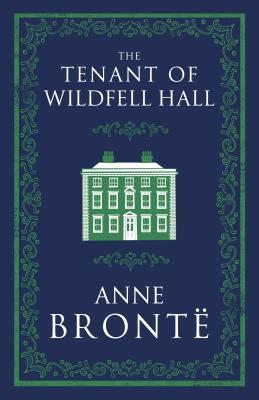
Review ~ The Tenant of Wildfell Hall by Anne Brontรซ


On Hist Fic Saturday


Let's go back to ...Victorian England


40046046
Alma Classics
Alma Books
November 2018

My thanks to the publishers for my copy of this edition of The Tenant of Wildfell Hall

Gilbert Markham is fascinated by Helen Graham, the beautiful and enigmatic woman who has recently moved into Wildfell Hall. He is swift to befriend her and steadfastly refutes the local gossip calling her character and behaviour into question, yet he soon has cause to regret his infatuation, and grave doubts and misgivings begin to arise in his mind. It is only when Helen presents Gilbert with her diary and instructs him to read it that the shocking truth about her past life becomes clear.

My thoughts..

The content of The Tenant of Wildfell Hall is, by the standard of its time, rather dark and shocking as it uncovers a web of deceit and wickedness which surely shocked the sensibilities of its first readers It's about a woman who is grievously wronged and who, despite her precarious position in Victorian society, strives to protect herself, and her child, from further harm. 

Whilst there is no doubt that this story has all the strength and passion we associate with Anne Brontรซ it is not an easy read, firstly, it takes a while to become accustomed to Anne's writing style which is quite loquacious, and also the sheer scale of the novel takes a real investment of time. Realistically, I found that I could only read a chapter at a time, as the story is complex, and I needed to take time to absorb the meaning of this dark and quite gloomy Victorian Gothic.

The Tenant of Wildfell Hall is the book I most associate with Anne Brontรซ, and although by 1846 she had contributed to a book of poems with her sisters, it was the acceptance of Charlotte's novel, Jane Eyre, which spurred Anne to publish her first novel, Agnes Grey in 1847, under the pseudonym, Acton Bell. However, whilst Agnes Grey did reasonably well, it was rather overlooked by the greater success of Emily's Wuthering Heights which was published at the same time. Undaunted by this Anne went on to publish The Tenant of Wildfell Hall in 1848 and it's shocking and controversial content made it a huge success, with the first published run of the book selling out in 6 weeks.


There remains something remarkably important about the Brontรซ novels as no matter when you read the stories written by Charlotte, Anne or Emily, there is always something to discover which reiterates the strength, not just of their style writing, but also of their unique and at times quite scathing observation of  the role of women in Victorian society.

This edition of The Tenant of Wildfell Hall was published by Alma Classics in November 2018 and is a beautifully presented copy with a sumptuous new cover. The series of illustrations at the start of the book show portraits of Anne, her parents and her sisters, placing them nicely into context and the extra material about Anne's life is both fascinating and informative.


Anne Brontรซ was an English novelist and poet, the youngest member of the Brontรซ literary family. The daughter of Patrick Brontรซ, a poor Irish clergyman in the Church of England, Anne Brontรซ lived most of her life with her family at the parish of Haworth on the Yorkshire moors. She died, aged 29, from tuberculosis in 1849.


©Digital Images

@almabooks

Friday, 7 December 2018

๐ŸŽ„Northern Writers ~ Drew Neary and Ceri Williams


I am delighted to bring to Jaffareadstoo this feature which showcases the work of authors who have based their work in the North of England

Here are Northern co-writers : Drew Neary and Ceri Williams 

and the book illustrator, Ana Priscila Rodriguez Aranda


Drew
Drew Neary became interested in history, science fiction/fantasy and conspiracy theories in his teenage years. This prompted him to write short stories over the years. He is also a fan of tabletop gaming.


Ceri

Ceri Williams has always loved language, and after a 5 year stint in advertising and journalism, now writes supernatural horror and fantasy. The Clockmaker is their first book and forms part of an upcoming series.


Ana Priscila Rodriguez Aranda

Priscila Rodriguez was born in Mexico City, 1974 and now resides in The Netherlands since 1998.


A huge welcome to you all. Thank you for being our guests today. 

Tell us a little about yourselves and how you got started? 

We met in a writers’ forum and quickly realised that our interests and approaches to writing were very similar. As we live close to each other we met for a coffee and began discussing a photograph that we had seen online. Before we knew it several hours had passed and we had outlined an exciting epic storyline that we knew had to be written. 

"This is the first time we are co-writing and we are really excited about how dynamic our partnership is. It was evident from our initial meetings and the snowballing of ideas which evolved into the journey, that we absolutely had to write this novel, and which subsequently forms the basis for the books that will follow."


40095780


What’s the book about? 

The story is about a little child, Duncan and his mother, Annette, who are moving to his father's ancestral place in Scotland. Here they plan to start a lodging service to escape the devastation of the London blitz and heal the scars left by the death of Duncan's father in WW2. 

On their train journey to Scotland they briefly meet a man whom they later find in their own village as a guest in their lodge. This man known only as The Clockmaker who escaped from Hilter’s bunker is much more than meets the eye. Who is this mystery man and does he have any role in the many strange things that begin to happen in this little Scottish village? 

“I enjoyed this book. It has some gothic, is a bit historical, has some supernatural and a touch (but only a touch) of horror. This is not a blood, guts and gore book but a clever unravelling of a story where the human characters are not the most unnerving.” 


As writers based in the North, does this present any problems in terms of marketing and promoting your books and if so, how do you overcome them?

Drew splits his time between the North and the Midlands where his children are based. 

In terms of marketing and promotion we will obviously try and get promoted everywhere in the UK and abroad (we have books on shelves in Europe for example). However we found a great deal of support from our communities up north and the first Waterstones to stock our books were actually Northern branches. 

In terms of radio and TV interviews you have to be prepared to travel as you do for book signings and literary festivals etc. We were interviewed in Bournemouth recently for example but we love doing it and consider it a healthy part of the job. We are still quite new to this but we find social media is an invaluable tool to promote and market our work and a wonderful way to meet new readers, which is one of the joys of being an author.


In your research for your books, do you visit any of the places you write about and which have made a lasting impression? 

The book starts off in Newcastle where Drew hails from and so all of the places mentioned are a significant part of his youth. Two of the characters are based on his grand parents, and the young girl is his mum. It was an opportunity to celebrate the lives of real people who fitted the timeline of the book, which is post WW2, and it fits with the storyline. Drew’s grandfather was:

“A WW2 veteran, who had so many amazing stories about his war experiences and yet he told them to us young ones in a way that wasn’t terrifying- it was entrancing. He earned a box full of medals (one from El Alamein) that are now the treasured possessions of my son.” 

This involvement of real people in the novel was something that hopefully the reader engages with. Drew wanted people to know what his grandfather was like.

The main body of the novel is set in Balomoral in the Scottish highlands, in the fictitious village of Lochnagar. Western Scotland is a beautiful country dotted with little villages, standing stones, mountains, lochs and mists that whisper of ancient secrets and hidden ancient powers waiting to be re- discovered. Powers which the clockmaker seeks to unlock. We felt it important to visit several places in Scotland so as to ensure we got the soul of the country in our words. 

“One of the most well-written books I've read in a while. The setting development cannot be beat and you actually are placed dead in the centre of every scene.” David Kaiser 


If you were pitching the North as an ideal place to live, work and write – how would you sell it and what makes it so special? 

It is the people above all. All those we grew up with in the North-friends, neighbours and family. It is hard to imagine a warmer, friendlier, positive group of people with an awesome sense of humour and a great outlook on the joys of living. 

The north has some wonderful cities such as Newcastle, Liverpool, Manchester, and Chester. All of these cities have given so much to not just the UK but also the world in general. Music art, literature, sport, engineering to name just a few. 

In addition you have beautiful countryside-which was part of the inspiration for the setting of the book. 


Writing is a solitary business - how do you interact with other authors? 

We’re a little different as we co-write. We do write separately on occasion, but the most important aspects and content of the writing and novels come from us blending what we have written, discussions around ideas and next steps, and what we come up with when writing together. We have been asked whether it is difficult to write together, and our response has been not at all- in fact just the opposite. 

When we are co-writing we are putting into words a dialogue we have with each other. Then we blend it in the editing process. So it reads as though one person has written it. Readers of our book cannot tell which parts have been written by either of us. Editing together is vital, it allows us to discuss what needs to be changed and or developed. 

Drew: “I’m definitely not a loner, I much prefer the company of people, admittedly when you are writing you have to get the words n the page which is solitary one man job; but I write with music, or the radio on and I talk over scenes in my head, so I don’t feel like I am alone. But also when I have written some pages, I talk them over with my children and ask them what they think. My son in particular will always ask what happens next-and this spurs me to write .He is very good at giving feedback and thinking of other scenarios.” 

If we cannot physically write together, a really successful method has been sending each other the writing via email and then discussing this, or we just ring up and have a chat. 

We find that we have a very strong respect for each other’s ideas and thoughts, and as a result this respect leads to a meshing of quality text. 

We use social media extensively to promote our novel, and in the process have linked up with other authors. 


How supportive are local communities to your writing, and are there ever any opportunities for bookshops, local reading groups, or libraries to be involved in promoting your work? 

We have held signing events at local shops who carry copies of the book. We contacted local and regional library services and are now stocked in several and are currently waiting for confirmation of author events. 

Drew attended a local reading group who were reading The Clockmaker, and the response from them was wonderful (they even made a cake) and several of them put it their top 3 books of the year.


What can you tell us about your latest books? 

We are currently writing two books, as The Clockmaker is part of an upcoming series. Optics is the prequel and The Perfect Child is the sequel. 

Optics: 

Is a semi dystopian novel set in the future but jumps backwards and forwards through time, and this is where The Clockmaker first appears. Many of the genres evident in The Clockmaker are within the novel, although there is a strong sci -fi element throughout. 

Through the sins of mankind The Beast grew in power and was thus able to slay God. Mankind is spread through the stars but a sentient artifact from the past is discovered by the heroes- Judd and Walden who are escapees from the shackles of The Great machine. This artifact leads the heroes down on a fraught and mysterious journey to restore the balance between good and evil and attempt the impossible -and bring God back. 

The Perfect Child: 

Continues the journey started by Annette and Duncan in The Clockmaker. Spanning 3 centuries, the protagonists are brought together for one final time. Set in Nottingham primarily, it is a gothic thriller with elements of the supernatural and horror.


More about the illustrator - Ana Priscila Rodriguez Aranda - Visual artist

Priscila Rodriguez was Born in Mexico City, 1974 and now resides in The Netherlands since 1998.
She graduated from the Academy of Fine Arts in Utrecht in 2006 with a specialty in Intermedia and Photography and has also studies in History and Graphic Design, currently she works in developing her own photographic techniques, in which she combines digital and three dimensional elements.

She started working with the classical forms of drawing and painting until she soon discovered the magic of antique photographs and old papers left behind in flee markets, which she has been obsessively collecting for more than a decade. The fascination for the old and the forgotten are the key elements to her work and the stories she tells.

Among exhibitions in Mexico and in The Netherlands, she has also collaborated in publications. The Clockmaker is her first book cover.

The atmosphere of the novel and the nature of her "time based" visuality gives to this title the perfect match.


For more of her work, visit:  http://www.allthingslostonearth.com/


Drew and Ceri on Twitter@stepford115


Huge thanks to Drew and Ceri for being my guests on the blog today