Tuesday, 12 February 2013

Review ~ Little Exiles by Robert Dinsdale

Little Exiles
Harper Collins
28 February 2013
Little Exiles

by

Robert Dinsdale


“ It is proposed that the commonwealth seek out in Britain, by whatever means necessary, at least 17,000 children a year suitable and available for immediate migration to Australia.”

Arthur Calwell

Australian Minister for Immigration , 1949


Leeds, Christmas 1948, and nine year old Jon Heather anxiously awaits his father’s return from the war, but times are hard for the Heather family, and even though Jon’s mother tries to hold her family together, she is in desperate circumstances. When she leaves Jon at the Chapeltown Boy’s Home of the Children’s Crusade, she promises to return for him in two months time, but as weeks pass with no news of his mother, Jon like all the other abandoned boys at the Children’s crusade must watch and wait and hope for a better future. What then follows, is a harrowing story of the forced migration of orphan and abandoned children, who were sent from England to Australia, ostensibly to a land filled with promise and great opportunity.

Based on fact, this fictional story is graphic in its depiction of what happened to the children once they reached Australia, and although at times it makes for uncomfortable reading, there is an overwhelming urge to continue with the story, in the hope that life will get better for them in this land of plenty. Jon is a spirited and reliable narrator, and throughout his story, I was reminded of Victorian Gothic novels, were orphans were exploited and used abominably, and then I had to forcibly remind myself that this story was far from Gothic, and had only happened within the last sixty or so years.

Beautifully written, the author Robert Dinsdale has a real flair for storytelling and despite the burden of sadness which pervades in Little Exiles, there is also a story of friendship, loyalty and the eventual realisation that home is wherever you can find it.

I am sure that this book will be featured on many a book group’s to be read list. Within it there is much to discuss, and more importantly, so much that remains with you long after the book is finished.

5 *****

My thanks to Newbooks for a review copy of this book. 


Saturday, 9 February 2013

Review ~ The Fatal Crown by Ellen Jones


The political alliances formed in the aftermath of the conquest of England in 1066 had repercussions for generations and the rulers in twelfth century Europe are depicted as a scheming combination of political aspiration and ruthless ambition. Caught in the middle are two royal heirs to the English crown, whose supporters will bring England to civil war in the fight for supremacy.

In A Fatal Crown, Ellen Jones has woven the historically accurate story of the fight for power between Maud, daughter of King Henry I, and her cousin Stephen of Blois, and has created a story of illicit passion, and royal subterfuge. I am not sure that there is any historical evidence to suggest that Maud and Stephen ever embarked on an illicit love affair, and yet within the context of this story it works well, and ultimately offers a more romantic version of what after all was a supreme power struggle.

If you are upset by slight variations in history then this book is not for you, but if you want a lively historical romp with a smattering of sex and romance then you won’t be disappointed.
Originally published in 1991, the book is now republished with new and more appealing cover art. It continues to be a fascinating and sensuous account of this troubled period in English history.


My thanks to NetGalley and Open Road for an e copy of this book to review.

Friday, 8 February 2013

Friday Recommends

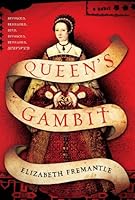
Queen's Gambit
Michael Joseph (14 Mar 2013)

Queen's Gambit

by


When faced with the terrifying prospect of being the sixth wife of King Henry VIII, Katherine Parr was justified in being apprehensive; after all, Henry's previous marriages hadn't exactly fared well. However, she quickly realises that refusing a King's marriage proposal is tantamount to treason, and as she turns her back on a passionate involvement with the charismatic Thomas Seymour, she resigns herself to becoming the helpmate of an irascible and awkward old man. With great skill, Elizabeth Fremantle has provided a vivid portrait of the latter years of Henry’s reign and a real sense of history pervades the story as it charts the challenging years of Katherine’s marriage to an ageing and increasingly volatile Henry. Katherine Parr has always been overshadowed by the sexier and altogether more robust catalogue of Henry’s ex wives, and yet in Queen's Gambit, it is easy to see just how this intelligent and thoughtful queen managed to hold together all the pieces of Henry’s fragmented life. Katherine’s determination to involve Henry’s lost and lonely children in some semblance of family life is commendable; however, it is her religious fervour which will prove to be her Achilles heel.

The story abounds with Tudor skulduggery, and takes us effortlessly from the domestic arrangements of a royal court on the move, to the intrigue of political and religious obsession. The ever present threat of danger is never too far away and a real sense of foreboding pervades as Katherine attempts to manage Henry whose capricious nature often reveals a terrifying split personality. The historical figures that flit into and out of court life are extremely well managed and the inclusion of an extensive character list at the end of the book helps to put them all into context

Beautifully written, and finely observed throughout, Queen's Gambit soon becomes a real page turner. Elizabeth Fremantle is without doubt a major new talent in historical fiction writing.

This is a real treat for fans of historical fiction.

5*****

My thanks to Newbooks, Real Readers, NetGalley and Penguin Books Ltd for a review copy of this book.

Alternative cover

Thursday, 7 February 2013

Guest Author ~Ruth Mancini

Guest Author

I am delighted to introduce  Ruth Mancini

Photograph courtesy of the author


Ruth is the talented author of Swimming Upstream 


Swimming Upstream
FeedARead.com (18 Oct 2012)
Ruth Mancini; 1. edition (15 Nov 2012)
Swimming Upstream is available in paperback and on Kindle


Swimming Upstream is a life-affirming and often humorous story about a young woman’s pursuit of happiness. Set in the early 1990s in Cambridge and London, it is also a story of friendship, love and divided loyalties – and the moral choices that Lizzie ultimately faces, when the chips are down.


Ruth, welcome to Jafffareadsoo and thank you for being our guest author today.


What inspired you to become an author? 

I have always been an avid reader. I wrote my first (unpublished!) book when I was 9.


Where did you get the inspiration for Swimming Upstream? 
I wrote “Swimming Upstream” after a painful relationship break up when issues from my own past came rearing up to haunt me. I wanted to read something similar, to know that someone had been through what I had and survived. I read some self-help books, but couldn’t find a novel that had issues that I could relate to. So I decided to write one. But I also wanted to write a story with lots of drama. I love psychological thrillers so wanted to create a story that had some of that aspect to it too.


Do you write stories for yourself, or other people?

Both. I love writing because I enjoy the creative process, but I also write for women like me, basically, who are anywhere between 17 – 77! I write for anyone who has loved and lost, who has battled with life, who has ever felt low, tired and alone. Or who just wants an interesting story to read!


Do you have a special place to do your writing?

No. I share a computer with my children! We now have two computers in our small study so that I get a look-in when we are all at home.


Can you tell us what are you writing next?

I have an idea for my next novel but I haven’t started it yet. I am writing regular blog posts for my website though.


Which writers have inspired you?

Anne Tyler, Jane Smiley, Harper Lee, Nick Hornby, Elizabeth Gilbert, to name but a few…


And finally for fun..If you could invite three authors to your dinner table, who would you choose and why?

That’s so difficult!

If I was in the mood for a deep, interesting conversation then probably Dr Raj Persaud, Khaled Hosseini and Alain de Botton. 

If I wanted a light-hearted fun evening then maybe JoJo Moyes, Nick Hornby and Elizabeth Gilbert! 


Ruth very kindly asked me to read a copy of Swimming Upstream - here are my thoughts.


Lizzie Taylor feels that she has everything she has ever wanted, but when an unexpected road accident forces her to re-evaluate her life, she realises that she is far from happy, and leaving her reasonably settled life in Cambridge behind, she sets off on a journey to London. The book is set in the boom years of the 1990’s, and from the narrative, is it obvious that the author is familiar with both Cambridge and London, and uses her knowledge of this era to good effect. The story is both entertaining and enlightening in equal measure and yet, underneath the humour is a story of self discovery and the realisation that life sometimes turns out very different from the way in which we thought it would.
I found the book easy to read; the narrative flows well and encourages a large amount of emotional investment in the characters, so much so, I really cared about what happened to Lizzie, she could have been someone I once knew. Overall, there is poignancy to the story which tugs at the heart strings and the ending when it comes is well thought out and in keeping with the theme of the story.

As a debut novel, the book has much to commend it, and I hope to be able to read more from this talented author in future novels.
5*****


Ruth,  thank you so much for spending time with us, Jaffa and I have loved having you as our guest author today. 

We wish you lots of success with your writing career. 


Wednesday, 6 February 2013

Wishlist Wednesday..


 I am delighted to be part of wishlist Wednesday which is hosted by Dani at pen to paper

The idea is to post about one book each week that has been on your wishlist for some time, or maybe just added.

So what do you need to do to join in?

Follow Pen to Paper as host of the meme.

Pick a book from your wishlist that you are dying to get to put on your shelves.

Do a post telling your readers about the book and why it's on your wishlist.

Add your blog to the linky at the bottom of her post.

Put a link back to pen to paper (http://vogue-pentopaper.blogspot.com) somewhere in your post.


Like This, For Ever
Expected Publication 11 April 2013

My wishlist Wednesday choice

 is

Like This For Ever (Lacey Flint #3)

by


Bright red. Like rose petals. Or rubies. Or balloons. Little red droplets.

Barney knows the killer will strike again soon. The victim will be another boy, just like him. He will drain the body of blood, and leave it on a Thames beach. There will be no clues for detectives Dana Tulloch and Mark Joesbury to find. There will be no warning about who will be next. There will be no good reason for Lacey Flint to become involved ... And no chance that she can stay away.


I first discovered the writing of this talented author in 2009 with the publication of her first novel, Sacrifice. Since then her novels have firmly fixed themselves amongst my favourite of contemporary British crime writers.

Like This For Ever is the third book in the series of crime thrillers which feature detectives Mark Joesbury and Lacey Flint.


Monday, 4 February 2013

King Richard III...


Richard III  King of England 1483 -1485

As an avid reader of historical fiction with a particular fondness for books set during the War of the Roses, it is with great interest that I view the news issued today that the finding of  bones during an archaeological dig in a car park in Leicester in 2012 , are "beyond reasonable doubt"  those of King Richard III, the last Plantagenet King who was killed at the Battle of Bosworth in 1485.

Although the skeletal evidence suggests that the king had a curvature deformity of the spine , this is a long way from the maligned portrait depicted by William Shakespeare in his play, Richard III,

" Now is the winter of our discontent
Made glorious summer by this sun of York,
And all the clouds that loured upon our house
In the deep bosom of the ocean buried.
Now are our brows bound with victorious wreaths,
Our bruised arms hung up for monuments,
Our stern alarums changed to merry meetings,
Our dreadful marches to delightful measures.
Grim-visaged war hath smoothed his wrinkled front;
And now, instead of mounting barbed steeds
To fright the souls of fearful adversaries,
He capers nimbly in a lady’s chamber
To the lascivious pleasing of a lute.
But I, that am not shaped for sportive tricks,
Nor made to court an amorous looking-glass;
I, that am rudely stamped, and want love’s majesty
To strut before a wanton ambling nymph;
I, that am curtailed of this fair proportion,
Cheated of feature by dissembling nature,
Deformed, unfinished, sent before my time
Into this breathing world, scarce half made up,
And that so lamely and unfashionable
That dogs bark at me as I halt by them,—
Why, I, in this weak piping time of peace,
Have no delight to pass away the time,
Unless to spy my shadow in the sun"


King Richard III. Act i. Sc. 1.

Friday, 1 February 2013

Friday Recommends..

The Forbidden Queen
Expected Publication 1 March 2013
Harlequin (UK) Mira

The Forbidden Queen

 by 


In the aftermath of the Battle of Agincourt, Katherine de Valois is offered as a political pawn in marriage to Henry V of England. The alliance is expedient in uniting France and England, but Henry, the soldier King is more focused on the intricacies of war than on his young, desirable bride. However, Katherine’s role is to provide the stability of a male heir for the English crown, which she does in 1421 when the future Henry VI is born. Following the premature death of Henry V, Katherine is left a widow at 21, and as her tiny son becomes King in name only, Katherine finds herself once more the pawn of ambitious and malicious statesmen. By necessity, as Dowager Queen, Katherine is forced to live circumspectly, and yet her beauty and desirability continue to make her a magnet for unscrupulous matchmaking. When Katherine falls in love with her servant, Owen Tudor, the scandal is enough to shake the foundations of the nation. 

The Forbidden Queen is the story of how a beautiful young woman was manipulated into a loveless marriage, and then forced to live her life in the shadow of powerful men. Katherine’s story draws you in from the very beginning as we rejoice to see her as an innocent bride and gently protective mother, but then grieve as she learns to live her life as a beautiful young widow, but what really brings the novel to life is the way in which this gentle, charismatic Queen was treated by the powerful men who were appointed as the young King’s protectors.

Anne O’Brien has a great skill with words and undoubtedly makes history come alive, so much so, you are easily transported back in time to an age when women were largely seen but not heard, and as the 21st century begins to fade and the echoes of the past resonate within your imagination, you feel the cold of the castle walls and sense Katherine’s unease as she finds herself caught between love and duty.

There is no doubt that history has much to thank Katherine de Valois for, as this largely forgotten queen was not only the mother of a King of England, but was also the grandmother of the Tudor dynasty, in this novel Anne O'Brien more than does justice to a story that needed to be told.

There is no doubt that Anne O'Brien's historical narratives just get better and better, and The Forbidden Queen, is one of my favourite of her novels to date. 

My thanks to Netgalley and Harlequin (UK) for an advance ecopy of this book to read and review.